

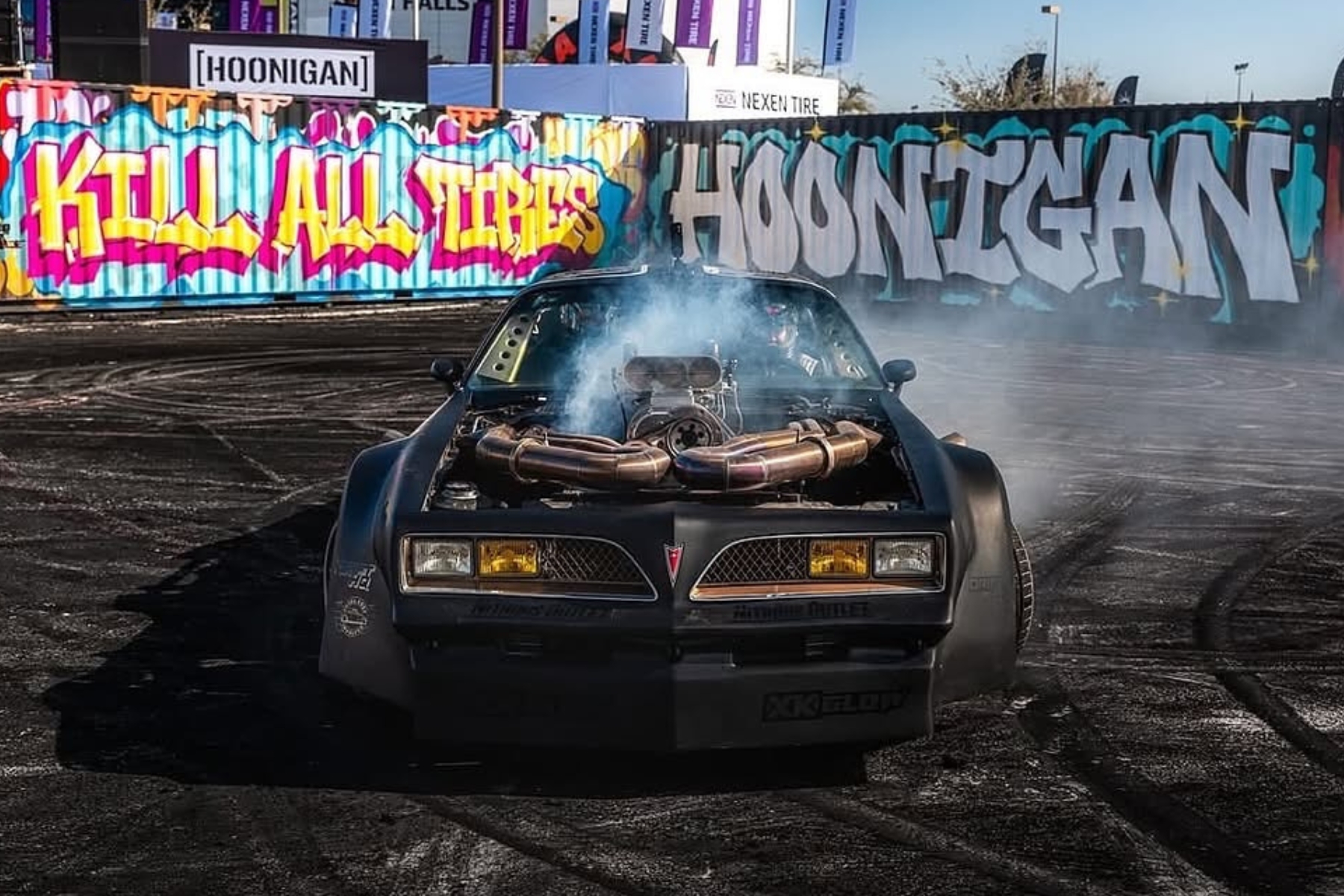
Whether the goal is to handle a mild bolt-on street car or a dedicated track machine producing four-digit torque figures, SPEC’s catalog covers the spectrum through single-disc and twin-disc configurations. Understanding what defines each clutch stage helps ensure reliability and the driving feel that suits the project.
Stage 1: Organic Composition With Smooth Engagement
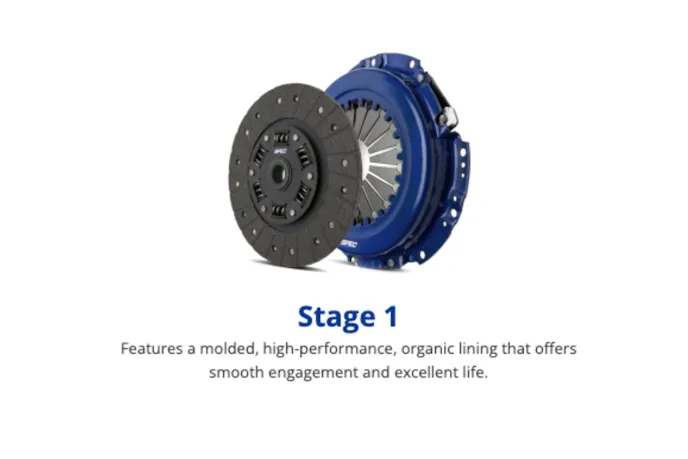
Stage 1 is SPEC’s gateway into performance clutch systems. It features a molded, high-performance organic friction lining designed for smooth engagement, low noise, and excellent wear resistance. The material choice provides an ideal balance between stock-like drivability and improved torque handling.
This stage is mostly intended for lightly modified vehicles, daily drivers, or those looking for a refined upgrade over the factory unit. In some applications, they can handle more heavily modified setups. SPEC’s endurance lining is also a formidable track matrix used in both road course and drag race environments. Drivers can expect smooth pedal modulation and long service life, even in traffic or frequent stop-and-go situations.
SPEC’s Stage 1 clutches are often chosen for builds that need improved holding power without sacrificing comfort, offering a seamless transition from OEM behavior to a more capable setup.
Stage 2: Kevlar Reinforcement And Increased Capacity

Stepping up to Stage 2 brings a Kevlar friction disc with a steel backing, offering a higher torque capacity and longer wear life. Kevlar maintains excellent daily drivability and modulation, making it a fantastic choice for daily drivers, autocross, and light towing. Kevlar is also easy on the pressure plate and flywheel surfaces.
Stage 2’s advantage lies in its balance between strength and manageability. It’s a popular choice for street-driven vehicles with moderate engine upgrades that require dependable power transfer without excessive harshness.
Stage 2+: Multi-Friction Engineering For Enhanced Grip

Stage 2+ retains the street-friendly engagement characteristics of Stage 2 while incorporating a hybrid, multi-friction disc that provides approximately fifteen to twenty percent greater torque capacity. This setup combines the smoothness of Kevlar with the grip of tougher materials, creating a clutch that balances everyday comfort with the strong performance needed for the track.
This clutch stage works particularly well in vehicles that produce significant torque increases but are still used regularly on the street. The multi-friction disc allows for crisp engagement under load while resisting fade under repeated high-temperature conditions. SPEC designed this stage for enthusiasts who have outgrown the limits of Stage 2 but do not need a puck-style clutch.
Stage 2+ stands out as a practical step for those balancing real-world usability and competition capability, offering an ideal blend of endurance and responsiveness.
Stage 3: Carbon Semi-Metallic Performance

Stage 3 introduces a major shift in design, moving to a carbon graphite semi-metallic six-puck configuration. This stage is built for drivers who demand a higher rate of engagement and superior heat tolerance in performance environments. The six-puck disc design increases the clutch’s friction coefficient, allowing it to handle significantly higher torque levels without slip or fade.
Despite its aggressive nature, SPEC engineered Stage 3 to remain roadworthy when paired with proper driving technique. Engagement becomes sharper, and while some chatter may occur during low-speed takeoff, the benefits in strength and consistency are substantial. High-powered performance builds often incorporate this stage, as maintaining consistency under heavy load is crucial.
Stage 3 is a staple among enthusiasts building track-capable cars that still see some street use, combining durability, response, and dependable torque application under severe conditions.
Stage 3+: Full-Face Carbon Semi-Metallic Control
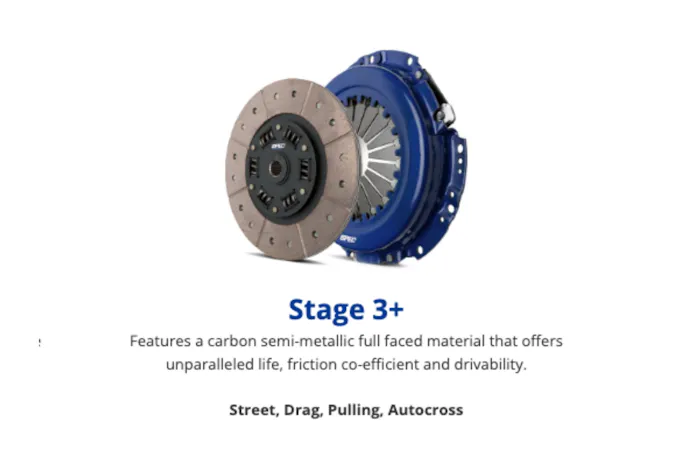
Stage 3+ builds on the foundation of Stage 3 but replaces the puck configuration with a full-face carbon semi-metallic friction surface. The result is a clutch that offers high torque capacity while providing smoother, more predictable engagement than a puck unit.
This stage is favored among high-power street builds and weekend track cars that require both high capacity and favorable street manners. The full-face design distributes pressure evenly across the friction surface, improving engagement quality and wear patterns and extending service life under demanding conditions. It also allows for better modulation in traffic compared to puck-style alternatives. The Stage 3+ is generally regarded as the longest-wearing performance friction mix in the marketplace.
Stage 3+ is often considered SPEC’s most versatile single-disc stage, offering the durability of a race clutch with engagement characteristics that remain manageable for daily driving. It strikes an ideal middle ground between extreme performance and real-world comfort.
Stage 4: Rigid Design For Competitive Response

Stage 4 applies the principles of Stage 3 but uses a rigid hub design that eliminates the damping springs found in earlier stages. The result is faster engagement and a more direct connection between the engine and drivetrain.
While some Stage 4 application listings share the same torque ratings as Stage 3, the distinction lies in the clutch’s construction and behavior. The rigid hub transmits power more efficiently but significantly increases engagement rate and harshness. This makes Stage 4 better suited for dedicated competition use or vehicles that prioritize performance feedback over comfort.
Stage 4 demonstrates SPEC’s commitment to offering professional-grade hardware that can withstand repeated launches, road course stress, and extreme thermal cycles. It remains drivable but clearly leans toward motorsport functionality.
Stage 5: Full Metallic Composition For Maximum Torque

Stage 5 represents the capacity peak of SPEC’s single-disc performance line. It features a sintered iron disc designed with the highest possible friction coefficient. The disc’s construction prioritizes strength, temperature control, and resistance to slip under the most punishing conditions.
SPEC describes Stage 5 as “street drivable, but not street friendly,” which accurately summarizes its purpose. It is meant for racing or extremely high-output builds that operate at the limits of what a single-disc clutch can endure. Engagement is high, but due to its relative surface area, Stage 5 is more progressive than Stage 4. However, when matched with an appropriate powertrain, the performance results are exceptional.
This stage is the clear choice for professional drag racing or any scenario where heat control and friction coefficient are paramount.
The Super Twin And Mini Twin Systems
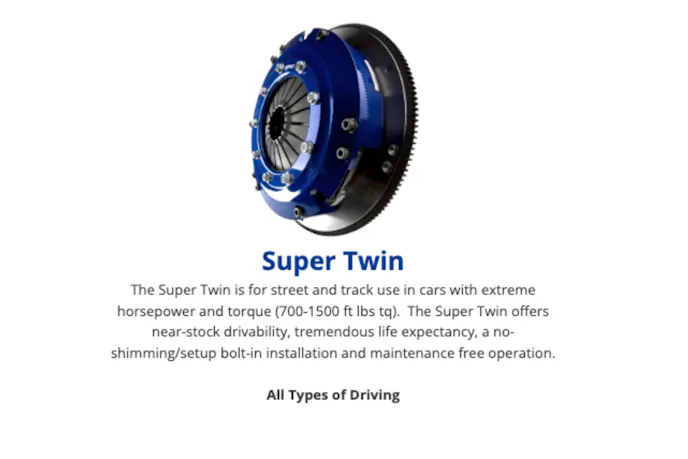
Beyond its single-disc lineup, SPEC manufactures two multi-disc clutch systems designed for high-horsepower and endurance applications. The Super Twin is engineered for street and track use in vehicles producing between 700 and 3,000 lb-ft of torque. It uses friction combinations found in the single disc line, dependent on the trim level. Super Twin setups feature friendly pedal requirements and maximum surface area for progressive engagement and excellent heat control. SPEC emphasizes that the Super Twin requires no shimming or setup adjustments, making installation straightforward.

The Mini Twin serves a more specialized role, available in multiple disc counts and diameters to suit different forms of racing or limited street use. These small-diameter assemblies are built for engines operating at high power and rpm levels where single-disc systems would be insufficient. Mini Twin assemblies are most often used in road course applications or drag racing for builds utilizing smaller bellhousings. Both the Super Twin and Mini Twin are examples of SPEC’s high-end engineering, combining precision manufacturing with performance tuning adaptability.
Selecting The Right Stage
Choosing the correct clutch stage begins with an honest evaluation of power goals, usage, and driving conditions. Enthusiasts should start by identifying the engine’s torque output and intended use. Every application has unique capacity and drivability characteristics, so SPEC suggests clients request a stage recommendation before purchase.

Overclutching can lead to unnecessary drivability symptoms, like chatter during daily operations. Underclutching results in premature wear or slipping under load. SPEC’s system makes this decision-making process easier by giving each stage clear engagement characteristics and tested torque ratings for certain vehicle uses.
Proper installation and break-in remain essential. SPEC recommends following its prescribed break-in period, allowing friction materials to seat properly and ensure consistent holding power. Regular inspection of related components, such as the flywheel, throwout bearing, and hydraulic system, also contributes to long-term reliability.
The Value Of A Purpose-Built System
SPEC Clutch’s stage system goes beyond a sequence of numbered upgrades. It provides a structured approach to performance that allows every driver, from an enthusiast to a professional racer, to achieve predictable results. By carefully improving friction materials, plate shape, and how everything fits together, SPEC offers strong durability for racing while still being easy to control and comfortable for everyday driving.
Each clutch stage exists for a reason, and understanding those differences makes it possible to match performance expectations with the right component. For anyone upgrading their driveline or planning a new build, SPEC’s comprehensive lineup provides the confidence that every clutch is tested, purpose-built, and engineered to perform.
You might also like
GM Reveals Gen 6 LS V8 Power Numbers For 2027 Silverado And Sierra
GM reveals Gen 6 V8 power for the 2027 Silverado and Sierra, including a 481hp 6.6L L78 and 402hp 5.7L L76.