

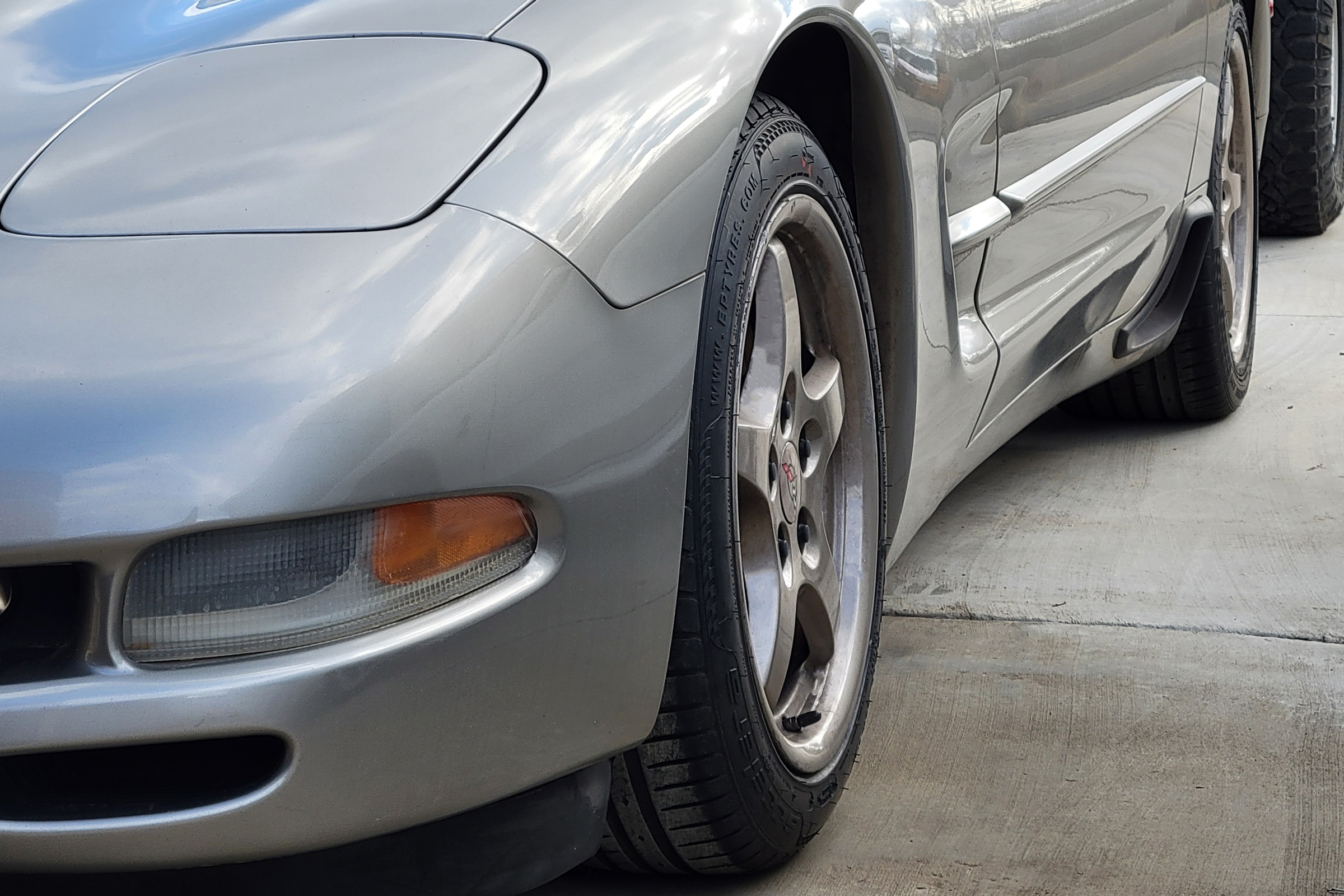
In its previous life, our C5 Corvette project car, Project Honey Badger, was focused on dragstrip performance. That meant that the desired suspension settings were vastly different from what you would set up based on wanting to attack the corners, like we want to do. So, the first step in getting Honey Badger ready for the track was to make some basic suspension upgrades to be able to reliably and accurately dial in our camber and caster in order to take on the turns. We already have PFADT Series Featherlight coilovers on the car, so all we needed was an advanced FLOW engineering (aFe Power) camber kit.
Making Camber Adjustments Stick
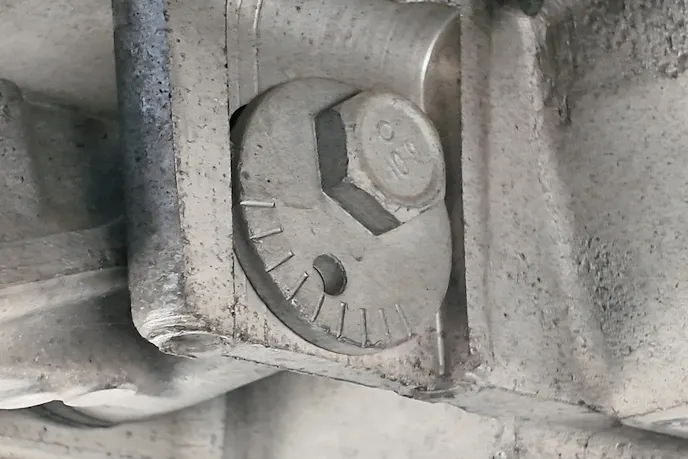
Looking at the factory C5 camber adjustment, it’s pretty straightforward. A bolt with an eccentric on it can be rotated to move the lower control arm out and in throughout the eccentric’s rotation to change the angle of the hub (and by extension, the wheel and tire) between the upper and lower control arms. The problem with that system is that it relies solely on the torque of the bolt to hold the positioning of the eccentric. Those who have driven a C5 in anger, with sticky tires, know that torque alone isn’t always enough to keep those settings where you put them.
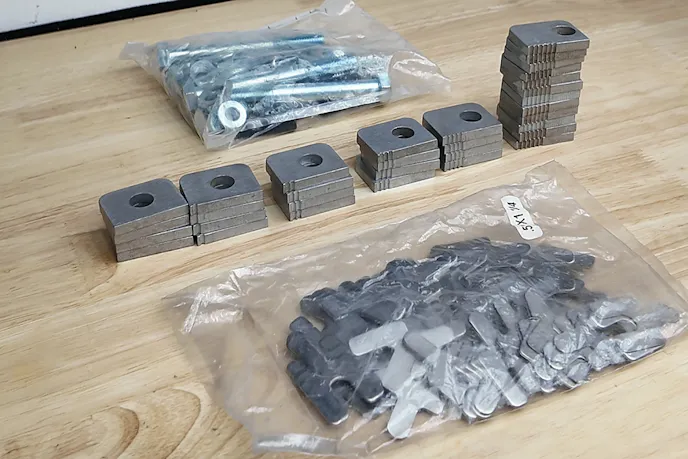
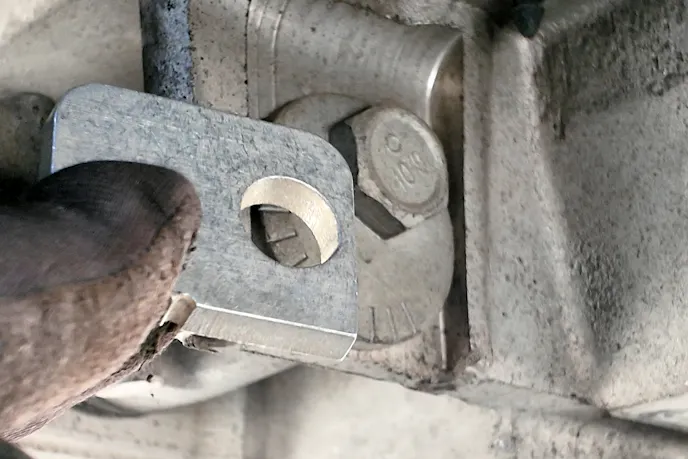
To remedy this, aFe designed the PFADT Series Steel Camber Kit for the C5 and C6 Corvette. Instead of a rotatable eccentric, the kit uses plates waterjet-cut from thick aluminum plate to locate the lower control arm. The plates fit directly into the control arm mounting frame, so they are unable to move, even under the highest cornering loads. Now, you might be wondering, if it doesn’t move, how does it adjust the camber setting?
Front End Camber Kit Adjustments
Gross camber adjustments are accomplished via different plates. The camber kit comes with six variants of the adjustment plates, each denoted by the number of notches on the edge of the plate. If, for some reason, you wanted to dial in positive camber, you can simply flip the plates, and they will pull the lower control arm in, instead of pushing the control arm out. The kit also comes with all-new grade 10.9 hardware, ensuring that there’s no chance of bent or broken control arm hardware on the track.
Now, for fine camber adjustments, those are addressed via the upper control arm. Included in the kit are a variety of 304 stainless steel shims that slide in between the chassis and the upper control arm mount. They come in various thicknesses, with 1 mm being the thinnest. That 1mm shim removes approximately 0.2 degrees of camber from the total camber. In order to make those adjustments easy, the kit also replaces the standard upper control arm mounting bolts with a stud and a grade 10.9 nut.
To adjust the caster, once the camber is set where you want it, you can simply move the upper control arm shims from the front to the back, or back to front. As long as you don’t alter the total number of shims, you’ll only be adjusting the caster measurement, while keeping the camber where it is.
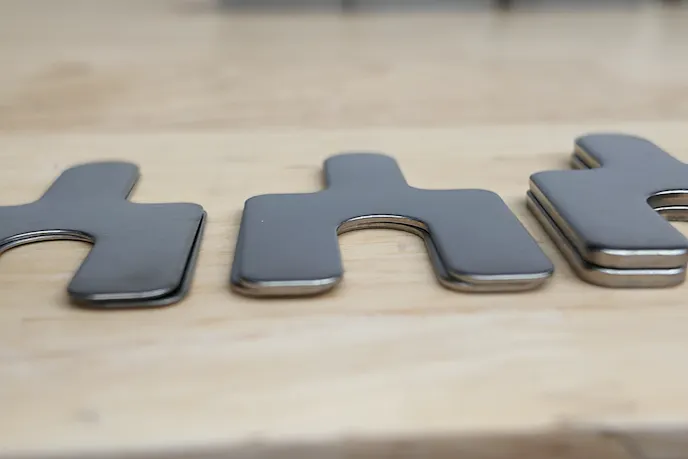
Rear End Camber Kit Adjustment
The C5’s rear suspension is slightly different in that there is only one side of the lower control arm that is altered to make camber changes. The kit uses the same plates and bolt to replace the same eccentric as you’d find on the front, but only on the lower front pivot point. Each plate number change makes for approximately 0.2 degree of change in the rear, with higher numbers increasing negative camber. The kit allows for toe adjustments with the factory adjusters.
Installation of the kit is a straightforward removal and replacement proposition. You simply remove the lower control arm bolts, with the eccentric plates, and replace them with the new camber plates and grade 10.9 bolts, and torque everything to 80 lb-ft. The upper control arm is the same, except that you replace the mounting bolts of the upper control arm with the provided studs and flange nuts. In the rear, the installation is even easier, since you are only adjusting one pivot point, on the lower control arm (so one bolt and two plates) and you’re done.
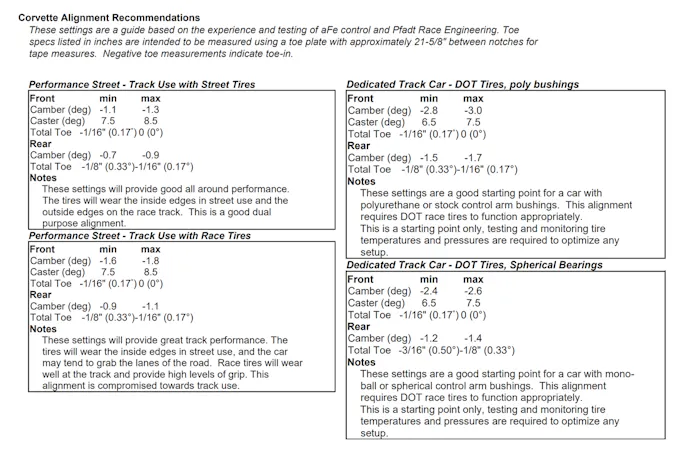
Unfortunately, at this time of year, our preferred performance alignment shop is difficult to get an appointment with because of the holidays and the fact that everyone is dealing with maintenance before the weather turns. This has actually led us to looking into a set of DIY alignment tools so that we can make precise alignment changes ourselves, even at the track, if need be. But, for the initial setup, we’ll be waiting for our turn with the pros, later in the new year.
Front And Rear Tow Hooks
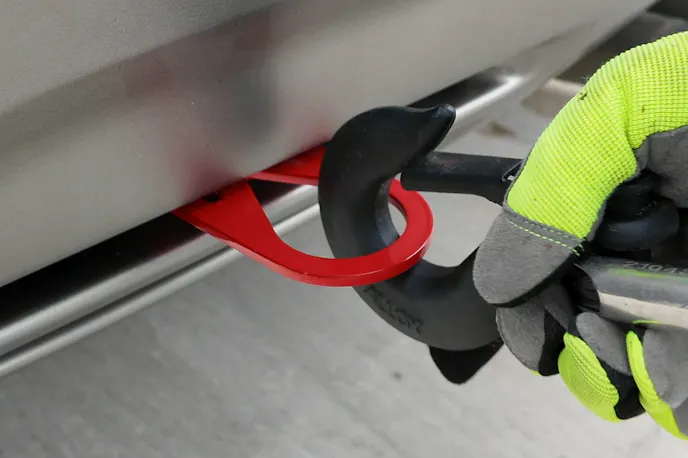
Since our goal is to get ready for the track, one of the other things we’ll need to be both safe and legal, is tow hooks. Fortunately, aFe makes both front and rear tow hooks. Both hooks are made from laser-cut A36 steel and are then powder-coated in either red or blue. For the front hook, you’ll need to drill a couple of holes and notch your foglight housing (if you want to keep your foglights).
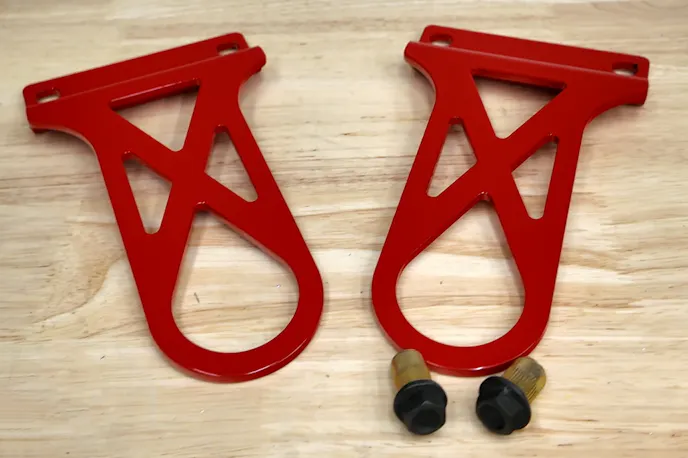
The installation process is a little more involved than you might think, as you need to remove your radiator shroud and air deflector paneling underneath the car to get at the crossmember you’ll mount the tow hook on. Not difficult work in the slightest, just time consuming. Once you get all the paneling off, you can choose driver or passenger side mounting. You simply mark the location of the two mounting holes and drill out a 33/64th-inch hole. (Note, when purchasing a 33/64 bit. First, it’s not something easily found locally, so plan ahead. Second, your author thought he was big-brained and had a 33/64 bit on hand. However, the bit on hand was a wood bit designed to drill pens — not at all suitable for drilling metal. So, while the appropriate cobalt-steel bit was only $9 on the jungle site, it did take just short of a week to arrive.)
Once the holes are drilled, you simply install the included rivnuts (with the included rivnut installation tool) and then bolt the tow hook in. The rear tow hook is even easier, as all you have to do is remove the bolts on one of the exhaust hangers (again, your choice of driver or passenger side) and then sandwich the tow hook between the hanger and the chassis, and reinstall the bolts. Even making it harder on ourselves by leaving the car on the ground, and sitting behind the car, it only took about 10 minutes, and eight of those were trying to blindly get the bolts back into the holes, instead of just getting under the bumper and looking.
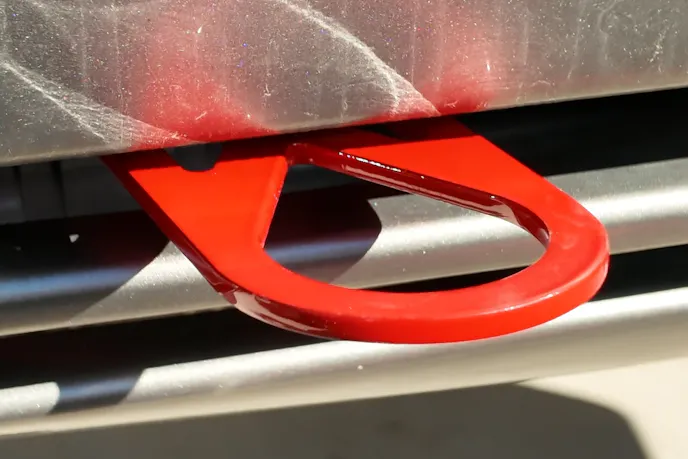
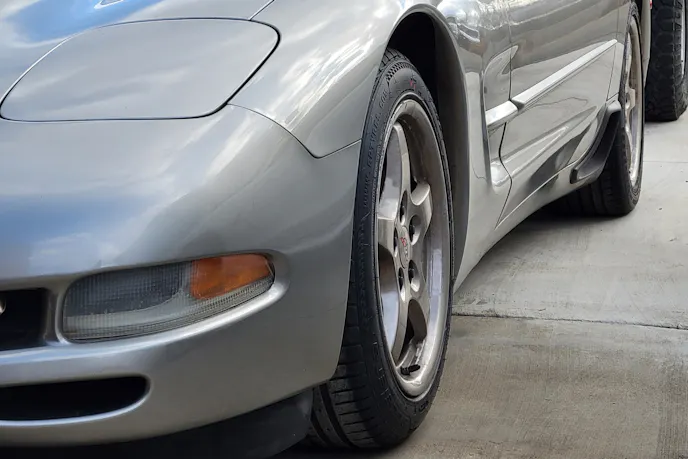
After a pretty relaxed day in the driveway, Project Honey Badger now has a decent amount of camber, front and rear tow hooks, and a whole lot of hovercraft fitment, now that the tops of the tires have been pulled even more into the wheelwells. Don’t worry, that will be remedied soon, as we have plenty of height adjustment on the coilovers, and we have new wheels and tires ready to be mounted — the tire place is on the same block as the alignment shop. So, keep an eye out as Honey Badger continues to get ready to make its road course debut.
You might also like
Project Swedish Meatball Gets A Fresh AutoMeter Gauge Cluster
AutoMeter’s InVision Digital Dash and CAN Bridge give LS-swapped vehicles a modern, plug-and-play gauge cluster solution.