

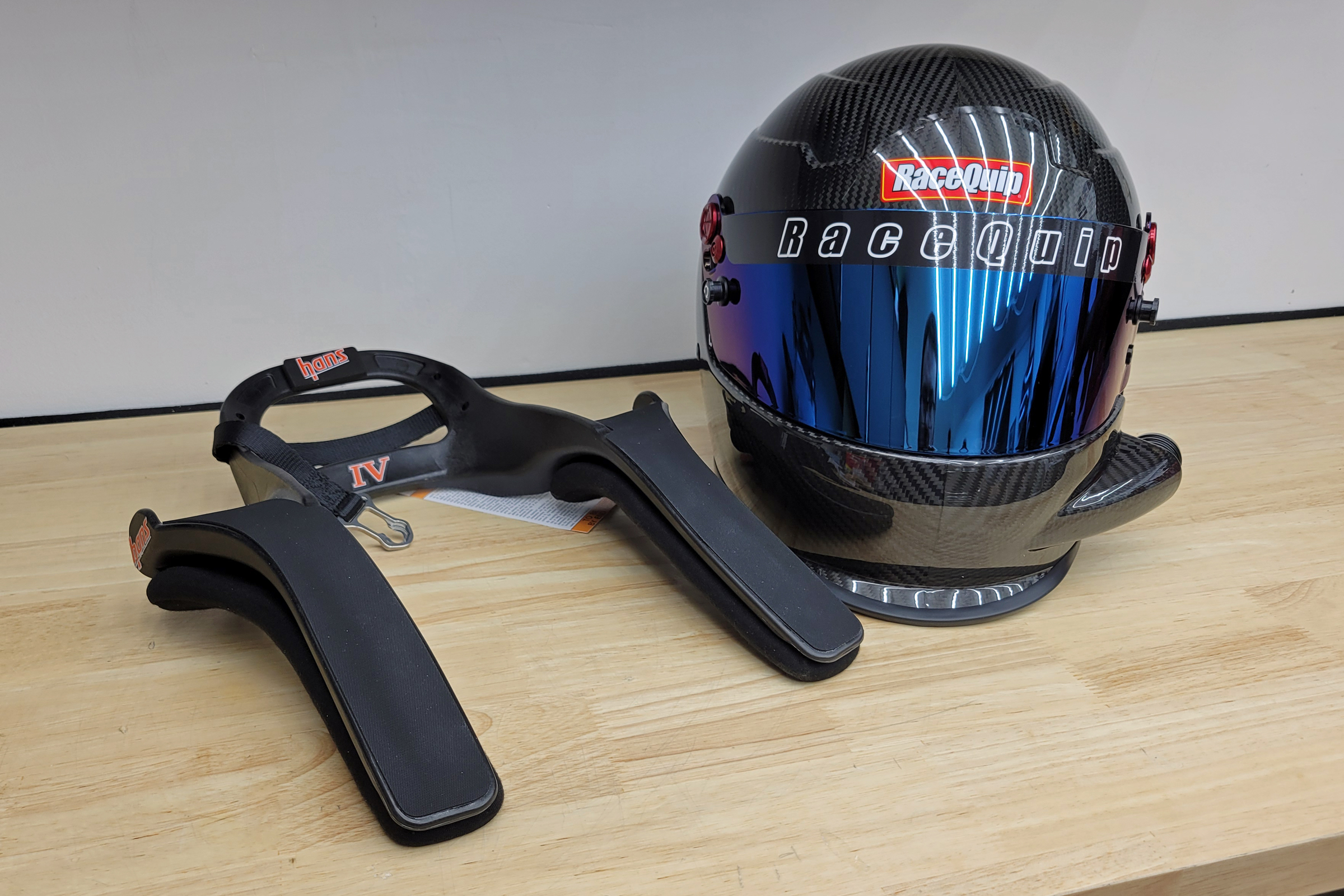
When it comes to personal safety equipment, we usually see people fall into one of two camps. The first is the person who wants to spend as little as possible to not get hassled going through tech. The second is the guy spending two months’ salary on gear with WAY more rating than they need, because they like having the latest and greatest. However, there exists a middle ground, where your author firmly lives. A space that is also occupied by RaceQuip, which offers a range of safety equipment.
Safety is not something that should be an afterthought. Without sounding too dramatic, most safety rules are written in the blood of someone who’s gone before you. What that means is that no one is making a rule in order to just sell you a piece of safety equipment. In fact, the SFI Foundation — the organization responsible for issuing and administering the safety requirements for most of the racing equipment in the US — is a non-profit organization. Their sole mission is to try to keep people safe in an inherently unsafe activity.
Some quick background, so that you know where I’m coming from in this article: I’ve been participating in motorsports for longer than I haven’t in my lifetime. I’ve had experience as the broke racer, buying the absolute cheapest gear with a rating to get on the track. I’ve had experience working for a sanction and seeing the other side of tech inspection. And, I’ve also had the benefit of getting to access some really high-end equipment via my editorial career.
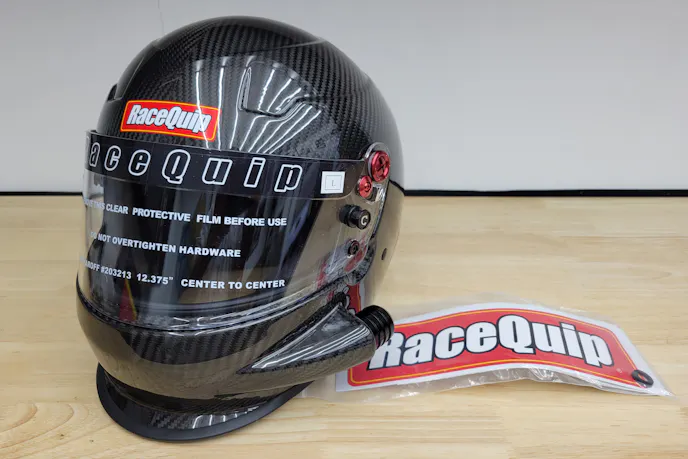
With all of my previous personal safety equipment out of date, it was time for me to get outfitted head to toe with new gear, for me to take Honey Badger out on track this year. The equipment we’ll discuss here is a well-rounded balance of cost, quality, and features, while explaining the why and how of the products’ protection. Keep in mind that not only do I have some sizing challenges, but I’m also incredibly picky with my safety gear.
Everyone Needs A Helmet
The first thing to talk about is the helmet. Regardless of what form or level of motorsport you are participating in, you need a helmet. There is an old saying: “A $5 helmet for a $5 head.” Young, broke “me” started with the most basic Snell M2000-rated helmet that I could get away with. And as I’ve matured and played with different helmets and features, I’ve come to believe that this is one area you should not skimp on.
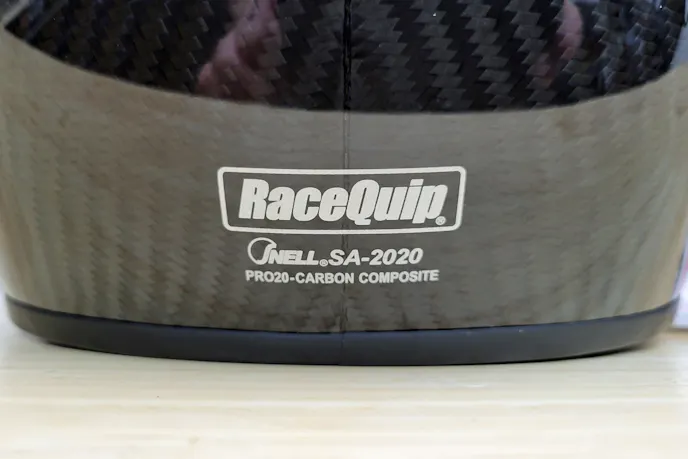
A heavy, poorly fitting helmet will make wearing it miserable. Inexpensive helmets have advanced greatly in the past two decades, and SA-rated helmets have some inherent features built into the specification that make them better for use in a vehicle than a motorcycle helmet. They are designed for multiple impacts and are tested for hits against hard surfaces like metal, which better simulates the interior of a car. M helmets are tested against softer surfaces, more representative of pavement, not to mention the use of fire-resistant materials. So, even if whatever you are doing allows a motorcycle helmet, at least move to an SA-rated helmet.
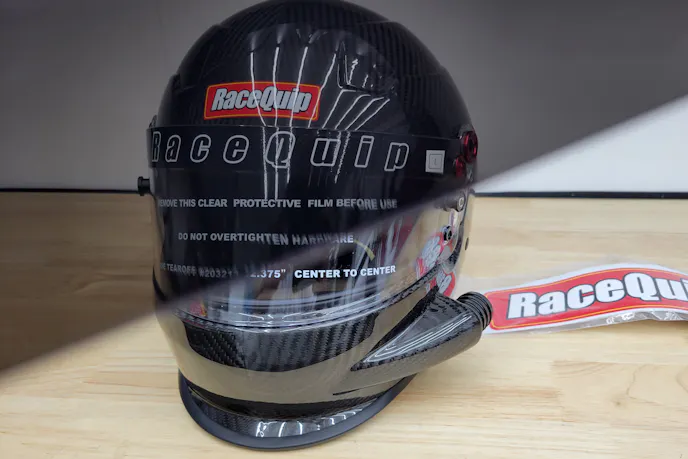
My personal choice is the RaceQuip Pro20 (now superseded by the Pro25, with the new SA25 rating) full-face, carbon helmet, with side air. Let’s talk about that. First, there is the full face design. There’s almost no reason to run an open-faced helmet in the 21st century. A full face helmet not only provides more impact protection, but also some extra time if there’s a fire. Speaking of which, the SA-rated Pro20 has a Nomex-blend interior lining and Nomex chin strap for fire resistance.
Yes, everyone knows the unhealthy affinity I have for carbon fiber, but my choice to go with a carbon fiber helmet has nothing to do with aesthetics. A carbon fiber helmet might not seem like it shaves a lot of weight just sitting static on a scale, but in an impact, ounces can make a real difference. With accidents measured in g-force. For example, a 10g impact (which would be considered fairly minor in motorsports) would be a 10x multiplier of mass. So shaving a pound or two off of your helmet could be an extra 10 to 20 pounds off your neck in a 10g crash, and even more the higher the impact forces go. It also has built-in HANS-device anchors, so no modification of the helmet is needed.
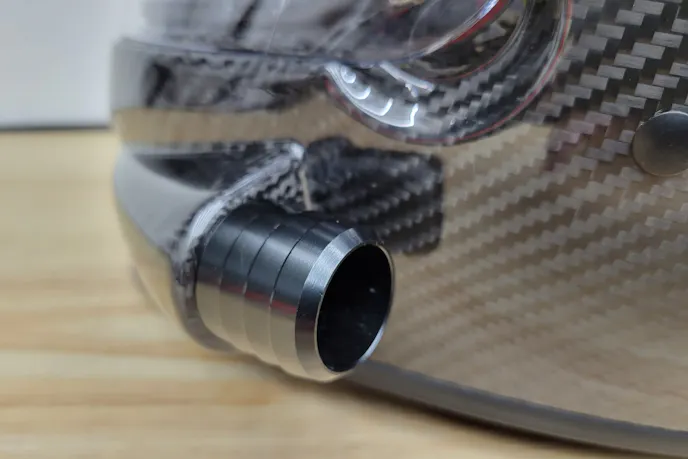
And finally, the side-air vent. This is a luxury, especially if you wear glasses. While usually the realm of endurance racers and off-roading, if you wear glasses, setting up an air system can keep them from fogging up even in the short span of an autocross or 30-minute open track session. This choice might not be for everyone, but with the wide variety of blower systems on the market these days, it’s worth looking into.
Helmet Visor
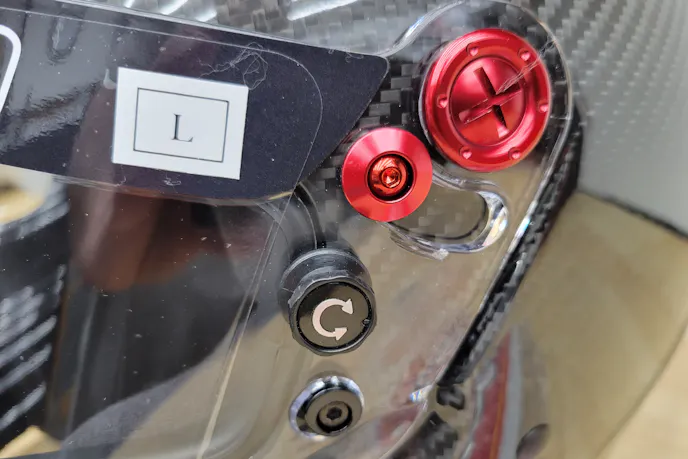
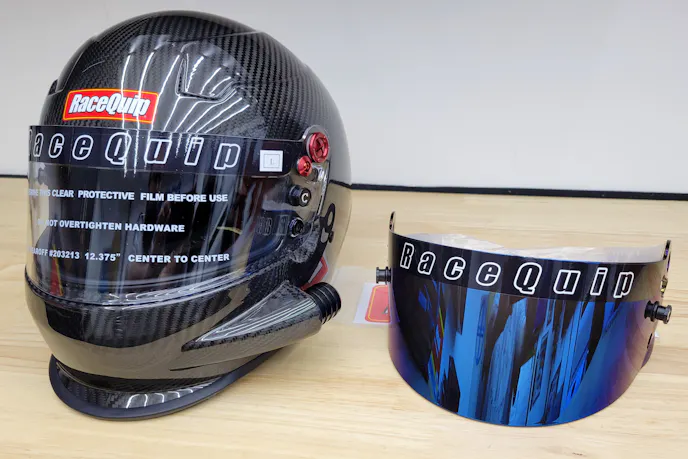
Out of the box, the Pro family of helmets all share a visor design. They come with a distortion-free, anti-fog 3.0mm-thick polycarbonate clear shield as standard. However, there are a variety of shields available as an upgrade. There are various gray-tinted shields that will act as sunglasses in bright weather, which is nice as a prescription glasses wearer, not to have to carry around multiple pairs of glasses.
The gray visors are available in three different “colors” – standard smoke gray, silver mirror, and Blue Iridium. All three are a base gray tint, but the silver and blue visors allow less light through than the plain smoke visor. There is also an amber visor available that some drag racers feel gives them an advantage on the tree.
Head And Neck Restraint
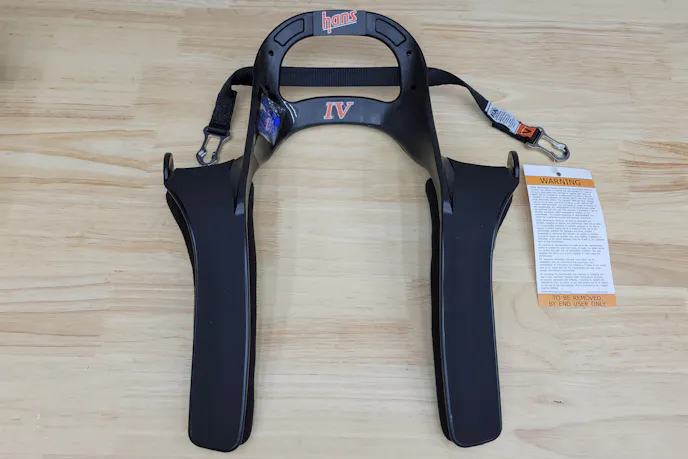
There are a large number of options available for head and neck restraints these days, which is a good thing for racers. For us, the original — the HANS device — is still the best option, especially with the brand new fourth-generation just released. The HANS IV, as it’s called, takes the proven design of the original HANS and has made not only performance upgrades, but also reduced the cost to manufacture.
If you didn’t know, a HANS device works by controlling how your head moves during a crash, so your neck doesn’t take the full force of the impact. Your neck isn’t built to handle the violent forces of a crash, especially when your head snaps forward while your body is held back. A HANS device reduces that danger by limiting how far your head can move and redirecting those forces into your chest and shoulders, which are much better equipped to absorb the impact.
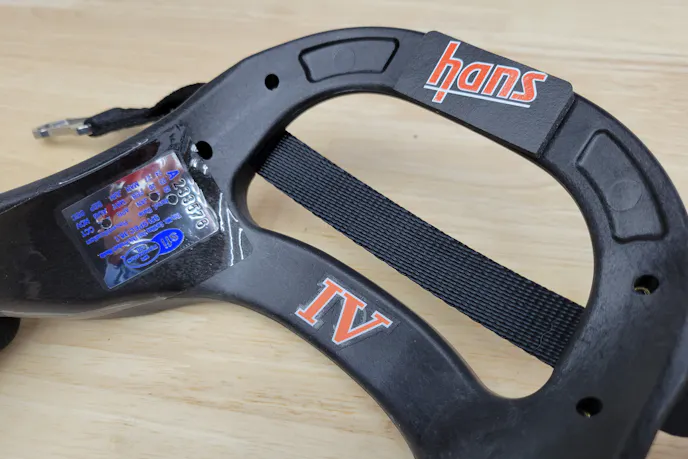
The HANS IV is available in three different sizes and is 10 percent lighter than the previous generation of HANS devices. Additionally, it features custom molded pads to prevent pad slippage under pressure, as well as three different anchor options (standard Post, QuickClick, and M61). The modified collar design is specifically engineered to not touch the wearer’s neck in rear impacts. Coupled with HANS-specific harnesses (which you’ll see more of in a future Honey Badger article), this is one of the most affordable, effective, and comfortable frontal head restraint systems on the market.
Fire Suit — Jacket and Pants or One Piece
The next “big” piece of the puzzle is your fire suit. In drag racing, the minimum rating is dictated by ET, and in some cases, fuel and/or power adder. For other types of racing, the restrictions can be looser or more strict. But the first thing to determine is if you want a one-piece suit or a two-piece suit, with a separate jacket and pants. I prefer a one-piece suit, even though that can be more challenging for someone like me, with a longer torso and shorter legs. But it’s worth the fitment challenge, since I feel like a one-piece suit offers better fire intrusion protection than two separate garments.
Next, you need to determine your protection level requirements. This is where some people get confused, as the rating is not the number of layers of material in your suit. Yes, there are single and multi-layer designs, and typically, more layers equal more protection, but the balance here is weight and bulk versus protection.
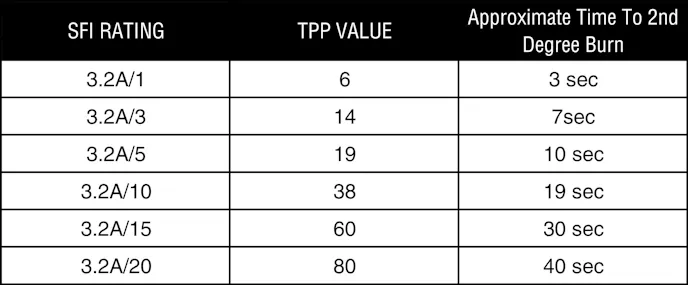
Protection ratings fall under SFI 3.2A and are denoted by a slash and a number (so, SFI 3.2A/3 might be referred to in shorthand as an “SFI three” rating). Each rating has a corresponding Thermal Protection Performance (TPP) number, which corresponds to an approximate time to a second-degree burn. See the chart below for the various ratings levels of protection.
Since I don’t plan on drag racing Project Honey Badger, the only ruleset I will be beholden to is for the series I plan on running. And according to the series most recent rulebook, Honey Badger’s class doesn’t require protective clothing. However, rules or not, I’ve seen enough people catch on fire at the racetrack that I’m going to use my best judgment here.
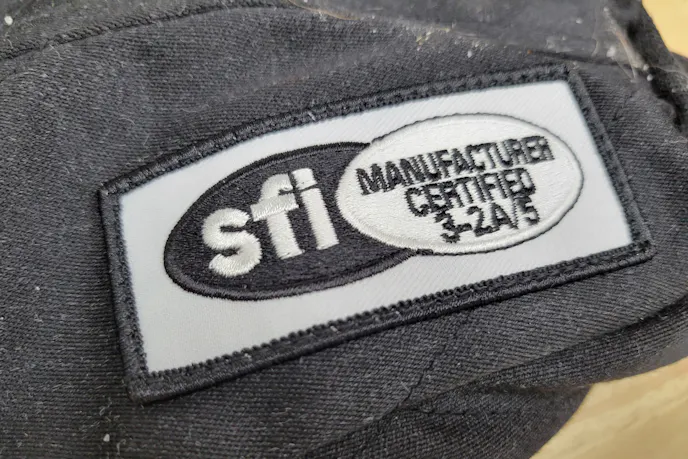
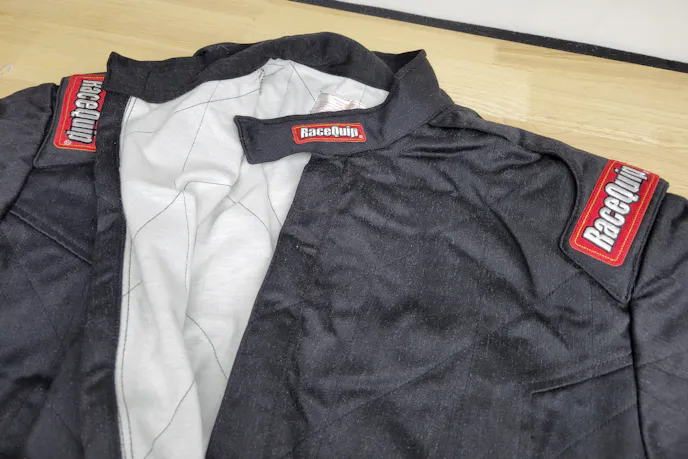
For that reason, and after a lot of consideration, I chose the RaceQuip one-piece multi-layer fire suit. First, the rating. The suit is SFI 3.2A/5 rated, with two Nomex layers. This construction provides ample fire protection in case of an accident, while the design of the suit allows for significant freedom of movement – something that can be challenging in a more affordable multi-layer suit.
Additionally, the boot cuff leg design still provides the protection of an elastic cuff, but the look of a hemmed cuff. That is something that is important to me, having shorter legs. My choices are usually an elastic cuff that causes a bunched-up leg that looks like a kid wearing Spiderman pajamas, or cuffs that drag on the ground. This design is the best of both worlds. Additionally, this suit punches way above its price point in relation to weight and comfort. I have had far more expensive suits that aren’t as soft and flexible as this one. And, it won’t smother me on a hot Phoenix track day.
Protecting Your Hands And Feet
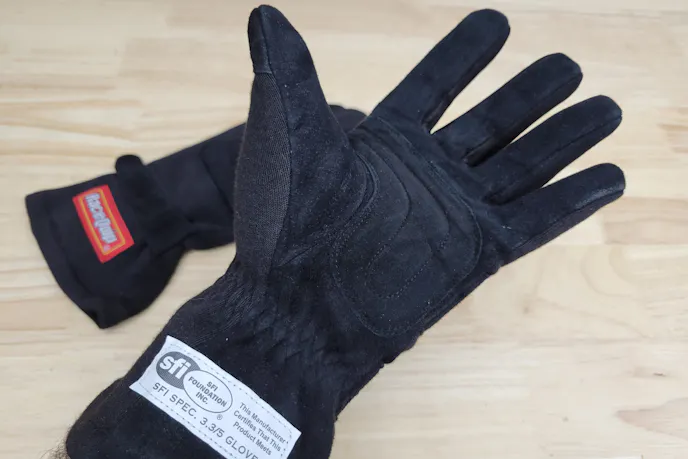
The two things your suit and helmet don’t cover are your hands and feet. For gloves, like suits, there are single and multi-layer options available. Typically, you’ll match your gloves’ SFI rating to your suit for matching protection. One thing to consider with gloves is the design. Longer wrist coverage provides more protection, and more layers protect you better, usually at the cost of dexterity. You’ll want to find the balance of comfort and protection. For me, since all of my cars are stick shifts, I need a little more dexterity, and the RaceQuip 355-series short-gauntlet dual-layer SFI-5 checks all the boxes without breaking the bank.
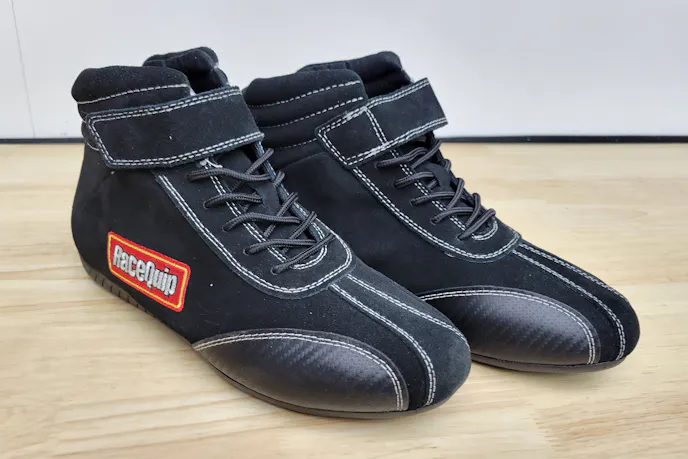
For your feet, things can get a little tricky, especially if you have a wider foot, as I do. Over the course of my years behind the wheel, I’ve driven with everything from Converse hi-tops to drag racing boots. Like gloves, there is a balance between protection and pedal feel and finesse. In a Funny Car, there isn’t much pedal finesse required, which works out because the moon boots required at that level are pretty cumbersome. However, for heel-toe shifting and fine throttle control, something a bit more flexible is needed. Enter the RaceQuip Euro Carbon racing shoe.
Like the suit and gloves, it is also SFI-5 rated, and beyond any other features, it fits my foot. Not listed as a “wide,” the sizing fits exactly the same as the Nikes and Vans in my closet. Beyond that, RaceQuip has worked hard on the design to provide what they call the Achilles Flex opening for increased foot mobility. The molded rubber sole provides pedal feedback, and the arch support and light weight make them comfortable to wear around the pits all day long, without feeling like you need to change shoes at the end of a run session.
Fire Retardant Underwear
One thing that you can use as a tool to add or remove protective layers in different situations is wearing fire-retardant undergarments. An outright requirement in some classes, others allow for mixing and matching. An SFI-1 suit might be allowed with a fire-retardant undershirt and leggings. However, one of the most common “undergarments” you’ll find is the lowly balaclava (or, more simply, head sock). Like gloves, the balaclava is available in single or dual-layer configurations and is designed to provide extra fire protection to your face.
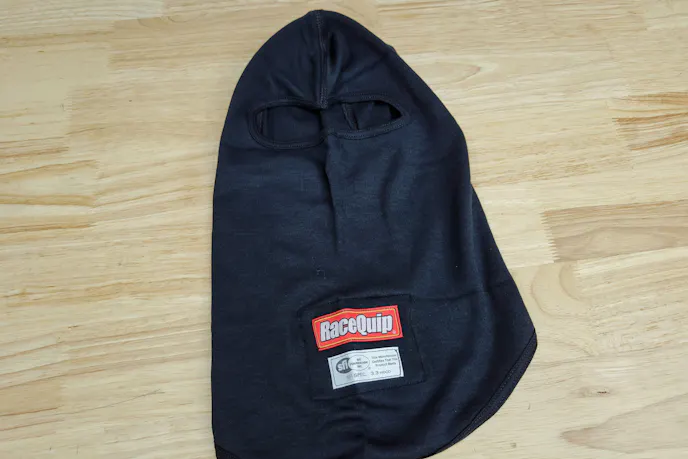
A side benefit, which you’ve likely seen if you’ve used a rental helmet, is that it acts as a barrier between your sweaty head and your helmet’s padding. I’ve replaced a number of head socks for being gross, but I never had to replace the lining of a helmet. As I typically do, I opted for the dual-layer RaceQuip balaclava (P/N 433992RQP), and noticed it is noticeably lighter and easier to breathe through than other dual-layer head socks I’ve had previously.
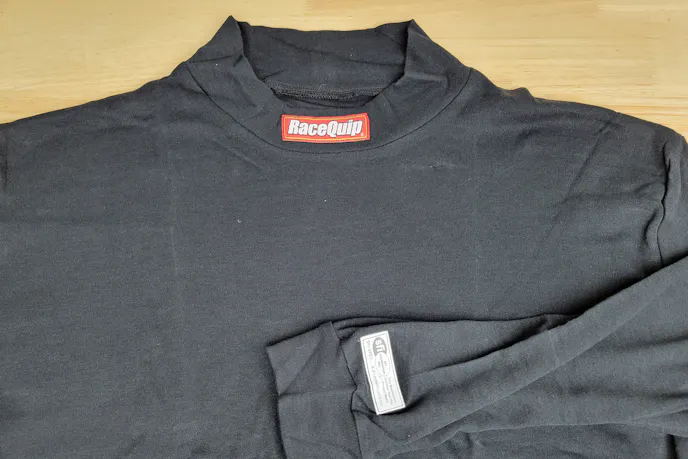
As far as fire-retardant tops and bottoms, I’ve worn them to summer autocross events where the speeds and risk are low enough not to warrant a fire suit. Modern FR underwear is light enough and unobtrusive enough that it is useful all on its own, as well as by adding additional protection to your fire suit. I opted for RaceQuip’s FRC/aramid blend top (P/N 421995RQP) and bottoms (P/N 422995RQP). Also, RaceQuips fire-retardant socks (P/N 411993RQP) are way more sock-like than some other options on the market. I’ve used some that feel like the disposable sock things they used to have in shoe stores when I was a kid.
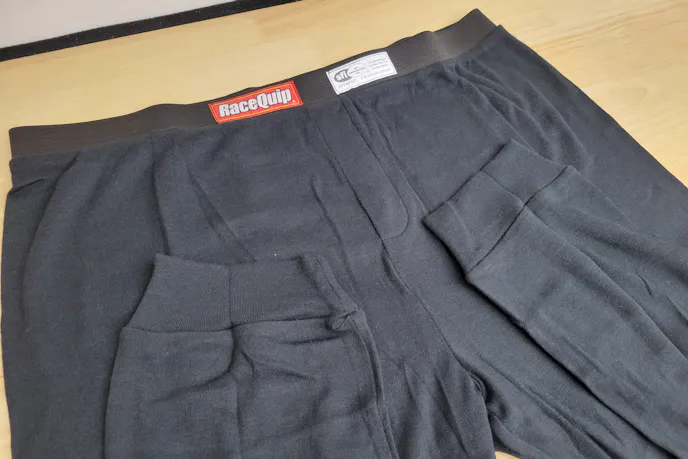
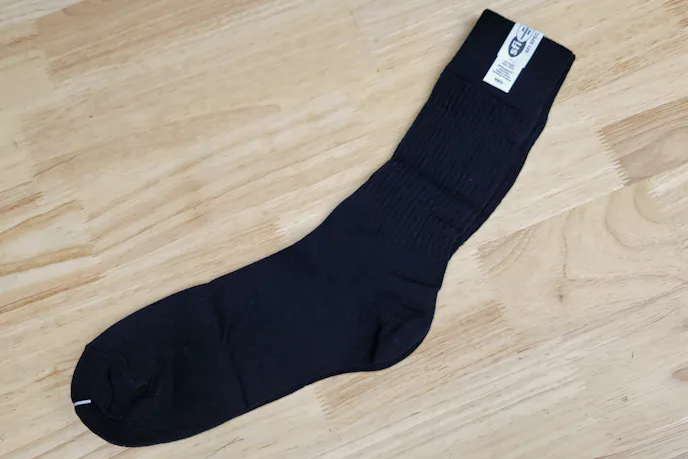
With all my safety gear sorted for at least four years, the only thing to focus on is getting laps on Honey Badger.
You might also like
The Science Of The Port: How Supercharger Porting Makes More Power (Part 1)
Learn how Kong Performance uses supercharger porting to improve airflow, efficiency, and horsepower in supercharged GM LS and LT engines.