

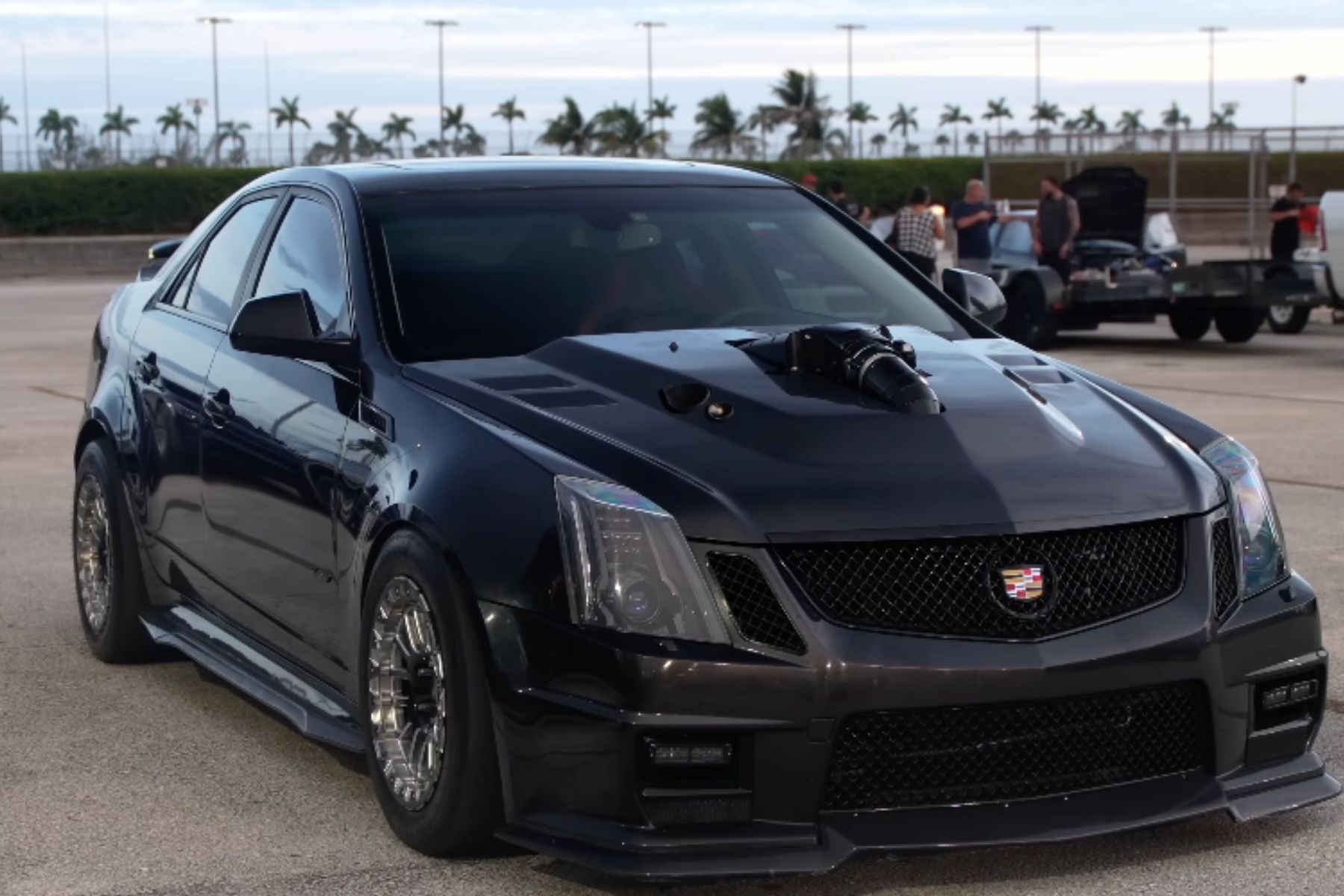
AM Performance in Cutler Bay, Florida, built this AWD Cadillac CTS-V for owner Alex, turning a 2012 model into a 1,400-horsepower street car that still runs air conditioning, power steering, and a full interior. As featured by That Racing Channel, the build started as a way to combine serious power with real-world drivability.
The result is a sedan that can pick up kids from school just as easily as it lays down eighth-mile passes. Alex has built all-wheel-drive performance cars before, but this CTS-V represents the most refined version of that idea yet. AM Performance, also known as AMP, has spent seven years building GM and BMW performance vehicles, and this conversion stands as one of the shop’s most ambitious projects to date.
Building The AWD Cadillac CTS-V From The Ground Up
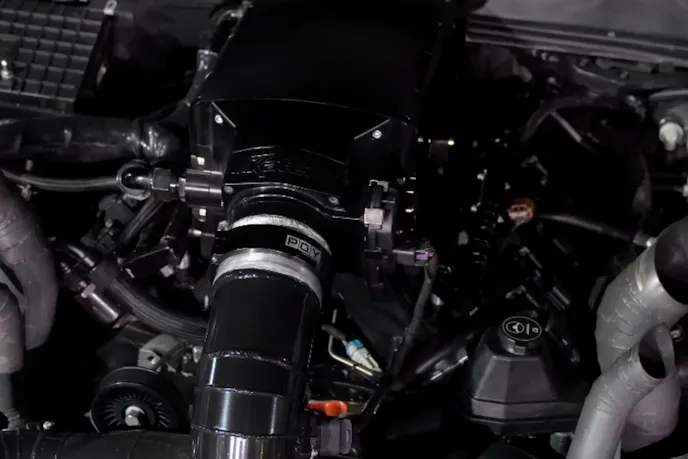
Under the hood, the AWD Cadillac CTS-V runs a 427-cubic-inch twin-turbo LS V8 topped with Frankenstein cylinder heads. A pair of oil-less CompTurbo 6871 turbochargers and a billet-lid intercooler feed the boost, while a Holley engine management system keeps everything in check. Getting the engine and transmission tunes to work together took dozens of dyno revisions, since the two computers have to communicate accurately for the setup to handle the added boost safely.
Behind the engine sits a built 6L90 transmission fitted with billet shafts and planetary gears from Circle D. The rear end is a Frankenstein setup of its own, combining a Cadillac SRX housing with the factory CTS-V limited-slip differential and Trailblazer SS front-end components.
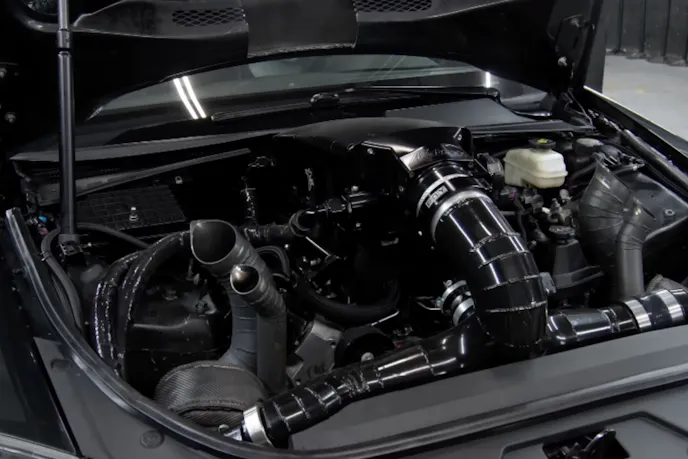
Custom axles and a modified subframe were needed to make the parts work together, since none of it was designed to bolt in as a kit, and Alex says most of the fabrication came down to trial and error.
A Street Car With A Full Interior And A Two-Wheel-Drive Option
Despite the power, the AWD Cadillac CTS-V is not locked into all-wheel drive full time. A driver-selectable lever inside the cabin switches the car between two-wheel drive and a true 50/50 all-wheel-drive split, giving Alex control over how the power gets to the ground.
On 17-inch beadlock wheels, the car has been tested in the eighth mile at Homestead-Miami Speedway. Alex can also swap in a set of factory wheels, which lets the CTS-V blend in and drive like a stock sedan whenever he wants it to.
What makes this CTS-V so compelling isn’t simply the 1,400-horsepower number. We’ve seen plenty of cars make ridiculous power. It’s the amount of engineering required to send that power through all four tires without stripping away everything that made the second-generation CTS-V such a great street car in the first place. Better yet, the selectable drivetrain means Alex can enjoy the personality of a traditional rear-wheel-drive V when he wants it, then pull a lever and send power to all four corners when 1,400 horsepower needs a little help finding pavement.
In an era when four-digit horsepower has almost become commonplace, builds like this remind us that making power is only part of the equation. Figuring out how to reliably use it is where things get really interesting.
You might also like
JEGS Makes Shopping For Your Next LS Or LT Build Easier
JEGS launches a redesigned website with improved search and fitment tools to make finding parts for LS and LT builds easier.