

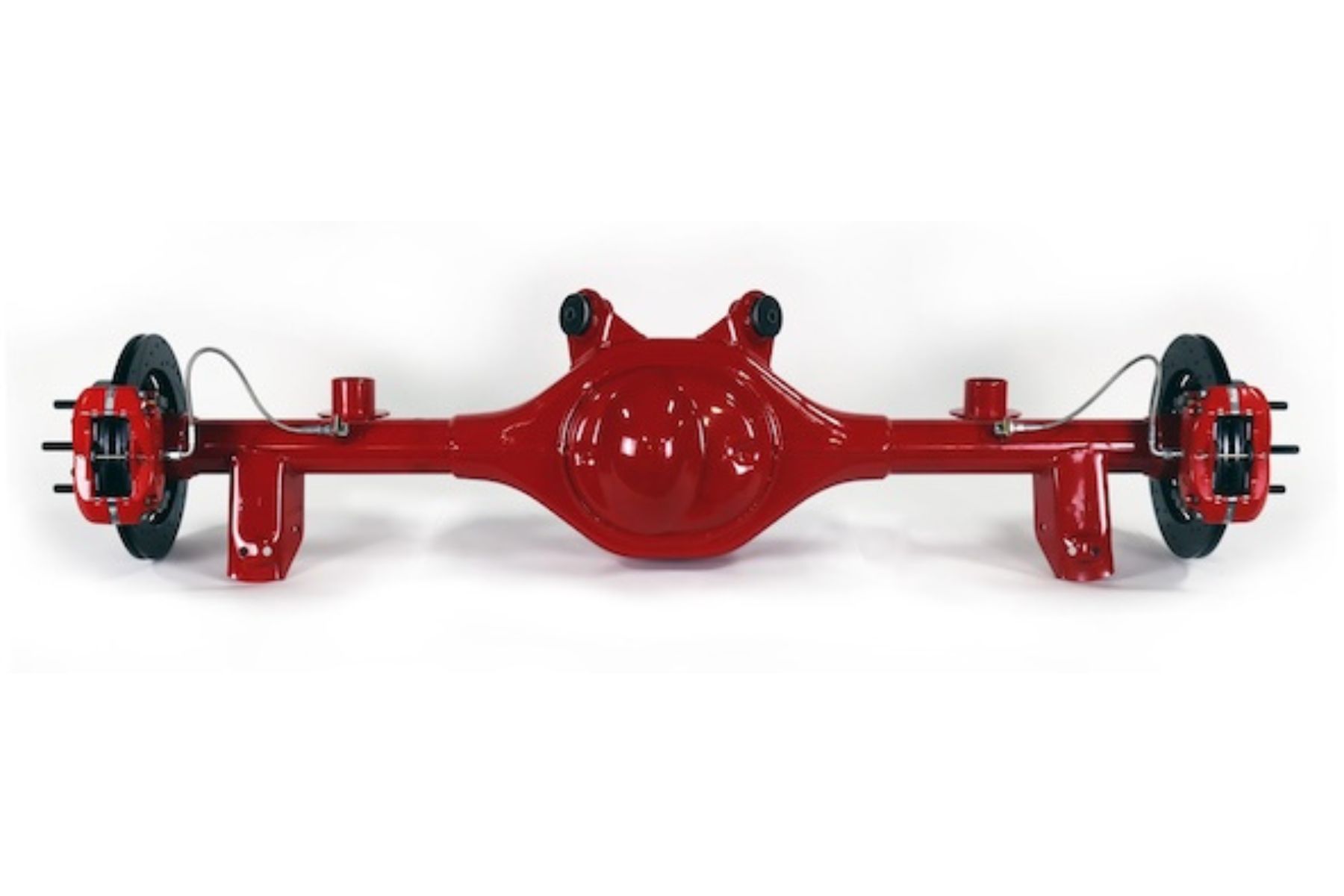
We talk numbers constantly in the car world. Horsepower, torque, quarter-mile times. But one number gets thrown around more than most without everyone actually knowing what it means: gear ratio. You have probably heard someone say they are “running 373s” or that they “just swapped to 410s,” but what is actually happening inside that rearend to make those numbers real? Moser Engineering broke the process down into simple, foolproof math anyone can follow at home.
The Ring-And-Pinion Formula
Calculating your gear ratio isn’t that complicated. It comes down to a simple division problem you can solve with nothing more than a paint marker and a finger to count teeth.
Every rear differential relies on two main gears working together. The ring gear is the large, plate-sized gear attached to the carrier, while the pinion gear is the smaller, cone-shaped gear attached to the yoke and driveshaft. Moser breaks the math down to one simple equation: your gear ratio is the number of teeth on the ring gear divided by the number of teeth on the pinion gear.
The formula looks like this: ring gear teeth divided by pinion gear teeth equals gear ratio.
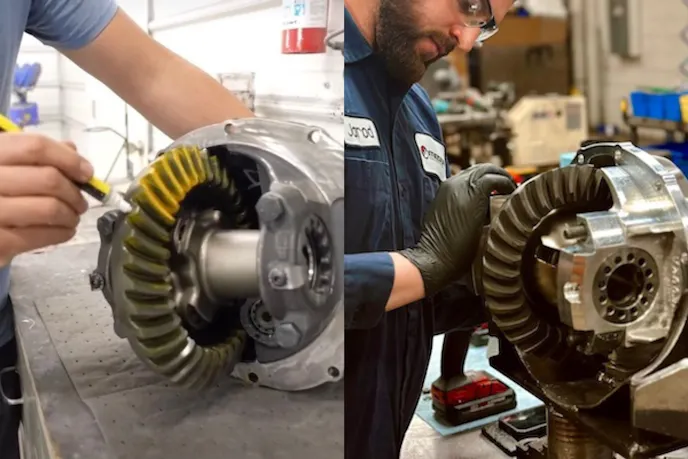
Counting Teeth To Calculate Gear Ratio
If you have your third member on a bench or the cover popped off your diff, you do not need to guess your ratio. Mark one tooth on the ring gear as a starting point, then rotate the gear and count every tooth until you land back on your mark. Do the same with the pinion gear, which is a little harder to see since it sits tucked inside the housing.
For example, a ring gear with 35 teeth divided by a pinion gear with 9 teeth works out to 3.89. Round that up and you have a 3.89:1 gear ratio, meaning the driveshaft has to spin almost four full rotations to turn the rear wheels once.
What Your Gear Ratio Means For Performance
Higher numerical ratios such as 3.73, 4.10, and 4.56 are considered shorter gears. They deliver more mechanical leverage and stronger bottom-end acceleration, which is why drag racers often favor them for hard launches. The trade-off is reduced top-end speed and higher engine RPM during highway cruising.

Lower numerical ratios such as 2.73, 3.08, and 3.23 are considered taller gears. They keep RPM lower for better highway manners and fuel economy, though the car will feel more sluggish off the line.
Building A Rearend That Can Handle The Power
Knowing your ratio is only step one, and Moser Engineering wants builders to have a rearend that can handle step two. Moser offers complete MUSCLE PAK rearend assemblies that bolt in using OEM mounting points, so no fabrication is required. Every housing, axle, and gear set the company builds is 100% new, made in the USA, and available with custom spline counts and finishes. Moser also does not use remanufactured parts, and with more than 40 years of experience behind every build, the company backs its rearends with some of the fastest turnaround times in the industry.
You might also like
Flowmaster American Thunder Exhaust Wakes Up Our 5.3L Silverado
We install a Flowmaster American Thunder cat-back on our 5.3L Silverado for classic V8 sound without annoying highway drone.