



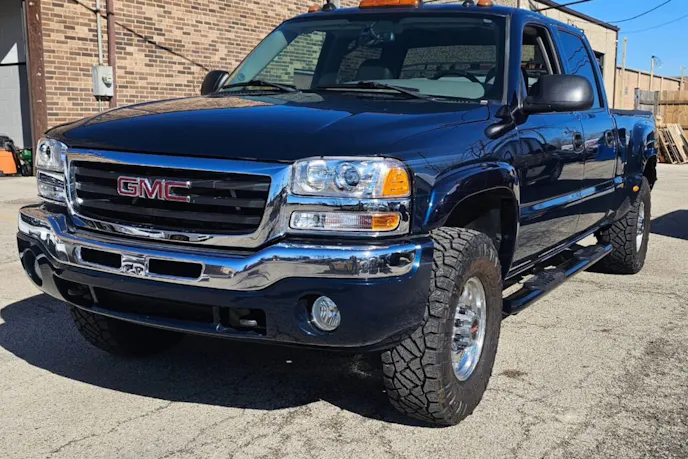
The 2005 GMC Sierra Quadrasteer is one of the rarest GMT800 trucks GM ever built. It steers all four wheels, giving it maneuverability most full-size trucks cannot match. GM fitted the Quadrasteer with a wider composite bed to clear the rear steering hardware. That bed also resists rust. The truck came as a 1500 HD. It carries the beefier suspension and tow package from the heavier-duty lineup. Heated leather seats, a sunroof, Bose audio, and dual-zone climate control came standard. Steering wheel controls, fog lights, and eight-lug aluminum wheels rounded out the options list. The one problem? It was slow. LegitStreetCars decided to fix that with a Hellcat-boosted LS build, transplanting a supercharger from a 2024 Ram TRX onto the truck’s 6.0-liter LS V8.
Making Room For The Blower
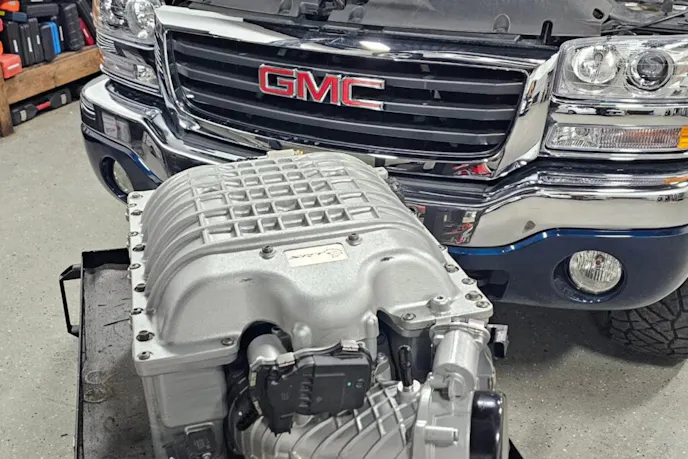
The 6.0-liter LS V8 and 4L80 transmission gave the build a strong starting point. LegitStreetCars sourced a used Hellcat supercharger from a 2024 TRX with roughly 8,000 miles on it. An ICT Billet adapter kit mated the blower to the LS. Fitting it in took more than just the adapter plates. The cowl sat too low by about a half inch. The builder cut the sheet metal to give the supercharger clearance and added a flexible, waterproof membrane that sealed the opening to keep water out.
Before the blower was bolted down for good, the engine needed some attention. New knock sensors and a fresh wiring harness went in. The valley plate received a new gasket and seals. A replacement cam sensor and oil pressure switch rounded out the refresh. A steam port kit was also added, which pushes coolant more evenly to the rear cylinders to prevent hot spots that can cause detonation under boost.
Balancer, Belts, Fuel, And The Tune
The Hellcat blower needs a different belt arrangement than a stock LS runs. That meant swapping in an LSA balancer from a CTS-V or ZL1 Camaro. The LSA balancer carries provisions for three belts, including an eight-rib supercharger belt. The builder also double-keyed the crankshaft with a dedicated keyway kit to keep the balancer locked. An LS3 water pump opened up space for the new accessory bracket layout. The new bracket also relocated the alternator and power steering pump.
An LS3 throttle body replaced the Hellcat unit on the blower’s inlet. The Sierra’s throttle control wires have opposite polarity compared to a Hellcat. An Xlink logic adapter resolved that difference and made communication between the two systems. Finally, an LSA three-bar MAP sensor dropped into the stock Hellcat location after the builder slightly enlarged the mounting hole.
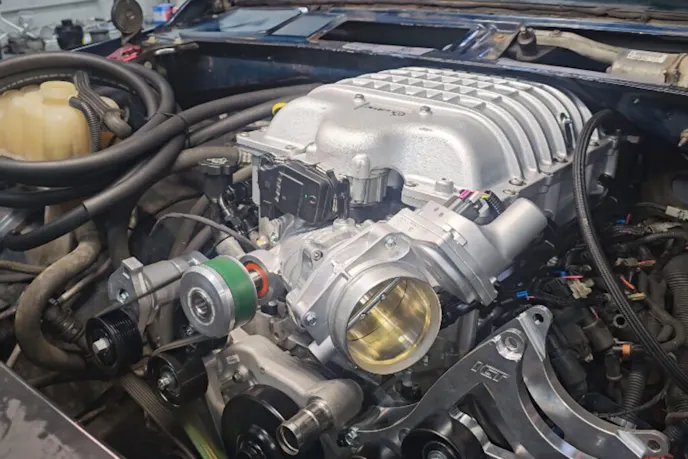
The TRX injectors went through flow testing before installation. Three passed cleanly while a fourth showed an inconsistent spray pattern at first. It eventually tested fine on a second pass. Aftermarket fuel rails replaced the factory Hellcat returnless setup, and the guys have decided to add a full return-style fuel system in a future video.
Jeremy at Satara handled remote tuning through HP Tuners. He sent a base tune built around the injector specs and the mods. On the first real start attempt, the Hellcat boosted LS fired and produced exactly the awesome supercharger howl you expect from that size of a blower. The next phase in the build will cover the intercooler system, a revised fuel system, electric fans, and a new alternator.
You might also like
Cleetus Built The Bel Air Limo—But This 1973 Checker Aerobus Could Be Even Cooler With LS Power
Imagine swinging into a meet in a matte-black Checker limo that idles with the unmistakable rumble of an LS camshaft.