

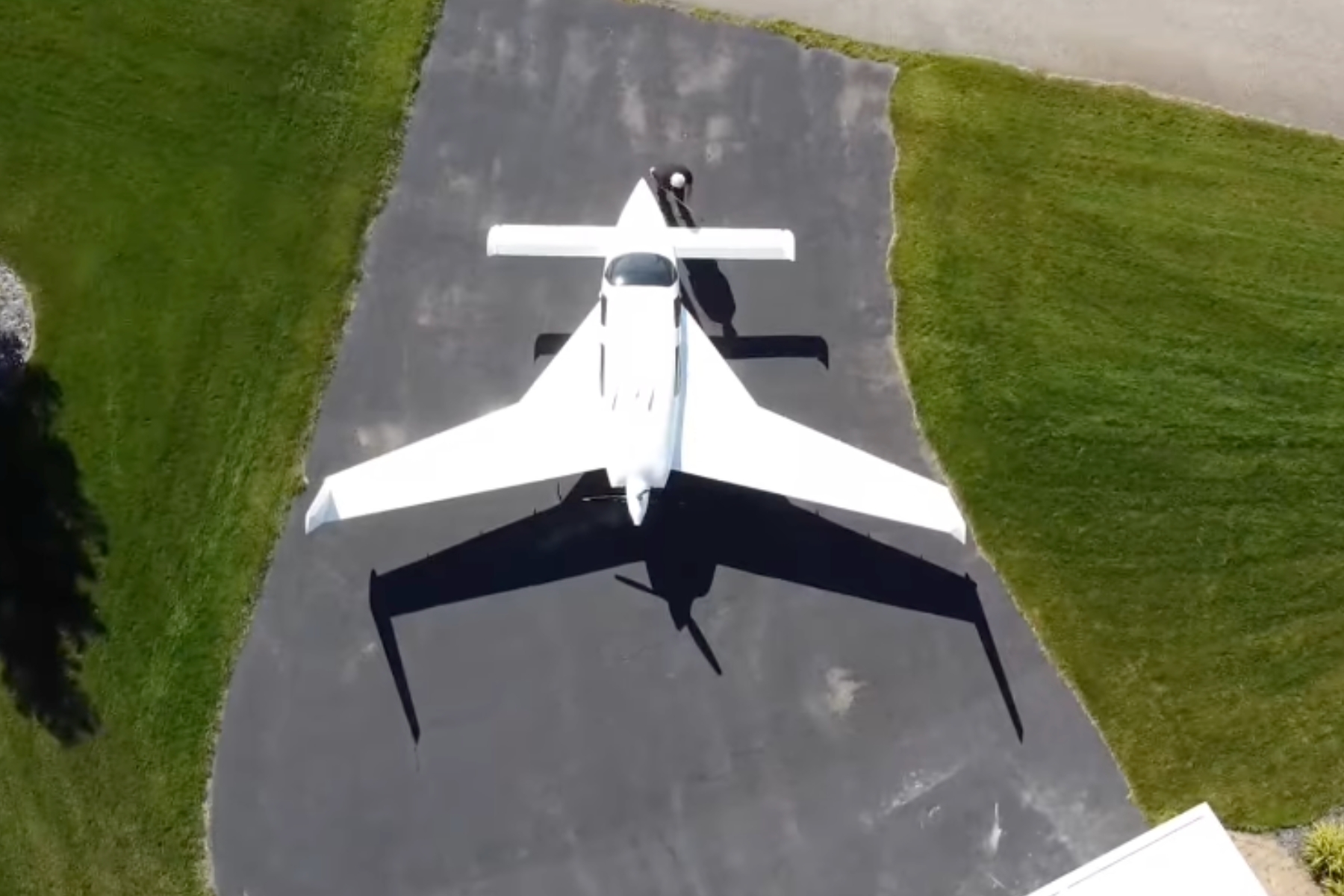
The idea of an LS-swapped airplane might sound like something born from internet bench racing, but it is very real, and in some cases, it is already flying. Enthusiasts have put GM’s LS engines into just about everything with wheels, from classic European sports cars to vintage compacts. Taking that same small-block V8 into the sky is simply the next frontier for builders who enjoy pushing boundaries.
One of the most talked-about examples is pilot Len Baxter’s Velocity XL kit plane, which he powered with a 6.2-liter LS3 more commonly found under the hood of a Corvette. The LS platform makes sense for experimental aviation projects because of its compact size, strong power output, and widespread availability. A stock LS3 produces around 430 horsepower. GM offers multiple crate variations that allow builders to tailor the engine’s characteristics to their specific goals. With millions produced, replacement parts and aftermarket support are easy to find, which appeals to hands-on owners who prefer accessible maintenance solutions.

Of course, building an LS-swapped airplane requires more than bolting an engine to an airframe. Aircraft propellers cannot spin anywhere near the 6,000 RPM that an LS can achieve in automotive trim, so a propeller reduction unit is essential. This gear reduction system lowers prop speed to a safe range, typically around 2,500 to 2,700 RPM, while engine speed is limited to roughly 4,500 RPM for sustained operation. Cooling and airflow must also be carefully engineered, especially in pusher-style aircraft like the Velocity XL, where the propeller sits behind the cabin.
In Baxter’s setup, the LS3 was configured with dual electronic control units and the ability to operate in split banks, effectively running as two separate V4s if needed. That redundancy adds a layer of safety uncommon in automotive applications. An LS-swapped airplane is not a casual weekend project, but when engineered correctly, it blends proven small-block performance with experimental aviation in a way that sounds as bold as it looks in flight.

You might also like
Peitz Performance Tunes Builds The World's Most Powerful C8 Z06
Peitz Performance has officially built the world's most powerful C8 Z06 with its Bravo Plus Twin Turbo system.