

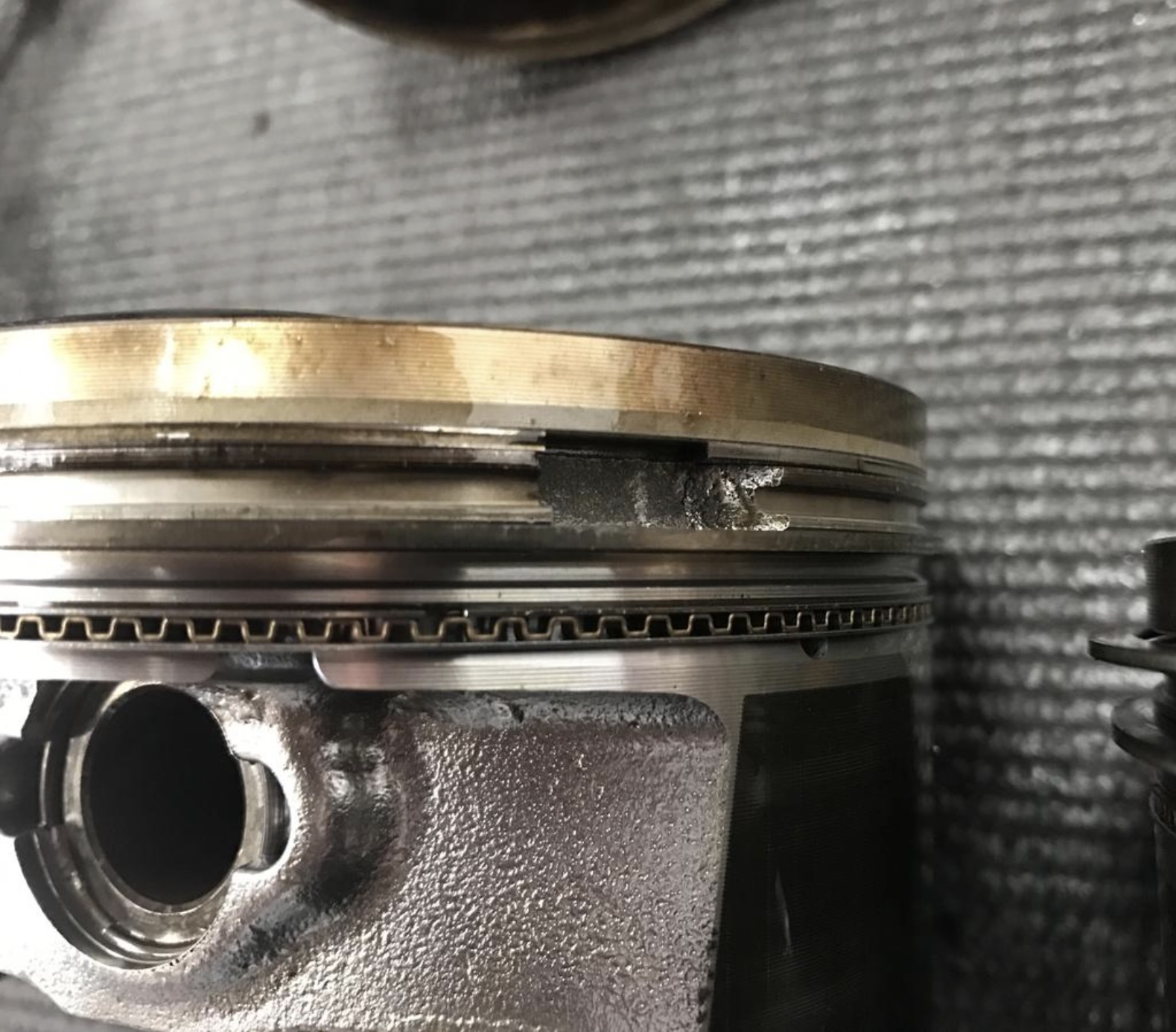
Gasoline Direct Injection (GDI) technology represents one of the most significant advances in internal combustion engine design of the past two decades. By injecting fuel at extremely high pressure directly into the combustion chamber — rather than upstream into the intake port — GDI engines deliver improved fuel atomization, precise fuel metering, and a charge-cooling effect that allows engineers to run higher compression ratios without the penalty of detonation under normal operating conditions. The result is an engine that wrings more power and efficiency from every drop of fuel.
However, this same set of physical characteristics that makes GDI so attractive also creates a unique and potentially destructive phenomenon known as Low-Speed Pre-Ignition (LSPI). Understanding LSPI requires looking at several interacting factors: combustion chamber dynamics, lubricating oil behavior, fuel dilution, and — critically — the condition of the cylinder wall surface finish. These factors do not operate in isolation; they form a chain of events that, when conditions align unfavorably, can produce a catastrophic pressure spike capable of destroying a piston, snapping a connecting rod, or cracking a cylinder block.
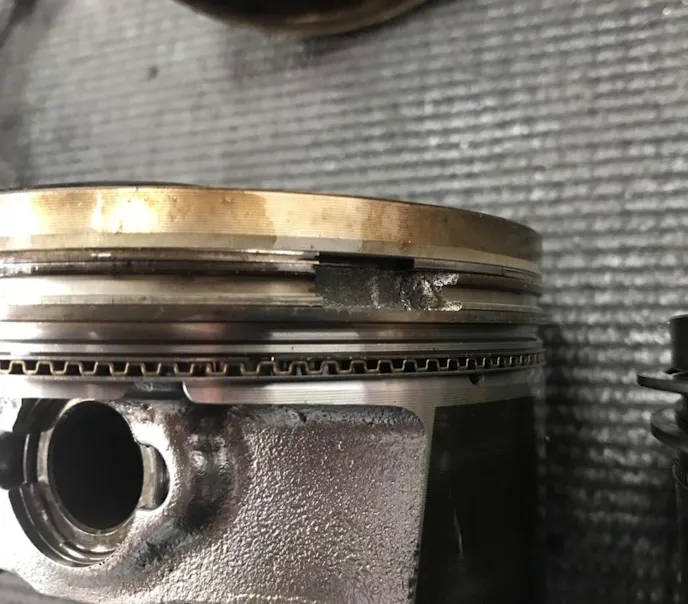
Nowhere is this convergence more relevant today than in General Motors’ LT engine family. The LT1 and LT4 performance variant small-block V8s — along with the LT-based truck engines — are increasingly finding their way into high-mileage daily drivers, track-day builds, and complete engine rebuilds. In each of these scenarios, the cylinder wall finish is a variable that demands serious attention.
How GDI Changes The Game
Traditional port-fuel-injected (PFI) engines spray gasoline onto the back of the intake valve and into the intake port. This means the intake charge arrives in the cylinder as a relatively well-mixed air-fuel vapor, and the liquid fuel that does collect on port walls and valve stems helps keep those surfaces clean. In a GDI engine, the injector is mounted directly in the combustion chamber, firing fuel at pressures ranging from roughly 550 psi at idle to as high as 2,900 psi at wide-open throttle in modern GM LT applications.
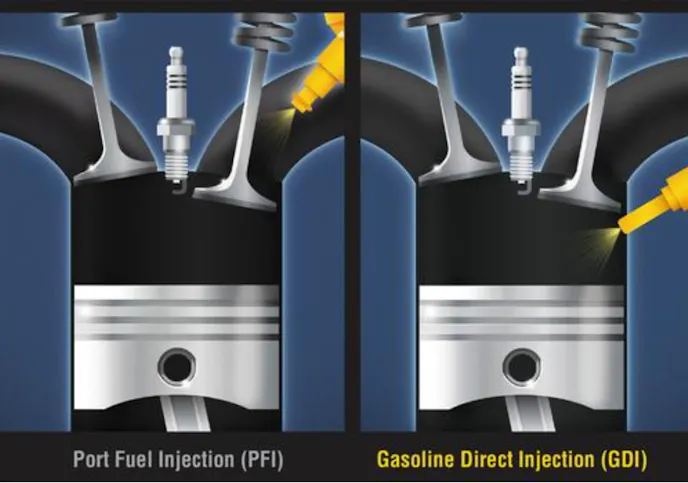
The direct injection strategy enables a higher effective compression ratio — the LT1 in the C7 Corvette runs an 11.5:1 static compression ratio, and the supercharged LT4 pushes the mechanical limit further still at 10.5:1 before the roots-type supercharger adds boost. These are not modest numbers, and they create an environment where the margin between controlled combustion and destructive pre-ignition is narrow, especially at low engine speeds and high loads.
The charge-cooling benefit of direct injection is real: when liquid fuel is injected directly into a hot combustion chamber, its evaporation absorbs heat, lowering the mixture temperature and suppressing knock. But this same process also means that cylinder walls and pistons are regularly wetted with raw fuel, which can thin the oil film on the cylinder wall — a phenomenon called fuel dilution — and contribute to oil degradation over time. That degraded oil plays a central role in triggering LSPI.
What Is Low-Speed Pre-Ignition?
Low Speed Pre-Ignition is defined as an autoignition event that occurs before the spark plug fires, typically at low engine speeds (below approximately 3,500 RPM) and high loads — exactly the conditions that arise during aggressive street driving, towing, and trailer work. Unlike traditional knock (detonation), which is an end-gas autoignition event that occurs after the spark plug fires and can often be managed by the knock-retard system, LSPI originates before the spark event. The ECU’s knock control system has no time to intervene.
The consequences are severe. When pre-ignition occurs, the rising piston encounters a pressure front that is already building from an off-schedule combustion event. The resulting pressure spike can reach two to three times the normal peak cylinder pressure. Ring lands fracture, pistons crack or melt, and connecting rods can be driven through block walls. In turbocharged GDI applications — such as the GM 2.0L Ecotec LTG four-cylinder — LSPI events have been documented destroying engines in a single cylinder event. Even in the naturally aspirated LT V8 family, the combination of high compression and elevated low-speed torque creates conditions where LSPI is a real risk, particularly as engines age.
Oil, PCV Systems, And The LSPI Trigger
Research by major automakers and lubricant suppliers has converged on a primary mechanism for LSPI ignition: the intrusion of oil droplets or oil-fuel mixture particles into the combustion chamber, where they act as ignition sources ahead of the spark event. These particles originate from the Positive Crankcase Ventilation (PCV) system.
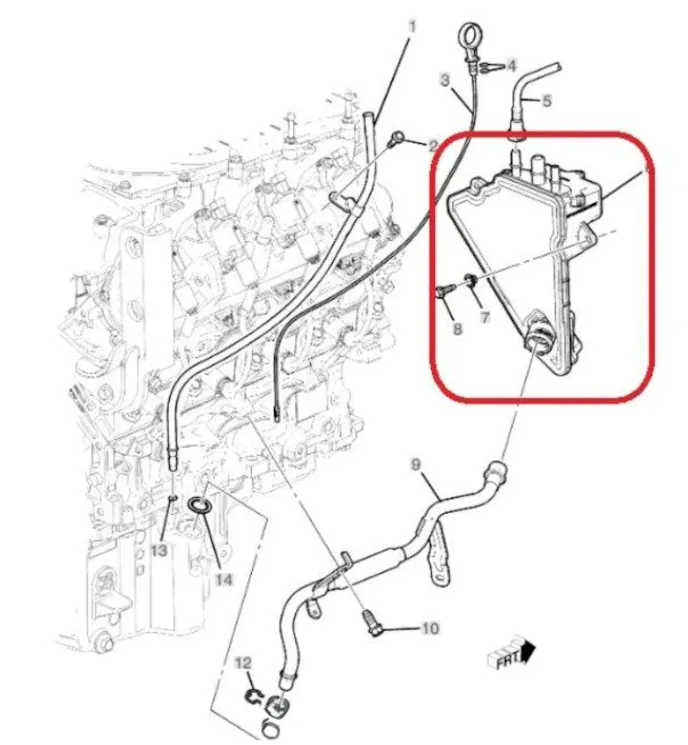
In a healthy engine, the PCV system recirculates blowby gases from the crankcase back into the intake manifold, where they are burned in the normal combustion cycle. This is a necessary emissions and pressure-management function. The problem arises when the oil that is entrained as fine mist in those blowby gases — or oil vapor that has passed through the PCV valve — makes its way into the intake charge. In a port-injected engine, oil droplets entering the intake port tend to be scrubbed by the fuel spray and absorbed before reaching the combustion chamber. In a GDI engine, there is no fuel spray in the intake port to act as a barrier. Oil mist and oil-fuel droplets travel directly from the intake manifold into the combustion chamber, where conditions during compression are sufficient to ignite them before the spark fires.
This is precisely why GM engineered a dedicated Oil Separator on the supercharged LT4 engine, which is a perfect example of an engine that can reach high load and low RPM. The environment that LSPI likes to thrive in. The OEM separator strips excess oil from the blowby stream and drains it back to the pan, keeping it away from the engine’s air inlet. It is an elegant solution to a physics problem that port-injection engines never had to solve.
The GDI combustion chamber is, by design, a high-temperature, high-pressure environment at low speeds and high loads. An oil droplet with an autoignition temperature below that of the compressed charge becomes a miniature pilot flame. The result is LSPI.
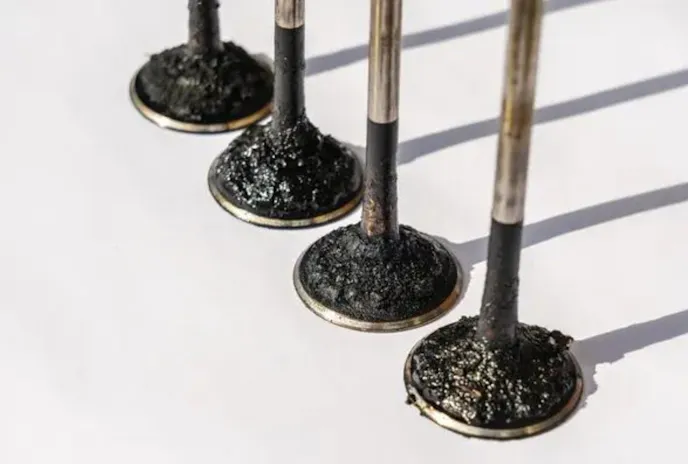
The Overlooked Variable: Cylinder Wall Finish
An area often overlooked in the LSPI equation is the cylinder wall itself. The cylinder wall finish — specifically the plateau hone pattern left by the final machining process — is one of the most consequential and least-discussed variables in this unwanted phenomenon. Its influence operates through two primary mechanisms: oil retention and ring seal.
A properly finished cylinder wall presents a carefully engineered surface to the piston rings: a series of plateau areas separated by cross-hatch valleys that hold a microscopic reservoir of oil. The valleys — measured in microinches or micrometers of depth — feed the plateau areas with lubricant as the piston reciprocates, maintaining an oil film that both lubricates the rings and seals combustion gases above the top ring.
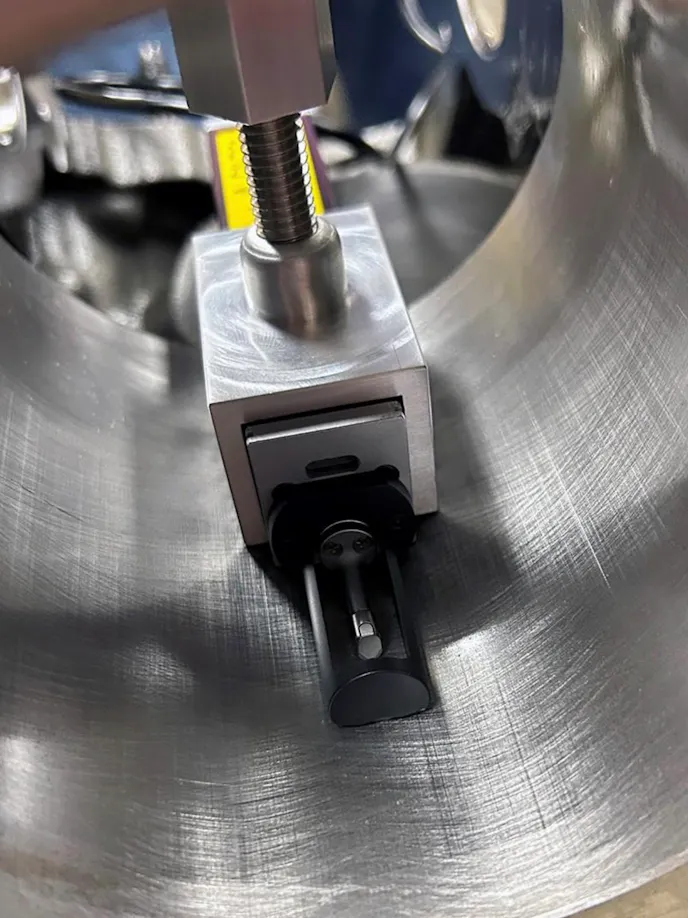
When that finish is incorrect — too rough, too smooth, or with an improper cross-hatch angle — the consequences include poor ring seating, excessive oil consumption, inadequate sealing, and, critically, the pumping of excess oil past the rings and into the combustion chamber. Oil that reaches the combustion chamber top-lands and ring grooves can carbonize, form deposits, and if it migrates to the incoming air-fuel charge, it can trigger LSPI. A rough finish with excessive valley depth also retains far more oil than is needed, increasing the amount available to migrate upward past the rings.
For builders working on new LT engine assemblies — whether a fresh LT1 block for a track build, a replacement LT truck engine, or a stroker project based on an LT platform — the cylinder honing specification is not a step to be rushed or approximated. The GM LT engine family uses relatively thin steel piston rings and relies on a specific surface finish for proper break-in and long-term ring seal. Cylinder walls should be finished by a competent shop with the ability to measure the wall finish. The use of deck plates is also mandatory to ensure the wall is finished straight and true. A “drop-in” piston installation using a ball hone on a drill will simply not provide the wall finish the rings need for proper control.
Oil Chemistry: Noack Volatility And LSPI Risk
The interaction between engine oil chemistry and LSPI risk is now well-established in the engineering community, and it has driven significant changes in how lubricant manufacturers formulate oils for GDI applications. Central to this discussion is the Noack Volatility Test (ASTM D5800), which measures the percentage of an oil sample’s mass that evaporates when subjected to a temperature of 250°C (482°F) for one hour.
The Noack number expresses oil evaporative loss as a weight percentage. An oil with a Noack value of 10% loses 10% of its mass as vapor under those test conditions. The lower the Noack number, the more thermally stable the oil and the less prone it is to volatilizing into vapor under high-temperature operating conditions.
Why does this matter? Because oil vapor is precisely the form of oil most easily entrained in the PCV blowby stream and carried into the combustion chamber as an aerosol. An oil with a high Noack value — meaning significant light-fraction volatility — will contribute more oil vapor to the crankcase atmosphere, which is then recirculated through the PCV system. That vapor condenses into fine droplets in the intake manifold and arrives in the combustion chamber as the ignition source for LSPI events.
The current API SP / ILSAC GF-6 specification (introduced in 2020) sets a maximum Noack evaporative loss of 15% for 0W-20, 5W-20, and 0W-30 viscosity grades — the grades most commonly specified for LT engines. However, premium oil formulations targeting GDI engines routinely achieve Noack values below 10%, and some full-synthetic products designed specifically for LSPI suppression reach values in the 6–8% range.
From a practical standpoint, this means that the grade of oil in the crankcase is not the only variable that matters — the quality and formulation of that oil matters enormously. A 0W-20 conventional oil meeting minimum API SP requirements may have a Noack value near the 15% ceiling. A 0W-20 full-synthetic formulated with a high-quality base stock and a modern additive package might achieve 7–8%, cutting oil vapor contribution to the PCV system by roughly half.
Additive Chemistry And LSPI: Calcium And Magnesium Detergents
Early LSPI research identified high levels of calcium-based detergents as a potential LSPI promoter. Calcium detergents — widely used in engine oils for their ability to neutralize acids and keep engine surfaces clean — can, under specific conditions, create calcium-containing deposits in the combustion chamber that act as pre-ignition sites. This led to a significant reformulation effort by lubricant manufacturers, shifting formulations toward magnesium-based detergents and reducing total calcium content. Modern API SP / ILSAC GF-6 oils are formulated with this balance in mind.
Soot Handling In GDI Engines
GDI engines generate more soot (combustion particulate matter) than their port-injected counterparts. Because fuel is injected directly into the combustion chamber, imperfect mixing can produce local rich zones where incomplete combustion generates carbon particulates. Some of this soot migrates past the rings into the crankcase, contaminating the engine oil.
In a well-formulated GDI oil, dispersants keep soot particles suspended in the oil as fine, discrete particles that can be captured by the filter or held in suspension until the next oil change. In a poorly formulated or degraded oil, soot agglomerates into larger particles that accelerate wear and can contribute to deposit formation.
The interaction between soot management and the Noack relationship is important: an oil that is good at holding soot in suspension will tend to be denser, with a higher molecular weight base stock that resists volatilizing. A low-Noack oil that also has strong dispersant chemistry kills two birds with one stone: it keeps soot in suspension and away from the PCV stream while simultaneously minimizing oil vapor reaching the intake.
Phosphorus And Friction Modifiers
Phosphorus-containing additives — specifically ZDDP (zinc) — have long been the cornerstone of anti-wear protection in engine oils. However, phosphorus is a catalyst poison that degrades catalytic converters, which is why API SP specifications cap phosphorus content in passenger car motor oils.
For high-performance LT builds, the more relevant concern for LSPI is molybdenum-based friction modifiers, which have been shown in some studies to reduce LSPI frequency by lowering the temperature at which oil droplets ignite.
Putting It All Together
Low Speed Pre-Ignition in GDI engines is not a fringe concern or a manufacturer defect — it is an inherent consequence of the physical architecture that makes GDI engines so efficient and powerful. The cylinder wall finish is the keystone that holds the LSPI prevention arch together. A properly finished bore maintains ring seal, controls oil consumption, and limits the quantity of oil vapor and mist that reaches the combustion chamber through the PCV system. A poorly finished bore — whether from inadequate machining on a fresh build or from wear on a high-mileage engine — allows excess oil into the crankcase atmosphere, elevating the Noack-relevant volatility of oil in the intake charge and increasing LSPI probability at exactly the worst time.
For engine builders, the message is straightforward: take the wall finish seriously. Specify it numerically, verify it with instrumentation, and choose the right hone process for a GDI application. For owners, the message is equally clear: use the right oil, change it at appropriate intervals for your actual driving conditions, and monitor your engine’s oil consumption as a leading indicator of cylinder health. More frequent oil changes and using oils that meet the needs of direct injection engines is a safe investment in warding off LSPI. As the LT engine family continues to age into higher-mileage service, the interaction between cylinder wall condition, oil chemistry, and LSPI risk will only become more clinically relevant. The good news is that both oil technology and engine machining practice have the tools to manage this risk effectively — provided those involved know what they are dealing with.
You might also like
Flowmaster American Thunder Exhaust Wakes Up Our 5.3L Silverado
We install a Flowmaster American Thunder cat-back on our 5.3L Silverado for classic V8 sound without annoying highway drone.