

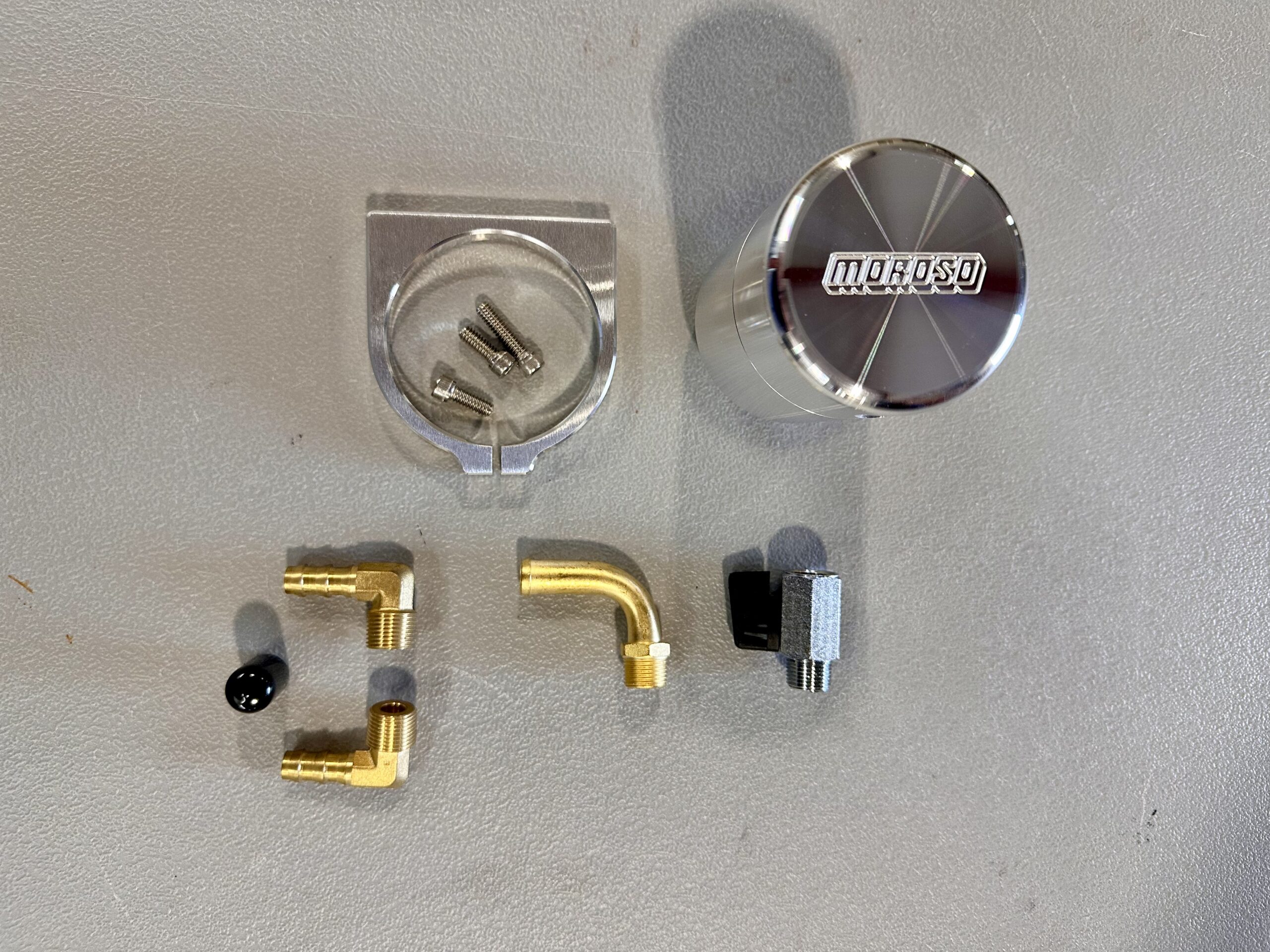
Perhaps one of the simplest and most sensible mods anyone can make to any modern engine is the addition of a high-quality air-oil separator. Known as the common catch can to enthusiasts, an air-oil separator can increase both the performance and longevity of your powerplant by keeping vital components and sensors free of excess oil and carbon buildup. What’s better, most air-oil separators, like this sweet billet unit we scored from our friends at Moroso, are super low maintenance and extremely easy to bolt up.
Catch Can 101: The Basics
The idea behind an air-oil separator is pretty straightforward. Modern engines pull crankcase vapors back into the intake tract through Positive Crankcase Ventilation (PCV) systems. An intentional process that’s designed to reduce pollution, the PCV system isn’t necessarily the best thing for the engine’s health. That’s especially true for the high-performance V8 you regularly flog and have spent hours tweaking to perfection. Simply put: adding an air-oil separator to the intake tract removes oil vapor recycled by your vehicle’s factory PCV system. That means a cleaner intake, a cleaner throttle body, cleaner intake valves, and cleaner sensors.
Public Enemy Number 1: Carbon Buildup
Unless you’ve been living under a Gen-I small-block for the past 10-15 years, you’ve probably heard about carbon buildup. While carbon buildup has always caused problems for internal combustion engines, it continues to be a bigger issue as fuel systems evolve. Since they’re equipped with PCV components, LS V8s are absolutely susceptible to carbon buildup, but it’s our beloved LT V8 that turns a bad day into a potential nightmare. LT engines use direct injection, as opposed to LS engines’ multi-port injection systems, which means fuel never hits the intake valves. As oil vapor sticks to the valves and bakes on over time, it can restrict airflow and lead to a substantial loss of performance and potential engine failure.
By the way, this issue isn’t exclusive to V8s. All direct injection engines can develop carbon buildup and, as a result, could benefit from an air oil separator.
Read The Code: Sensors And Such
Every modern powerplant is equipped with a MAP sensor, a MAF sensor, or both. The Manifold Absolute Pressure (MAP) sensor measures the air inside the vehicle’s intake, allowing the Engine Control Unit (ECU) to determine engine load. The Mass Air Flow sensor measures the amount of air coming into the engine, allowing the ECU to determine the correct amount of fuel required for optimum combustion. By gathering feedback on the amount of air and air density, the ECU can determine the necessary fuel and timing needed for optimal performance. That’s essential in effectively managing a vehicle’s air/fuel mixture, especially at different altitudes, at different temperatures, or under load. And, on forced induction engines, the MAP sensor becomes even more vital, monitoring boost pressure.
If oil vapors build up on MAP and MAF sensors, it essentially throws the engine’s entire process off balance. In addition to throwing codes, an affected vehicle will suffer from decreased performance, increased fuel consumption, rough idle, hesitation, and even stalling.
Power Adders: Boosting The Idea Further
There are many reasons why adding an air oil separator to your ride will improve long-term performance. With that in mind, installing an air oil separator on a boosted or turbocharged engine is considered an essential step to ensuring long-term reliability. The main reason for that is because twirly power adders produce high-pressure blowby that forces oil into the intake. Added oil reduces the octane of your fuel, which can eventually cause engine knock. Additionally, a catch can will increase the effectiveness of the power adder by keeping your charge cooler or intercooler cleaner.
All of that is especially important since most supercharged or turbo engines are built to be pushed hard or driven as performance vehicles. When oil vapor lowers the effective octane of the fuel, it can lead to detonation, pulled timing, and reduced power. By keeping oil out of the intake path, the air oil separator allows the engine to run cleaner, maintain timing, and stay safer under load by keeping combustion stable.
Moroso: The Solution
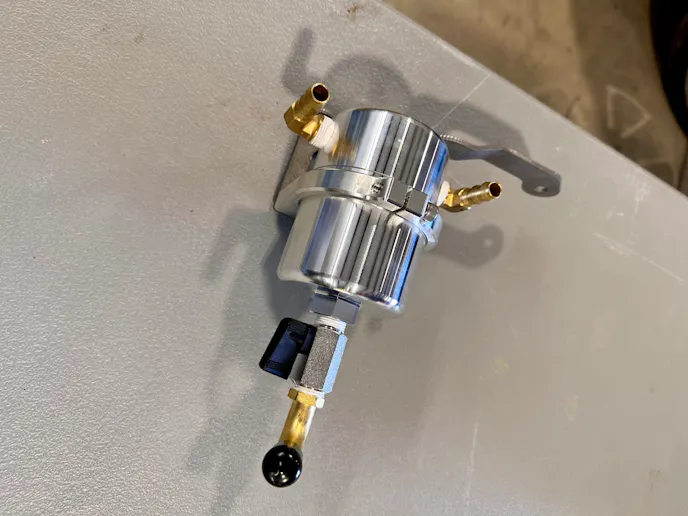
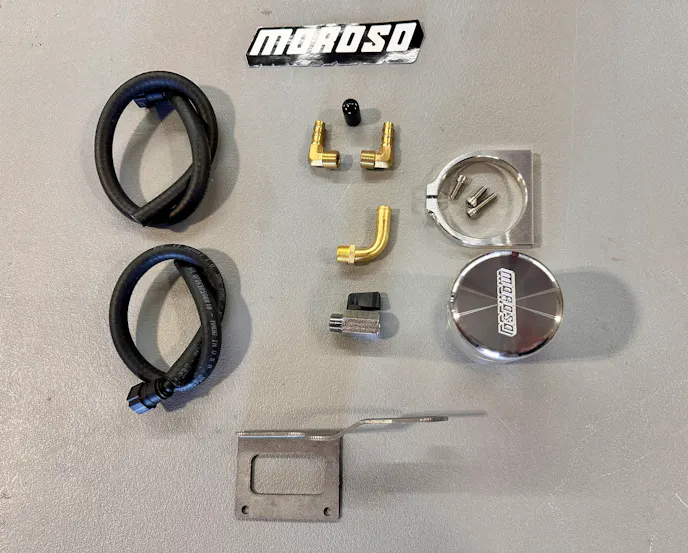
The Large Body Air Oil Separator Kit (P/N: 85529) we received from our friends at Moroso is pretty simple and very slick. The separator features a billet aluminum body with an internal baffle and stainless steel mesh media filter. In addition to 90-degree fittings and pre-cut hoses with pre-installed quick release ends, the kit includes a vehicle-specific mounting bracket and a billet separator clamp. It is designed to specifically fit 2014-2018 Silverados, Sierras, Tahoes, Suburbans and Yukons, and 2019 Silverado Legacy and Sierra Limited models. Engine size doesn’t matter, so the kit will work with either the 5.3 or the 6.2.
We headed down to Toland Motorsports in Florence, South Carolina, where we had the perfect candidate for an air-oil separator install. The truck was a well-kept 2014 GMC Sierra with 160,000 miles on the clock. Owned and enjoyed by the same family for most of its life, the goal here is simple: stay on top of maintenance and keep this rig running strong for as long as possible.
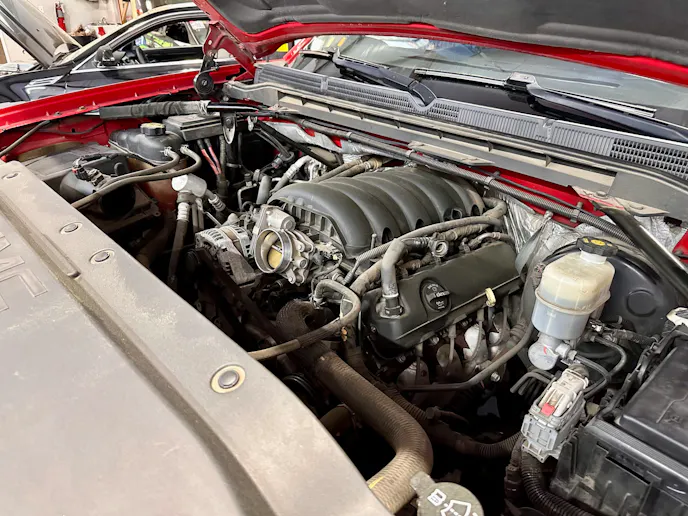
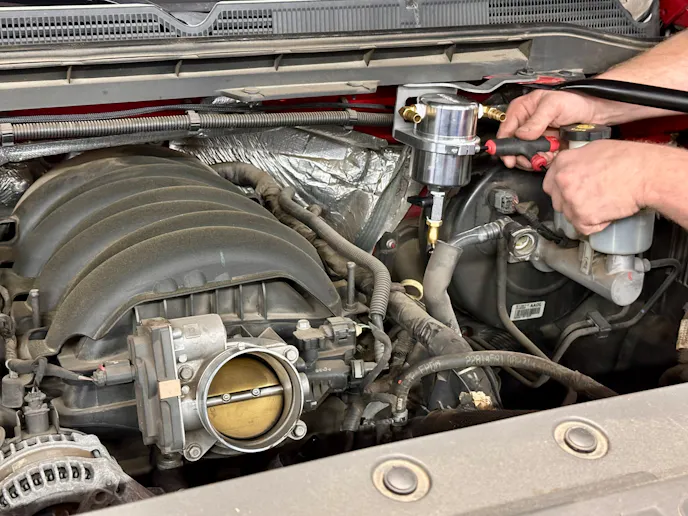
The installation of Moroso’s Large Body Air Oil Separator Kit (P/N 85529) was very straightforward. Our first step was preassembling the separator by threading the fittings and bolting the tank to the mounting bracket. Next, we located and removed the factory brace bolt at the back of the truck’s engine bay. With the bracket and can mounted, we located the PCV hose that runs under the throttle body to the intake manifold. Basically, the kit installs in-line to the PCV system to capture excess crankcase vapors, which means attention must be paid to avoid reversing the in/out hoses–this is a common mistake.
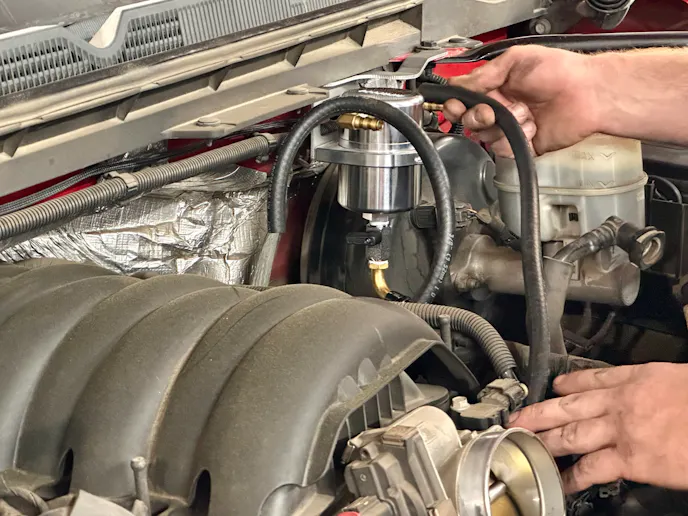
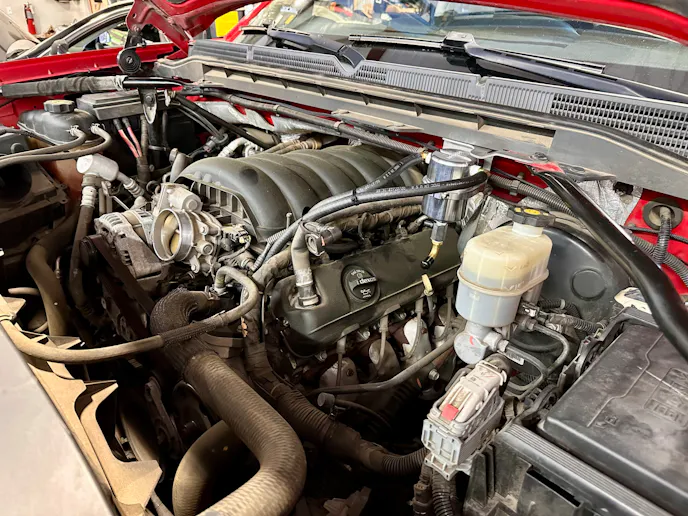
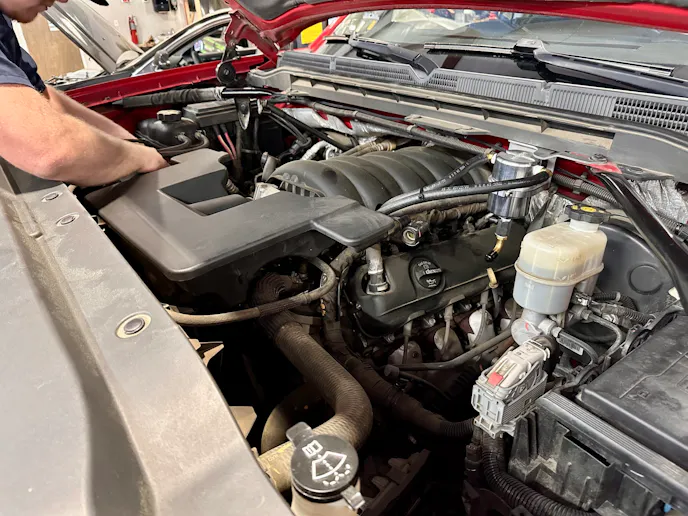
With the factory hose located, press the gray tabs to unlock each end. Next, reconstruct that same path to include the separator and Moroso’s pre-cut hoses. The hose from the passenger’s side of the separator runs under the throttle body, and the hose from the driver’s side of the separator goes to the port on the intake manifold. Slide each quick-release end until you hear it click, which indicates a locked status. Finally, perform a good visual inspection and fire the vehicle up to check for vacuum leaks and loose connections.
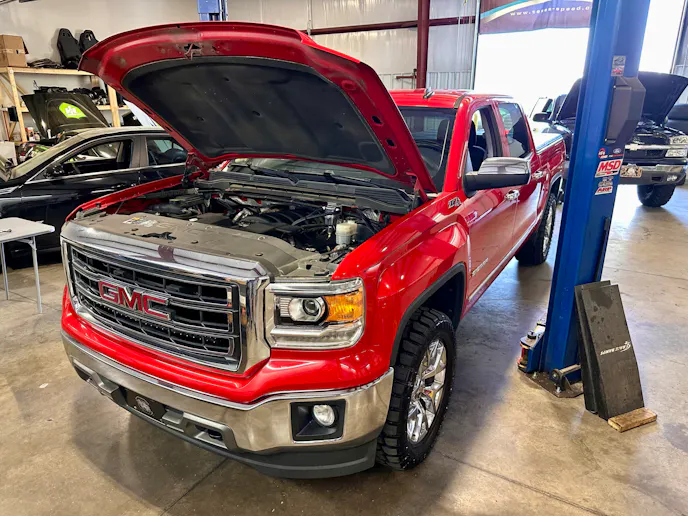
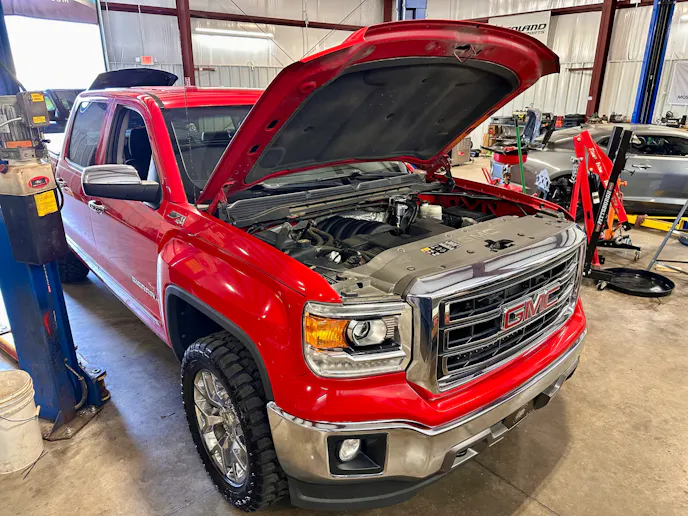
All told, it took about 15 minutes to install the Moroso components, and the kit includes a convenient ball valve and drain elbow that makes emptying the tank a cinch.
Adding a high-quality air-oil separator is one of those mods that just makes too much sense to ignore. Modern LS and LT engines make great power, but they also deal with things older engines never had to, like tighter tolerances and more junk getting pushed back through the intake in the name of emissions. The Moroso kit is affordable, easy, and will serve as low-maintenance insurance to help this awesome GMC roll many more miles!
You might also like
Flowmaster American Thunder Exhaust Wakes Up Our 5.3L Silverado
We install a Flowmaster American Thunder cat-back on our 5.3L Silverado for classic V8 sound without annoying highway drone.