

When General Motors introduced the Gen V LT engine family — first in the 2014 C7 Corvette and later in the sixth-generation Camaro — it brought with it a sophisticated Direct Injection (DI) fuel system that represented a significant leap forward in both efficiency and performance. The LT1 and supercharged LT4 that followed quickly became benchmarks for modern American performance engineering. But as with any technology rooted in precision engineering, the DI system carries inherent limitations that have sent aftermarket engineers scrambling for solutions. The answer, it turns out, lies in a technology that predates direct injection by decades: port fuel injection.
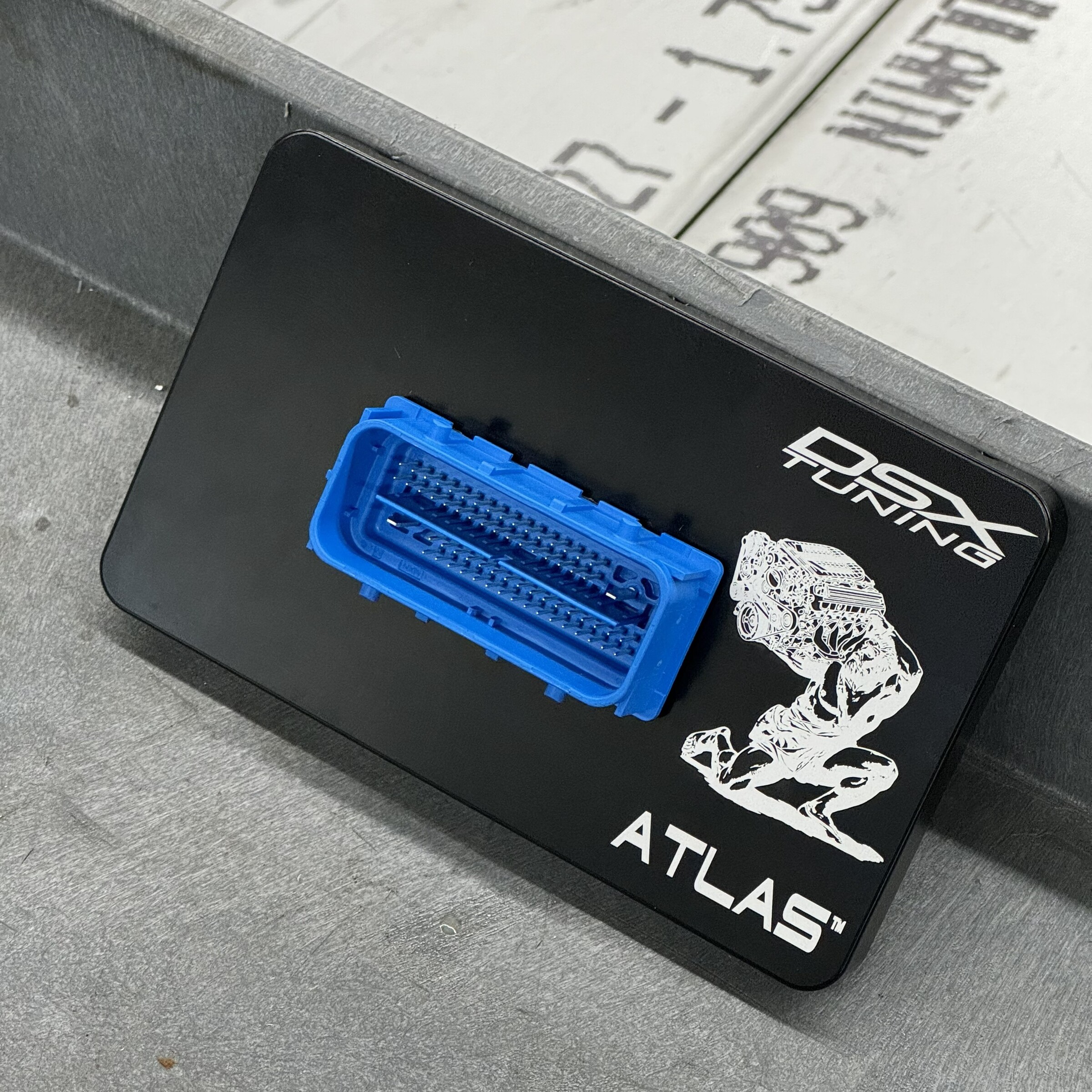
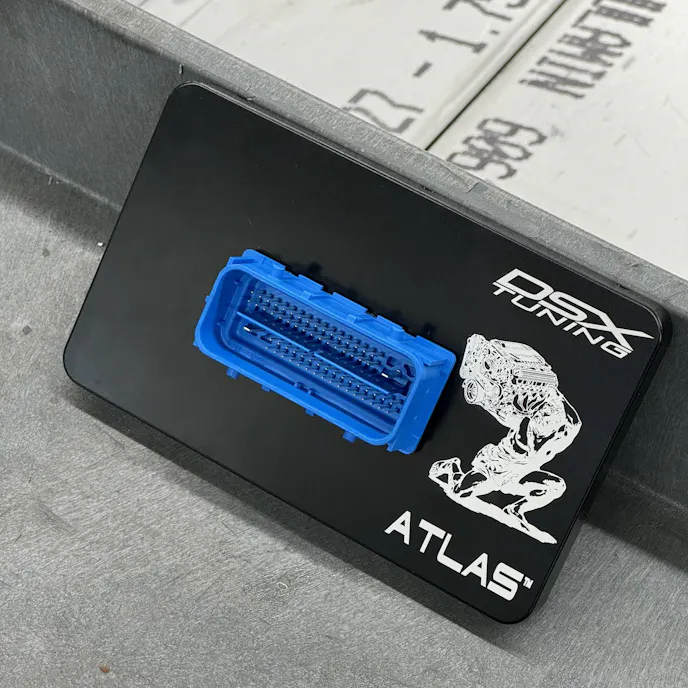
To get the full picture on how the Atlas Port Fuel Controller works, you need perspective from both an integrator and an innovator. As the owner of HTR Performance Engineering, I’ve built a career creating fueling solutions for various high-performance vehicles. I work closely with Dave Steck, owner of DSX Tuning, which designs and manufactures the Atlas Controller. Beginning with the basics, Dave and I will illustrate the concept behind the DSX Tuning Atlas Port Controller and how it can unlock massive potential both now and in the future.
Port Fuel Injection: The Foundation
Port fuel injection (PFI) has been the backbone of automotive fuel delivery since the 1980s. The concept is elegantly simple: individual fuel injectors are positioned in the intake manifold, upstream of each cylinder’s intake valve. Fuel is sprayed into the intake port, where it mixes with incoming air before the combined charge enters the combustion chamber.
One of the most significant advantages of port injection is timing flexibility. Because the injector sits outside the combustion chamber, fuel can be sprayed during any of the four engine strokes — intake, compression, power, or exhaust. Simply put, this generous spray window allows port injection engines to supply more fuel at high RPM.
The upstream location of port injectors also provides ample time for fuel vaporization. By the time the fuel-air mixture reaches the combustion chamber, the fuel has fully atomized and vaporized, promoting a consistent and reliable burn. As an added benefit, this fuel spray continually washes the intake valves, preventing carbon buildup — a detail that would later prove to be a notable weakness of direct injection.
Port injection systems are also mechanically simpler and more affordable to produce. They require only a single fuel pump and operate at modest pressures — typically around 58 psi — compared to the extreme pressures demanded by direct injection.
That said, PFI is not without its drawbacks. Not all injected fuel makes it cleanly into the combustion chamber; some can wet the intake manifold walls, leading to inconsistencies in the fuel-air ratio. Port injection also tends to be less efficient at wide-open throttle across the full RPM range when compared to direct injection. Perhaps most critically, because fuel occupies space in the intake runner, port injection engines are limited in how much air they can pack into the cylinder, which ultimately caps compression ratios and peak power.
Direct Injection: Precision Under Pressure
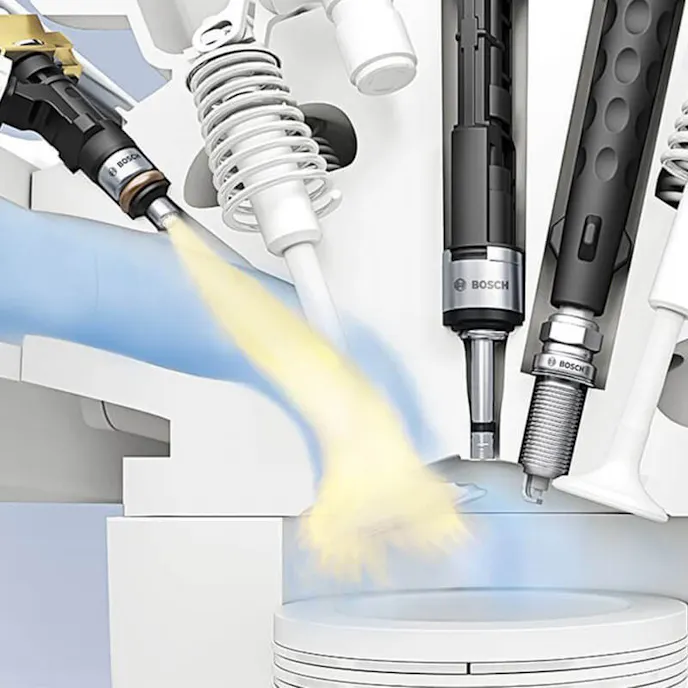
Direct injection brought a fundamental shift in thinking. Rather than preparing the fuel-air mixture upstream in the intake port, DI systems inject fuel directly into the combustion chamber during the compression stroke at extraordinarily high pressure — typically between 2,200 and 2,800 psi in GM’s LT architecture. This is a dramatic contrast to the 58 psi of a conventional port injection system.
The payoff for this complexity is substantial. By injecting fuel directly into the cylinder, DI systems eliminate any fuel displacement in the intake runner, allowing the engine to ingest a maximum charge of air on every cycle. The vaporizing fuel also has a direct charge-cooling effect within the combustion chamber itself, lowering cylinder temperatures during the compression stroke. This cooling enables engineers to run higher compression ratios — the LT1 famously runs 11.5:1 — without triggering destructive knock. Higher compression means more thermal efficiency and more power extracted from every drop of fuel.
The precision of DI systems is equally impressive. High-pressure injectors with orifice diameters as small as 0.006 to 0.011 inches create an ultra-fine mist of fuel droplets at extraordinary velocity, promoting near-complete combustion and reduced emissions. It is a system engineered to extract maximum performance and efficiency simultaneously. But those advantages come with a critical limitation — one that has profound consequences for high-performance builds.
The Wall That DI Hits: Time
One of the initial challenges with GDI is the reduced amount of time to introduce fuel into the intake cycle. Placement of the injector is a significant factor. Moving the point of injection of a port fuel injector — which is in the intake runner above the intake valve — into the combustion chamber reduces the spray time by almost 75%. Typically, in a port fuel engine, the start of injection is before the intake valve starts to open, versus GDI, where the spray is typically after the intake valve opens. To address this very short window, GDI engines use very high fuel pressures at the injector. Final fuel flow is directly tied to base pressure. In GDI engines, pressures of 2,200–2,800 psi are the norm versus a port fuel engine that runs at 58 psi.
To cut to the heart of the DI limitation: In a port fuel system, the injection window spans roughly 20 milliseconds at 6,000 rpm. In a GDI system, that window collapses to approximately 5 milliseconds — a reduction of 75%. Converting 180 degrees of crank rotation into real time at 6,000 rpm yields just 5 milliseconds to inject the entire fuel charge for that cycle.
GM’s engineers addressed this by dramatically increasing fuel pressure to compensate for the narrower injection window. More pressure means more fuel flow in less time. It works beautifully within the design parameters of a stock LT1 or LT4. But when horsepower targets climb well beyond factory intentions, those design parameters become walls.
Two ways to increase total fuel mass are to install a larger injector and/or increase fuel pressure while keeping the total injection window to 180 degrees. Larger DI injectors and high-capacity DI pumps that can move more volume and run at higher pressures are available. All of this has stretched the range a DI system can provide — but at some point, that’s it.
Larger DI injectors and upgraded high-pressure fuel pumps can push the factory system further, but there is a hard ceiling. The physics of the combustion cycle cannot be negotiated. When a performance builder needs to feed 800, 900, or 1,000-plus wheel horsepower through a direct injection system alone, that ceiling comes up fast, especially on ethanol-based fuels, which demand 30% more volume than gasoline fuels.
When DI Isn’t Enough: The Port Injection Solution
The performance aftermarket’s response to DI limitations was predictable: bring port fuel injection back into the equation. The concept of running both systems simultaneously — commonly known as Direct Plus Port, or DI+PFI — allows builders to use the DI system to its maximum capability while the port system fills in the fuel deficit that DI simply cannot cover.
In 2015, when the LT4 hit the streets, HTR Performance Engineering had designed a single billet plate that was fitted between the supercharger and the throttle body, and it had two ID850 cc injectors. We ran a very simple controller that used MAP and RPM for inputs, and we just blasted as much fuel as we could to make up for the DI limits. It was about as 1989 as you could get, but it allowed us to exceed 1,000 wheel horsepower on pump gas, which back then was a big deal. It worked, but it was crude by modern standards. The next evolution brought dedicated aftermarket ECUs running as piggyback controllers alongside the factory ECU — a meaningful improvement, but one that introduced its own complications.
Many of us have installed these aftermarket-style ECUs as ‘piggybacks’ to the factory OEM ECU. Because they were completely independent from each other, there was quite a bit of fudging that had to take place for it all to work. The most important step was to ensure the factory ECU stopped providing any fueling that would push it into a place where it could not properly support fueling. In order to do this, lowering the reported air mass to the ECU would stop any further fuel from being added. The downside is that these modern ECUs are torque-based control systems, and airflow and torque move together. Lowering the air mass means the reported torque would be reduced — and this can be a big problem. Torque is very critical to automatic transmission control as well as controlling the electronic throttle. However, with some creative calibration methods, you could work around all that.
The workarounds worked — barely. Fudging airflow numbers, skewing torque calculations, and babysitting two independent control systems through a tune was exactly the kind of inelegance that the precision of the LT architecture deserved better than. That need for a better answer is what put Dave Steck of DSX Tuning on a path he first envisioned in 2018.
Enter the Atlas: A Different Philosophy Entirely
Dave Steck is not a stranger to the depths of OEM fuel and engine control systems. His background working with factory-level electronics and fuel management gave him a unique perspective on what a port injection supplement needed to do — and more importantly, how it needed to communicate
The Atlas system is a port fuel system that communicates with many of the factory ECU parameters to partner with how the fuel is managed between the DI and port systems. — Dave Steck, DSX Tuning
The Atlas Port Fuel Controller represents a philosophical departure from every piggyback solution that preceded it. Rather than working around the factory ECU or forcing it to report false data, the Atlas works alongside it — in real time, using the factory ECU’s own data to make fueling decisions.
The key to making this possible was a partnership with HP Tuners, one of the most respected names in GM calibration software. Together, DSX Tuning and HP Tuners developed a specific operating system patch that modifies the factory ECU’s CAN bus output structure, effectively unlocking a high-speed data stream that the Atlas controller can read and act upon.
According to Dave, the patched operating system outputs a lot of information on a constant schedule — a 6ms update rate running at 160 Hz, which is twice as fast as the stock CAN networks. The Atlas takes all of that information to paint a picture of the total airflow the engine is consuming, along with the total amount of fuel the ECU is supplying through the DI system. When the DI system can’t keep up, there’s a delta — which is calculated in real time. The Atlas simply fuels that delta using the same physics-based function that GM’s ECMs have been using for years.
In its purest form, the Atlas is a system that monitors what the factory DI is doing, identifies the gap between what’s commanded and what DI can physically deliver, and fills that gap with port-injected fuel — seamlessly, in real time, without the factory ECU ever knowing anything has changed.
The Physics of the 180-Degree Window
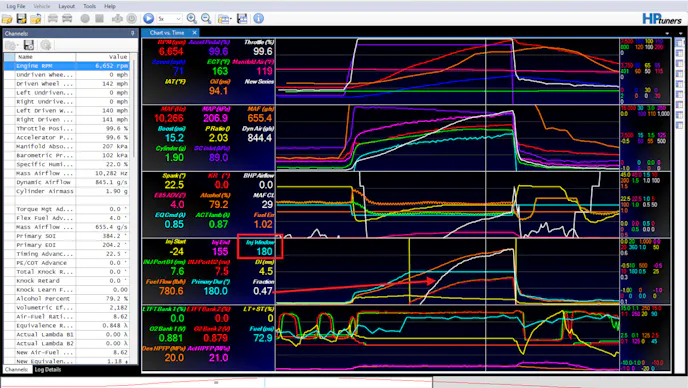
One of the most intellectually interesting aspects of the Atlas controller is how it determines when to bring the port system online — and it all revolves around a single number: 180 degrees of crank rotation. According to Dave, if you examine the log and pay attention to injection duration, you’ll see it caps out at 180 degrees. Through a lot of testing — and abuse of a poor test car — DSX found 180 degrees was the middle value of the bell curve in terms of power production. Reduce the engine cycle down to its basics, and there are four events: intake, compression, power, and exhaust. Each stage of the piston’s movement lasts 180 degrees. Direct injection absolutely cannot spray during the power stroke and shouldn’t during exhaust. Dave says you can spray during compression, but it’s not a great idea, so that leaves spraying during the intake stroke, which is what’s intended to happen anyway.
This 180-degree threshold is the moment the Atlas begins rolling in port fuel. The DI system is allowed to do whatever it wants until it hits this defined maximum — at that point, the port system begins contributing while continuously tracking its own contribution and adjusting based on the fraction of total fuel demand it is providing.
The result is an elegantly proportional system. On regular gasoline with a higher stoichiometric ratio, the port system may back off and run a lower fraction because the DI system can carry more of the load. On E85 or boosted applications demanding massive fuel volume, the port system’s contribution increases proportionally. The critical insight is that this calculation happens automatically, driven entirely by physics rather than a look-up table or a calibrator’s best guess.
The beauty of the system is we don’t even need to know ethanol content — though we do receive it from the main CAN bus for the upcoming boost control strategy. If your fuel pressure changes, your MAP value changes, your ethanol content changes, the temperature changes, barometric pressure changes — none of that matters due to the physics-based calculation for fueling. We track both MAP and absolute fuel pressure so we can calculate delta pressure, and we do it wholly over CAN. — Dave Steck, DSX Tuning
The Tuning Dividend: Torque Model Intact
Perhaps the most practically significant benefit of the Atlas approach — at least from a tuner’s perspective — is what it does not require the calibrator to do. Under legacy piggyback approaches, the need to cap the factory ECU’s fueling meant artificially lowering reported airflow. On a torque-based management system like GM’s LT architecture, airflow and torque are directly linked. Falsifying one means corrupting the other. For naturally aspirated engines or mild builds, this was a nuisance. On automatic-transmission-equipped LT vehicles or builds with electronic rev-match logic, corrupted torque data creates real-world problems: harsh shifts, transmission protection strategies triggering at the wrong moment, and throttle control anomalies.
The waterfall benefit here is that your torque calculation isn’t destroyed and won’t require you to cheat it back into compliance. The ECU will continue to appropriately calculate torque — producing believable numbers — which will keep your automatic transmission happy and help with rev-match logic for manuals, too. You can dial in your MAF and VE with realistic numbers and have believable data to see what’s really happening. You don’t have to tell a 1,000-horsepower combo that it’s only moving 400 grams per second of airflow.
With the Atlas, the factory ECU never sees false data. Airflow models remain intact. VE tables stay accurate. The torque model is never compromised. Tuners can calibrate an Atlas-equipped LT engine precisely as they would a stock one — the Atlas does the heavy lifting in the background. As Dave puts it, gone are the days of needing to hack up the airflow modeling and skew torque to get things back to a semi-functional state.
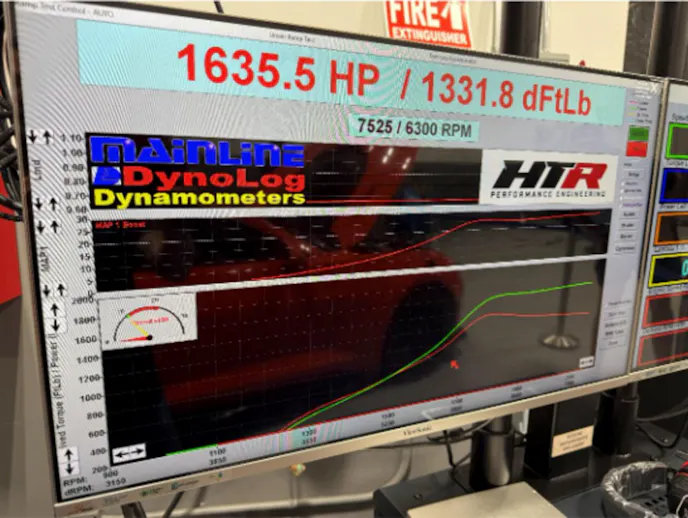
Living With the Atlas: Hardware and Integration
The Atlas controller controls up to eight individual port injectors and interfaces with the cam and crank sensors — the only physical signals it requires beyond the CAN connection. No additional sensors need to be intercepted or compensated for, and no fudge-factor tables are required.
Rather than a traditional wired interface, the Atlas generates its own WiFi network. All configuration, firmware updates, and live data viewing are handled through a web browser — no laptop software installation required. For those who prefer HP Tuners’ VCM Scanner for data logging, the Atlas is recognized as a supported device in the MPVI3, allowing full parameter logging directly alongside ECM data.
For closed-loop fueling refinement, an optional dual wideband system is available using AFX3 widebands with NTK sensors, purpose-programmed to Atlas specifications for fast update rates and onboard health monitoring. These widebands communicate over CAN and enable per-bank closed-loop fuel correction — a level of sophistication previously found only in OEM systems. Additionally, a complete wiring harness is included with each controller, vehicle-specific to ensure a clean, professional installation.
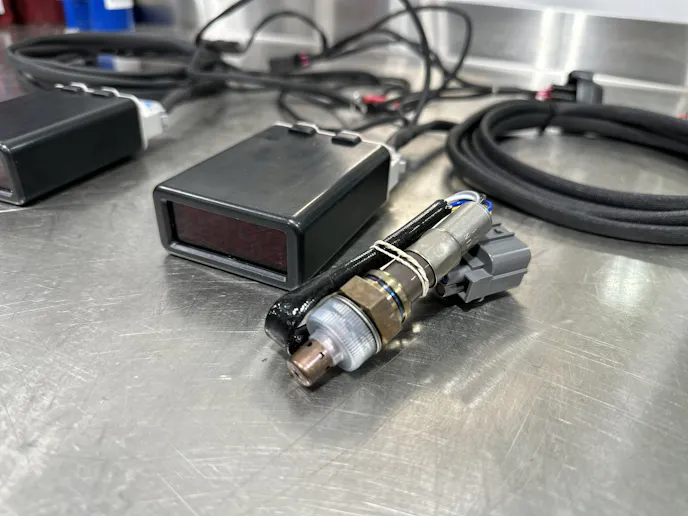
Since accurate injector data is the cornerstone of repeatable results. DSX Tuning strongly urges the use of either factory GM injectors or Injector Dynamics brand. If the client uses something besides those, DSX will not offer support or troubleshooting if they have inconsistent fueling.
In addition to seeing port injection solutions evolve from billet plates and primitive MAP-based blasters to sophisticated CAN-integrated systems, I’ve worked with Dave Steck for many years. He has always been relentless in making things work the right way. Dave’s vast background in OEM fuel systems and electronics was a perfect precursor to developing this controller. The Atlas is the right way to do this — it’s not a workaround. It’s proper integration. In essence, it is Smart Port!
That distinction — workaround versus proper integration — is perhaps the most concise summary of what separates the Atlas from everything that came before it.

The Bottom Line
The LT1 and LT4 represent the best thinking GM’s engineers could deliver within the constraints of a production vehicle. Direct injection is a genuine engineering advancement — more efficient, more powerful, and more precise than port injection alone. But performance builds live outside production constraints, and when power targets climb, the physics of the DI system’s narrow injection window become an impassable ceiling.
The DSX Tuning Atlas Port Controller doesn’t fight those physics. It works with them — using the factory ECU’s own data, delivered at 160 Hz over a patched CAN bus, to calculate exactly what DI cannot provide and deliver it through a port injection system in real time. Torque models remain accurate. Airflow data stays honest. Tuning becomes straightforward.
For LT-powered vehicles chasing serious horsepower numbers, the Atlas isn’t just another option on the parts list. It’s the answer the platform has needed since the first LT4 hit triple-digit wheel horsepower numbers in 2015.
You might also like
ATI 6R80E Transmission Kit Brings Six-Speed Power To LS Swaps
The ATI 6R80E transmission kit adapts Ford's six-speed automatic to bolt behind LS and LT Chevy engines rated up to 1,000 horsepower.