

This third-gen Camaro restomod started as a father-son project and turned into one of the cleanest, most capable 1991 Camaros making the rounds today. Third-gen Camaros have spent years in the shadows, underappreciated while first and second gens soaked up all the attention. That tide is turning, and this build is a big reason why.
Jack bought the car with the intention of saving it. When his son Peter turned 19, the choice was simple: a new car or build the Camaro. Peter chose right.
The Powerplant: Dry Sump LS7 On E85
Under the carbon fiber hood sits a dry sump 7.0-liter LS7 that was built by Simmons Performance. The engine runs forged pistons and roller lifters, making close to 700 horsepower on E85. On pump gas, that number sits around 670. SoCal Dyno handled the tune and, according to Jack, got more out of the motor than the engine builder originally did.
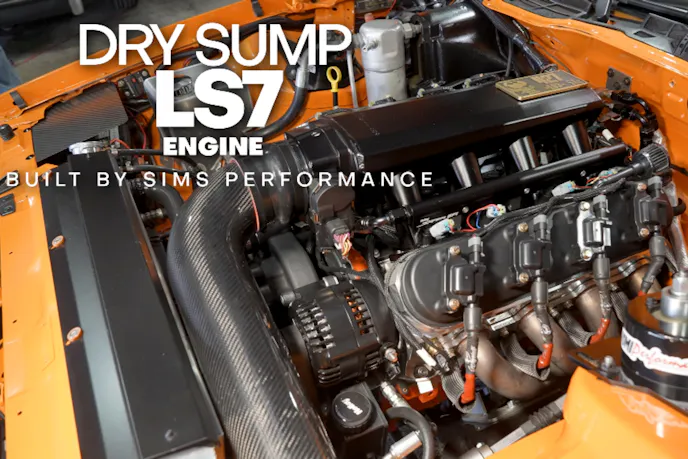
That stout LS7 is backed by a T56 Magnum that was sourced from Modern Driveline. Out back, Jack kept the original Borg Warner nine-bolt rearend and swapped in 3.73 gears. He calls it a tough unit, and the fact that it’s still holding up behind that much power makes a solid case for keeping it stock.
A Holley management system handles engine controls, and Jack wired the entire chassis himself after the factory wiring turned into what he described as a spaghetti mess under the dash. The digital Holley cluster allowed the builders to wrap the interior electronics together cleanly.
The Details That Make It A Third-Gen Restomod Worth Noticing
Up front, UMI tubular arms, struts, and strut towers handle suspension duty. Out back, Hutchkins trailing arms and adjustable QA1 shocks keep things planted. Jack retained the original subframe and ran subframe connectors all the way to the rear, powder-coated and cleaned up for presentation. Six-piston Brembo brakes with 14-inch rotors live at all four corners.
The car’s 18-inch Forgeline wheels run 275s up front and 315s out back, a direct tip of the hat to the Detroit Speed third-gen that originally inspired the build. Jack had to massage the rear fitment to make it work, but it cleared without tubbing.
Exhaust work came from Nico at Vintage Motorworks, who built a two-and-a-half-inch system that flows to an H-pipe, transitions to an oval section for clearance, and runs under the rearend to the back bumper.
This isn’t a trailer showpiece collecting dust between events. Peter drives it, Jack drives it, and when the weekend comes, it goes to the canyons where it belongs. This is a build that respects what a third-gen is, while quietly outperforming just about anything it would’ve shared the road with in 1991. Even better, it’s an excellent example of why these Camaros are finally getting their due. They’re light, highly capable cars that, with the right approach, can hang with anything built today.
You might also like
LS Fest East 2026 Recap: Drift, Drag, And Burnout Wars
Relive LS Fest East 2026 at Beech Bend Raceway, where drift, drag racing, Burnout Wars, and autocross winners battled for LS Fest glory.