

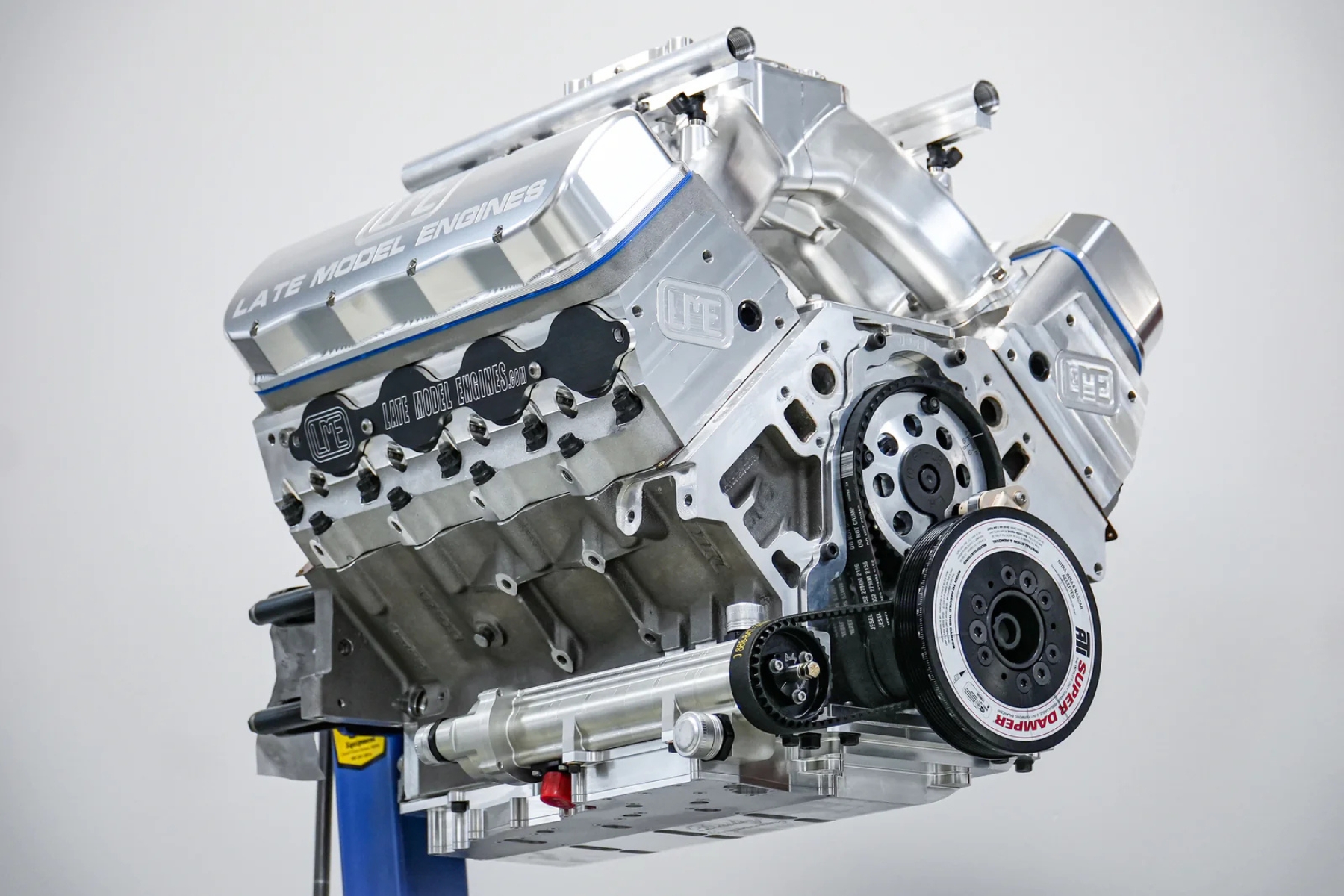
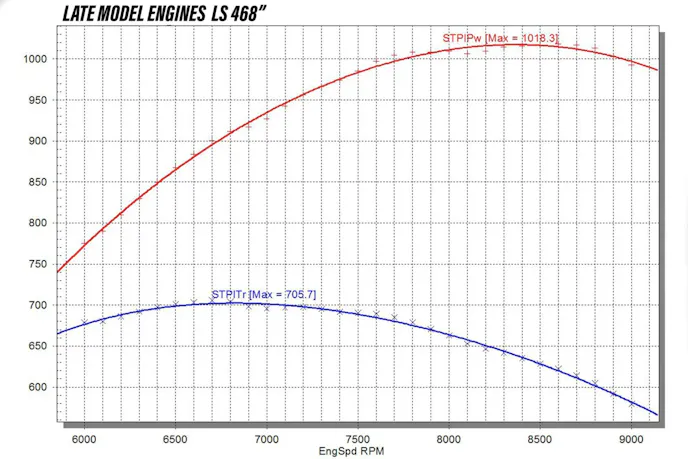
The forced induction crowd has owned the high-performance conversation for years. Big boost, big numbers, big headlines. Lost in all of that is the fact that a well-developed combination can still make serious power on motor alone, and Late Model Engines (LME) keeps making the case. The company’s 468 cubic inch long-block is a 1,000 horsepower, naturally aspirated (N/A) LS engine, and the spec sheet shows exactly how the Houston-based shop gets there without any turbo or blower in the mix.
A Stout Foundation For The Rotating Assembly
The 1,000-horsepower N/A LS build starts with a Dart Machinery tall-deck aluminum block. Tall-deck architecture buys the room a long-stroke crankshaft needs to live in without piston-to-counterweight interference, and aluminum shaves weight off the nose of the car compared to a cast-iron equivalent. From there, the bore opens up to 4.185 inches, which combines with a 4.250-inch stroke to produce 468 cubic inches of displacement.
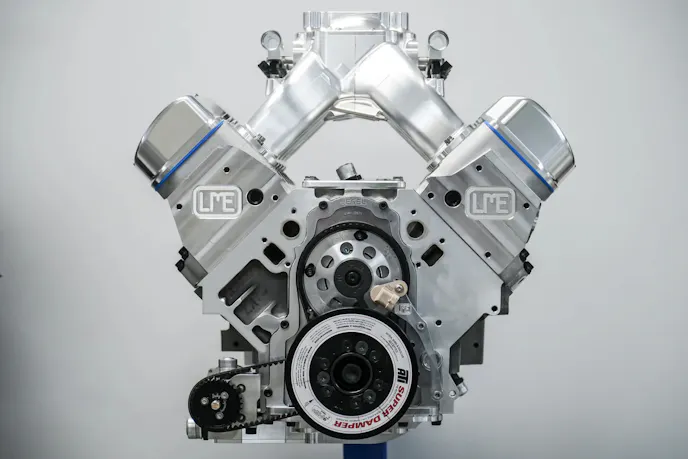
A Callies Magnum crankshaft handles the spinning duties, mated to Dyer’s 300M connecting rods that measure 6.400 inches between centers. The 300M alloy is a long-standing favorite in serious race engines because it offers higher tensile strength than typical 4340 steel, which matters when the engine is asked to live north of 7,000 rpm under load. Custom Diamond pistons sit on Trend H-13 wrist pins, and a Total Seal ring pack manages combustion sealing with a 0.9 mm top, 0.9 mm second, and 2 mm oil ring stack.
Down low, Clevite H-Series bearings and ARP main studs anchor the rotating assembly. Those parts are industry staples in builds chasing four-digit power, and they are part of the reason LME calls the engine reliable and proven rather than simply powerful.
Feeding A Naturally Aspirated Combination
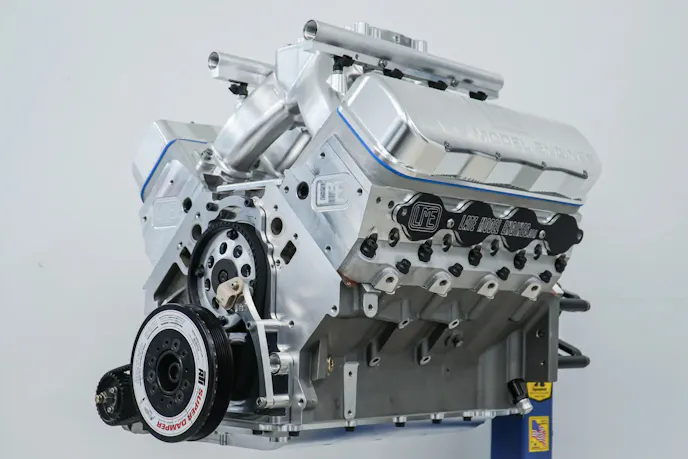
Making 1,000-plus horsepower without forced induction is an airflow problem first, and a parts problem second. LME’s ported and prepared canted-valve race heads are the centerpiece of the mill’s upper end. Canting the valves away from the cylinder bore axis does two useful things. First, it unshrouds the valves from the cylinder wall, which lets more air enter the chamber during the early portion of the lift curve. Second, it gives the port a more efficient entry angle into the chamber, which improves velocity and helps the cylinder fill at high RPM.
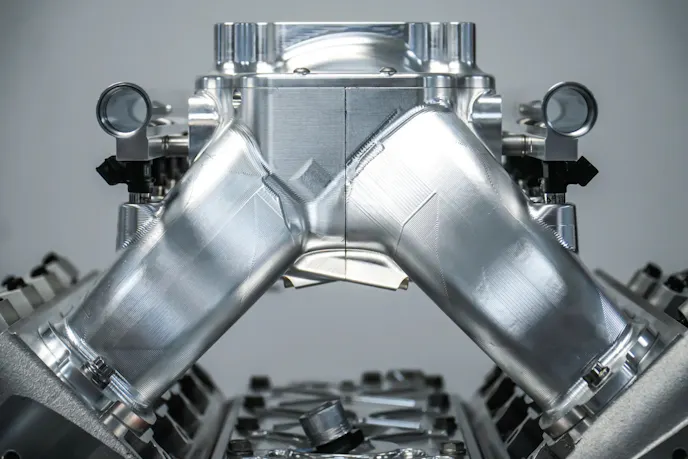
The result is a head package designed to feed a high-compression, high-RPM combination at a rate that conventional cathedral or rectangle port heads would struggle to match. LME includes an intake with the long-block, which removes one of the trickier matching exercises from the builder’s to-do list. Heads, intake, and short-block develop as a system rather than a parts pile.
For builders who have been chasing big naturally aspirated numbers with an off-the-shelf LS3 or LS7 head, the jump to a purpose-built canted-valve casting is one of the bigger single steps available on the airflow side.
What 16:1 Compression Tells You
The compression ratio on the build sheet reads 16:1. That number is a useful piece of context because it tells you a great deal about the fuel and tune required to make the package work. Compression ratios in that range live well outside pump-gas territory, and they push the combination into race fuel, methanol, or high-content ethanol blends depending on the operator’s preference and class rules.
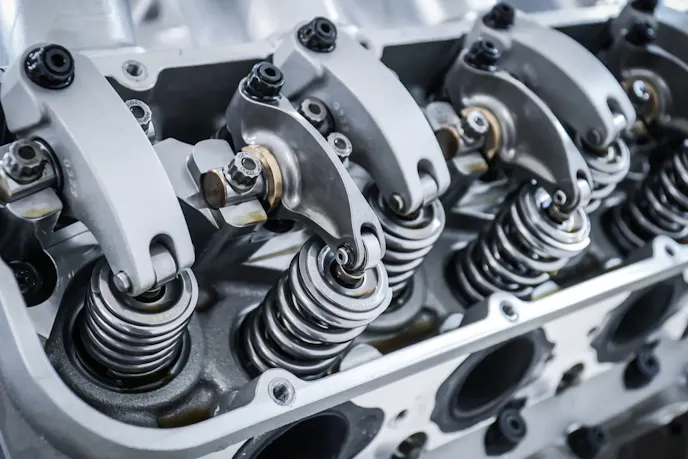
High compression is also one of the levers an N/A combination relies on to extract power without help from a turbo or blower. More compression means more thermal efficiency, more cylinder pressure on the power stroke, and more torque per cubic inch. Pairing 16:1 with a canted-valve head and 468 cubic inches is a calculated stack of advantages, and it is the main reason the engine clears four-digit horsepower on motor alone.
Why Dry-Sump Oiling Earns Its Keep
LME’s Longblock ships with a dry-sump oil system, and that choice makes sense given the applications the company has in mind. A dry-sump arrangement separates the oil tank from the engine, scavenges oil from the pan with dedicated pumps, and stores it externally. The benefits stack up quickly in a race environment.
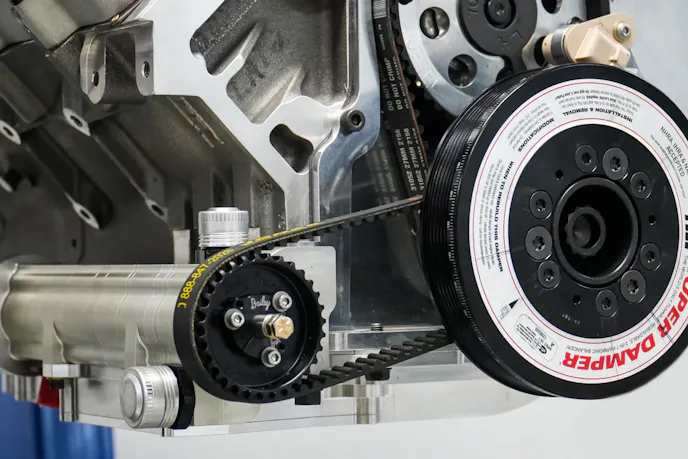
Crankcase pressure drops, which improves piston ring seal. The lack of oil in the crankcase and pan, keeps it away from the crankshaft, which frees up rotational losses. Oil control under sustained cornering load improves dramatically, since the pickup is no longer subject to oil sloshing away from the sump in a wet-sump arrangement. Sump depth shrinks too, which lets the engine sit lower in the chassis. For a road race, drift, or drag-and-drive program, those benefits are not optional luxuries.
Inside The 1,000 Horsepower N/A LS Engine Blueprinting
LME treats blueprinting as the price of admission for a build at this level. Every short-block that leaves the shop runs through the company’s standard blueprinting routine, and it covers the details that separate a true race engine from a parts-bin assembly.
Technicians fully deburr and inspect the block for flaws, then diamond hone the cylinders with torque plates installed. Torque plate honing simulates the load the cylinder will see once the heads are bolted on, which means the bores stay round under operating conditions rather than just at rest. A profilometer verifies the surface finish, and the crew machines in any necessary rod clearancing. When the block calls for boring, LME runs the cylinders on a four-axis CNC machine to ensure that the bores and decks are aligned perfectly at 90 degrees.
Bottom End Assembly And Final Checks
From there, the team indexes and trues the crankshaft journals to exact tolerance, then polishes them to a 2 μin surface finish or better. They also chamfer the oil holes for improved bearing oiling and balance the crankshaft within 0.25 ounce-inch. The crew checks and adjusts the rod housing bores for roundness, then dials in the piston pin bores for the application.
Down in the bottom end, the team align hones the block and sets it to the low end of spec for maximum bearing crush, which keeps the bearings locked in place under load. Technicians measure and adjust clearances on all five main bearings, and all eight rod bearings, and they precision file fit each ring to its cylinder. Deck surfaces get machined perpendicular to the mains, and deck height gets set for optimal quench. Cam bearings go in last, and a test cam confirms smooth rotation before final assembly. Every tolerance, clearance, machining spec, and part number ends up on a build sheet that ships with the engine.
Drag, Road Race, And Drift Applications
LME has tested the 1,000-horsepower N/A LS combination in drag-and-drive events, road race programs, and drift cars. The company notes that tuning shifts based on the application. A road race build gives up a small amount of peak power in exchange for additional grunt down low, which suits a corner-heavy circuit. A drag-focused tune pushes the engine closer to 1,100 horsepower at the top of the curve, since holding peak power longer matters more than mid-range grunt on a quarter-mile pass.
That kind of application-specific tuning is part of what the build sheet documentation supports. Each engine ships with a record of what is in it, which gives the tuner the information needed to refine the calibration for the program the engine lives in.
Final Thoughts
For builders chasing a real 1,000-horsepower, naturally-aspirated LS engine without leaning on spray, LME’s 468 Longblock is one of the best turnkey paths currently available. The hard engineering work is done, the parts list is dialed, and the build sheet leaves no guesswork on the tuner’s side.
You might also like
Extreme Performance Summer Vs. UHP All-Season Tires: Which Is Right For You?
We wanted to compare summer tires to ultra high perfiormance all-seasons to see if the tradeoff was worth it.