

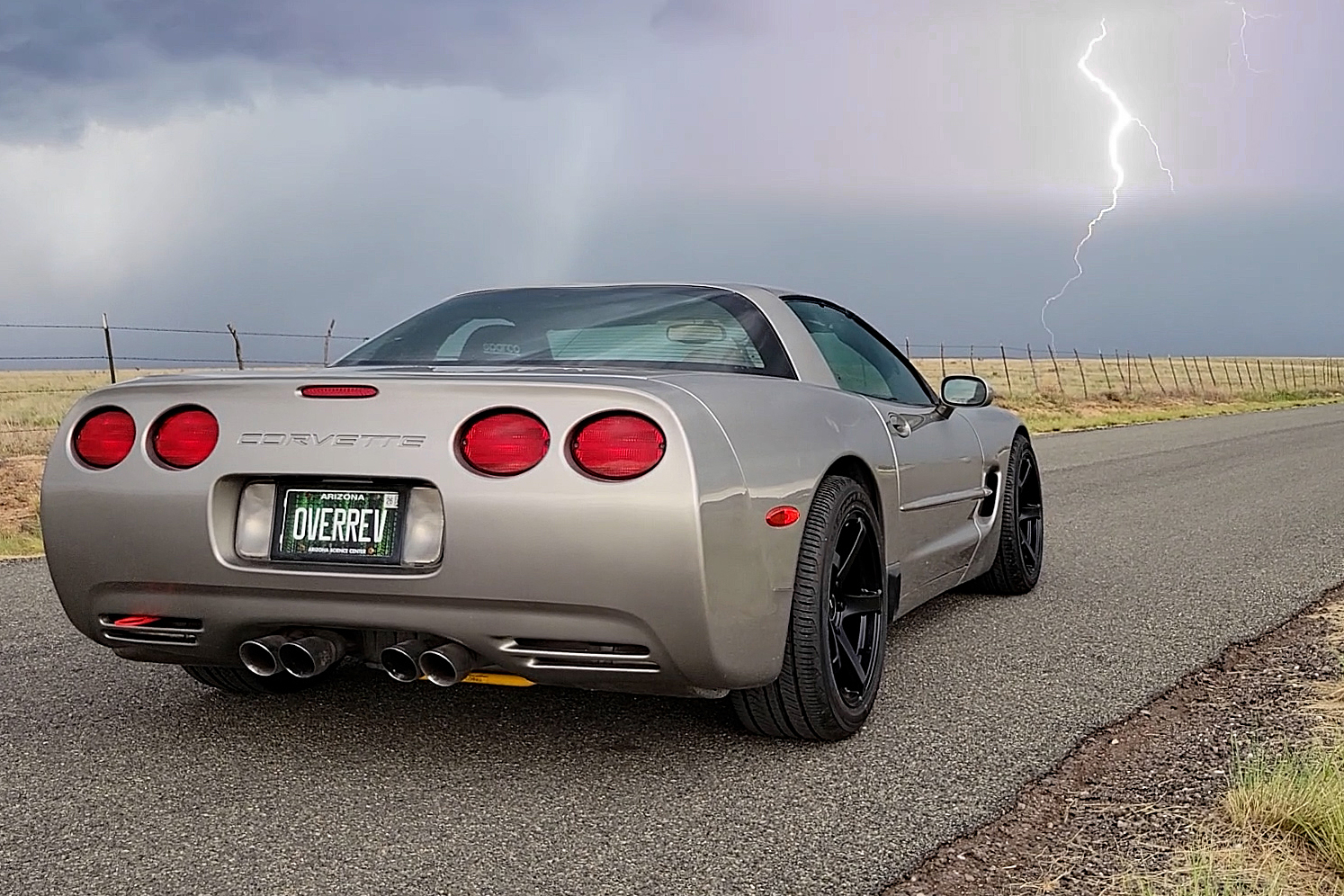
As performance enthusiasts, we demand the best parts for our vehicles. Power, handling, style… all extremely important factors to everyone reading this. One unsung hero in the performance world is street tires. Sure, race tires have some pizzaz, but for cars that live as much on the street as the track, choosing the perfect street tire is a critical decision for the enthusiast.
Our tires are the singular connection of our vehicle to the road. Cheap out, and no amount of power or suspension work matters, because you’ll have no grip. However, throwing money at tires isn’t necessarily the answer, either. There are a number of factors to consider when choosing the right tire for the street, and luckily for you, the reader, we’ve considered those factors heavily and are sharing that knowledge with you.
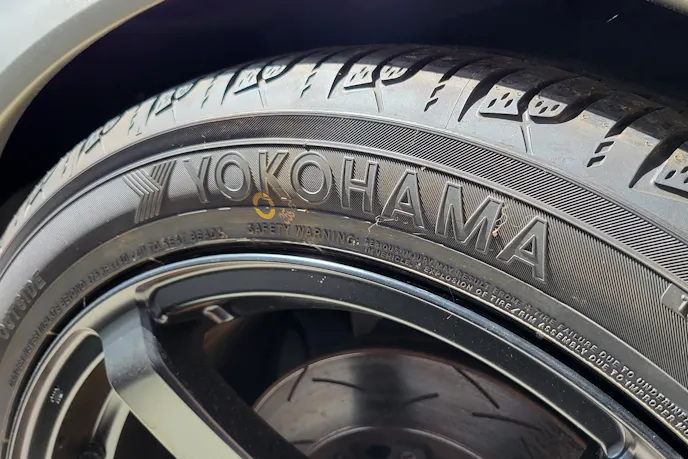
In order to illustrate what we’ve found over the past 25 years of performance driving experience, we’ve chosen two Yokohama street tires to highlight the differences — and similarities — between two of the most popular tire performance categories. In the Extreme Performance Summer category, we chose the Yokohama ADVAN Neova AD09. Representing the Ultra High Performance (UHP) All-Season category is the Yokohama ADVAN Sport A/S+.
By keeping both tires within the same manufacturer line, there are several advantages. First, the Uniform Tire Quality Ratings (UTQG) will be accurate to one another. Second, major tire technology will be the same between the models. And third, and possibly most importantly, is that Yokohama is a trusted name that has provided solid, reliable performance throughout our driving career.
UTQG Ratings: What They Are And What They Mean
You’ve likely seen tire ratings listed as something like “200 A A.” Those numbers and letters are the UTQG rating. The three-digit number is the treadwear rating. The first letter is the traction rating, and the third letter is the temperature rating.
The treadwear rating is a 7,200-mile test to prove the durability and tread life of the tire design against a standard. 100 is the baseline, so a 200 rating should last twice as long as a 100, and a 400 should last four times as long as a 100 and twice as long as a 200. However, these numbers come from manufacturers’ self-testing, which makes them tough to compare between manufacturers.
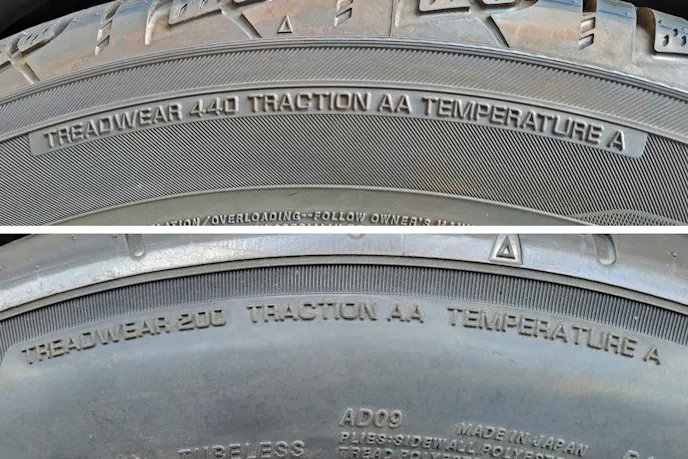
The traction rating actually has nothing to do with dry traction, but rather wet traction skidding in a straight line. The ratings are AA, A, B, and C.
The temperature rating of a tire is a measure of its heat dissipation and heat tolerance. This is a measure of the tire’s ability to run at sustained speeds (but different from its speed rating). The temperature ratings are A, B, and C.
Yokohama Tire is almost 110 years old, and they started in the U.S. market in 1969. They have been heavily involved in the performance and racing segments for a long time, and have proven their capabilities on and off the track time and time again. Their current lineup of tires covers a wide variety of applications from performance to off-road, commercial, and eco-friendly commuter tires.
The Two Tire Categories
Tires are categorized by their intended use and subcategorized within that group by their overall performance. Summer tires are just that: street tires designed for warm, sunny weather, which offer performance attributes.
The subcategories of the Summer Tire category are, in descending order of performance: Extreme Performance, Maximum Performance, Ultra High Performance, and High Performance. Typically, the summer categorization means that the compounds don’t perform well in colder temperatures or weather conditions, and certainly not in snow.
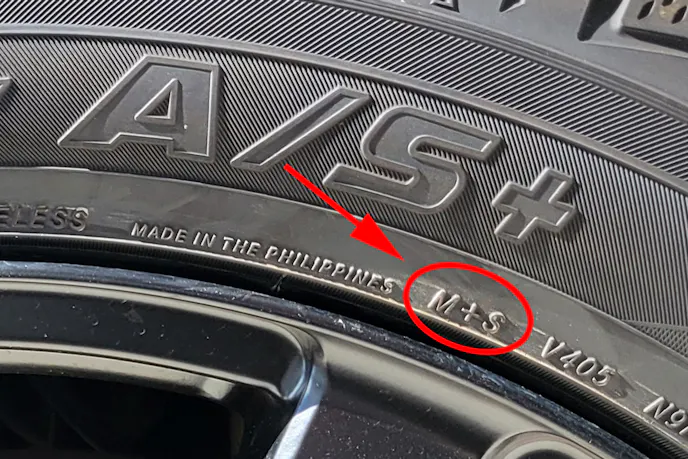
All-season tires are, once again, just that: street tires designed to perform well in all four seasons. They are balanced to perform well in a much wider variety of conditions, including mild winter conditions. The subcategories of All-Season tires are, again, in descending dry performance: Ultra High Performance All-Season, High-Performance All-Season, and All-Season Touring tires.
For this comparison, we are comparing the pinnacle subcategory from each category.
ADVAN Neova AD09
Yokohama’s ADVAN Neova AD09 is actually the second 200-treadwear, Extreme Performance Summer tire in Yokohama’s lineup. The first is the ADVAN A052, but that is designed more as a street-legal competition-oriented tire, as opposed to a real street tire, like the ADVAN Neova AD09 is.
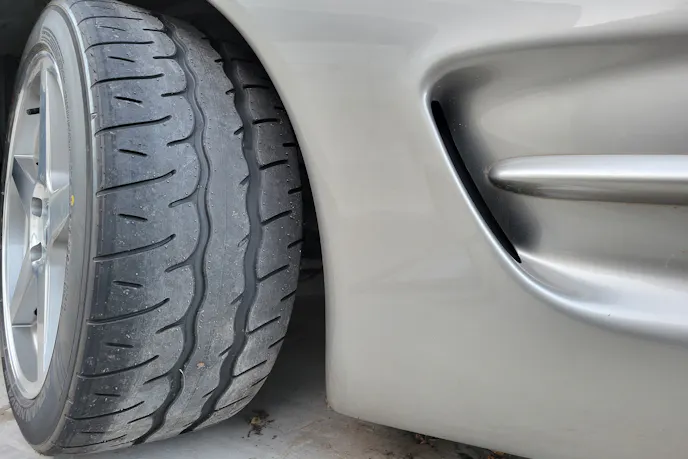
The Neova AD09 is still aimed at the 200-treadwear market, with its UTQG 200/AA/A rating, but has an improved wet performance over the A052, while still performing exceptionally well at the racetrack or autocross. Making such an advanced tire is the culmination of several design principles.
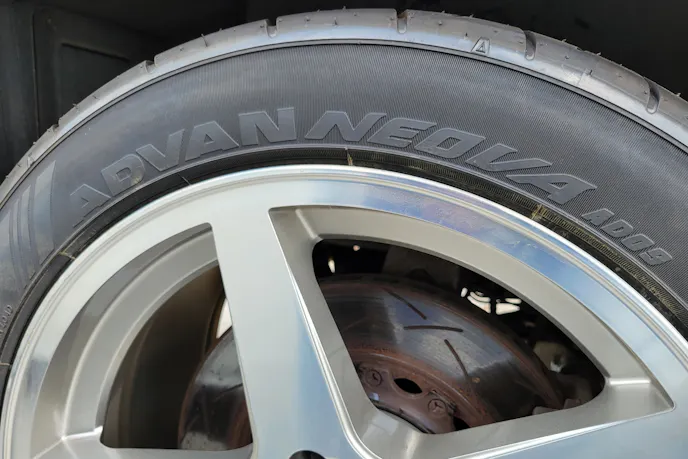
The unique, easily identifiable tread design of the ADVAN Neova AD09 incorporates large tread blocks for maximum contact with the road and maximum tread stability. It also features chamfered channels to evacuate water efficiently and prevent hydroplaning. The overall tread design has been engineered to be incredibly consistent from full tread depth all the way down to the wear bars.
The tire’s advanced construction also plays a large part in the tire’s performance. The “high turn-up ply” design not only makes for a strong tire, but also an exceptionally stiff sidewall, which makes the cornering feel and performance of the tire extremely consistent. If you are not familiar with this term, don’t worry, neither are we. The body ply is the primary structural layer of a tire, usually made from polyester, rayon, or nylon cords. In a radial tire, the cords run straight across the tire from bead to bead, at roughly a 90-degree angle to the direction of travel. A “high turn-up ply” means the body ply extends farther up the sidewall, sometimes nearly to the shoulder of the tire.
The ADVAN Neova AD09’s compound is a high-silica formula, like many summer tires, that not only increases dry grip, but improves warm wet grip as well. The downside of a high-silica compound is that there is a heavy degradation in grip as ambient temperature drops, hence the “Summer Tire” designation.
ADVAN Sport A/S+
The Yokohama ADVAN Sport A/S+ is the company’s premier all-season-rated tire. The UHP All-Season ADVAN Sport A/S+ is designed to be an all-around performer, providing Ultra High Performance tire performance in the dry, along with solid performance in inclement weather and low temperatures.
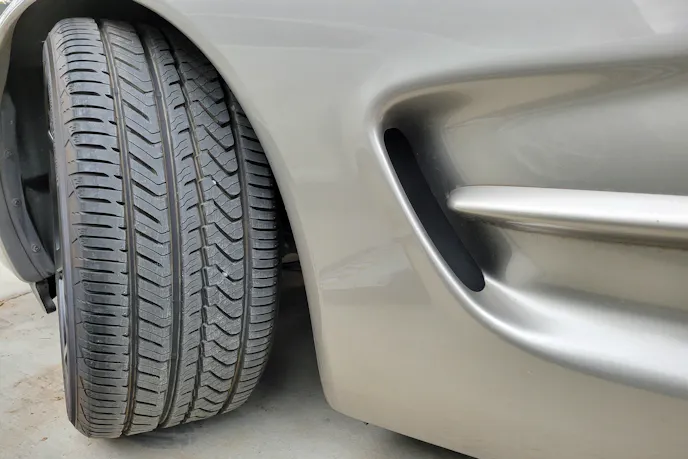
UTQG-rated at 440/AA/A, it’s going to last a little more than twice as long as the AD09 in a driver application, while still providing great performance on the car. The ADVAN Sport A/S+ has a reinforced shoulder as well as an optimized sidewall to provide stable, responsive performance in aggressive driving while still providing a decent ride on the road.
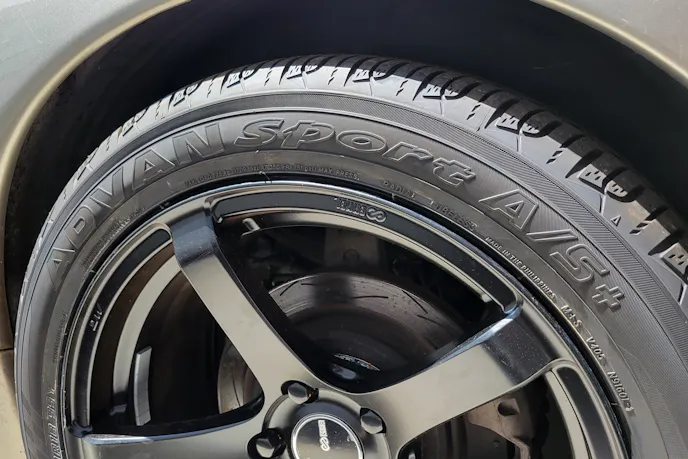
The tread design is more optimized to evacuate water while still being stable and providing a solid contact patch for maximum traction. The tire’s compound, dubbed “HS-2” is designed to be consistent across a wide ambient and tire temperature range. Additionally, the ADVAN Sport A/S+ has a warranty of up to 55,000 miles.
An incredible additional feature is the tire’s performance in snowy conditions. And that is the real draw of a UHP All-Season tire: being drivable in conditions that would be downright dangerous for a summer tire.
Driving Impressions of the ADVAN Neova AD09 and ADVAN Sport A/S+
Now that you know about the tires, let’s talk about our testbed. Project Honey Badger is our six-speed 2000 Corvette. Both sets of tires are the same size, so there are no advantages for one tire size over the other. We opted for a square setup, with 275/40-18 tires at all four corners.
The Advan Sport A/S+ tires were mounted on a set of Enkei Kojin 18×9.5 wheels, while the Advan Neova AD09s were mounted on a set of Rocket Racing 18×10 Flare wheels. Some might argue that the slightly wider wheel might offer a slightly larger contact patch. That’s exactly why we put the AD09s on the Flares, but, spoiler alert, we’re not pushing hard enough on the street for that to come into play.
The first tires we tested were the ADVAN Sport A/S+. Full disclosure, they replaced a set of extremely inexpensive offshore UHP All-Season tires in the stock staggered sizes that were simply a placeholder to replace the dry-rotted tires that were on the car when we got it. Right out of the gate, it was a night-and-day difference.
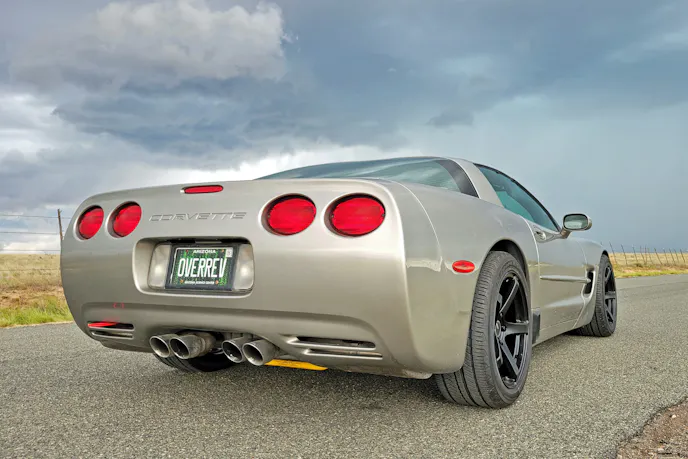
Our test route consisted of some country roads with roundabouts, a couple of highways, and a few windy mountain roads. The first roundabout highlighted the ADVAN Sport A/S+ nice turn-in and stability in tighter, complex turns with quick left-right transitions.
Granted, we aren’t huge fans of pushing past about 7/10ths on public roads, so we never found the limits of the Sport A/S+ in spirited driving. The ride is comfortable, both on the highway and less-than-perfect country roads. At the end of our test miles, there was nothing we felt was missing or coming up short on the Sport A/S+, and we even managed to log some miles in a monsoon. We are looking forward to keeping them on the Corvette year-round.
Switching to the ADVAN Neova AD09, the first thing we noticed was that the sidewalls were definitely stiffer as we drove down that same poorly maintained country road. However, that first roundabout showed where that stiffer sidewall shines, as the turn-in was even crisper than the Sport A/S+.
The second roundabout showed that there was extra grip in the compound, as it crowns halfway through the circle and goes off-camber as you exit the circle. Pushing here in other cars has shown the need for caution, but with the Neova AD09’s grip, the car was planted like never before.

Since we never really pushed beyond 7/10ths on the rest of the drive, that extra grip wasn’t really noticeable anywhere else. The stiffer sidewall was slightly noticeable on the highway, but that was offset by the improved turn-in on several tighter turns.
At the end of the day, we’re never going to push the car hard enough on the street to justify daily driving a set of Extreme Performance Summer tires. However, what we do love about the idea of the ADVAN Neova AD09, is that it’s enough of a street tire that we can drive on it, even for the two hours down to Phoenix, to an autocross or track day. That way, we get all of the grip of a true 200-treadwear tire, while not having to carry an extra set of tires.
However, for those of you who regularly carve the canyons or just like to hit the curved highway onramps like you’re qualifying, or just prioritize lateral grip over everything, and have the luxury of not having to ever drive in cold weather, daily driving the Neova AD09 is a solid choice. For us, where poor road quality, poor weather, and a conservative driving style on the street are the main factors, we’ll stick to the Ultra High Performance All-Season ADVAN Sport A/S+ as our dailies, and keep the Extreme Performance Summer Neova AD09’s on tap for autocrosses and track days.

You might also like
JEGS Makes Shopping For Your Next LS Or LT Build Easier
JEGS launches a redesigned website with improved search and fitment tools to make finding parts for LS and LT builds easier.