

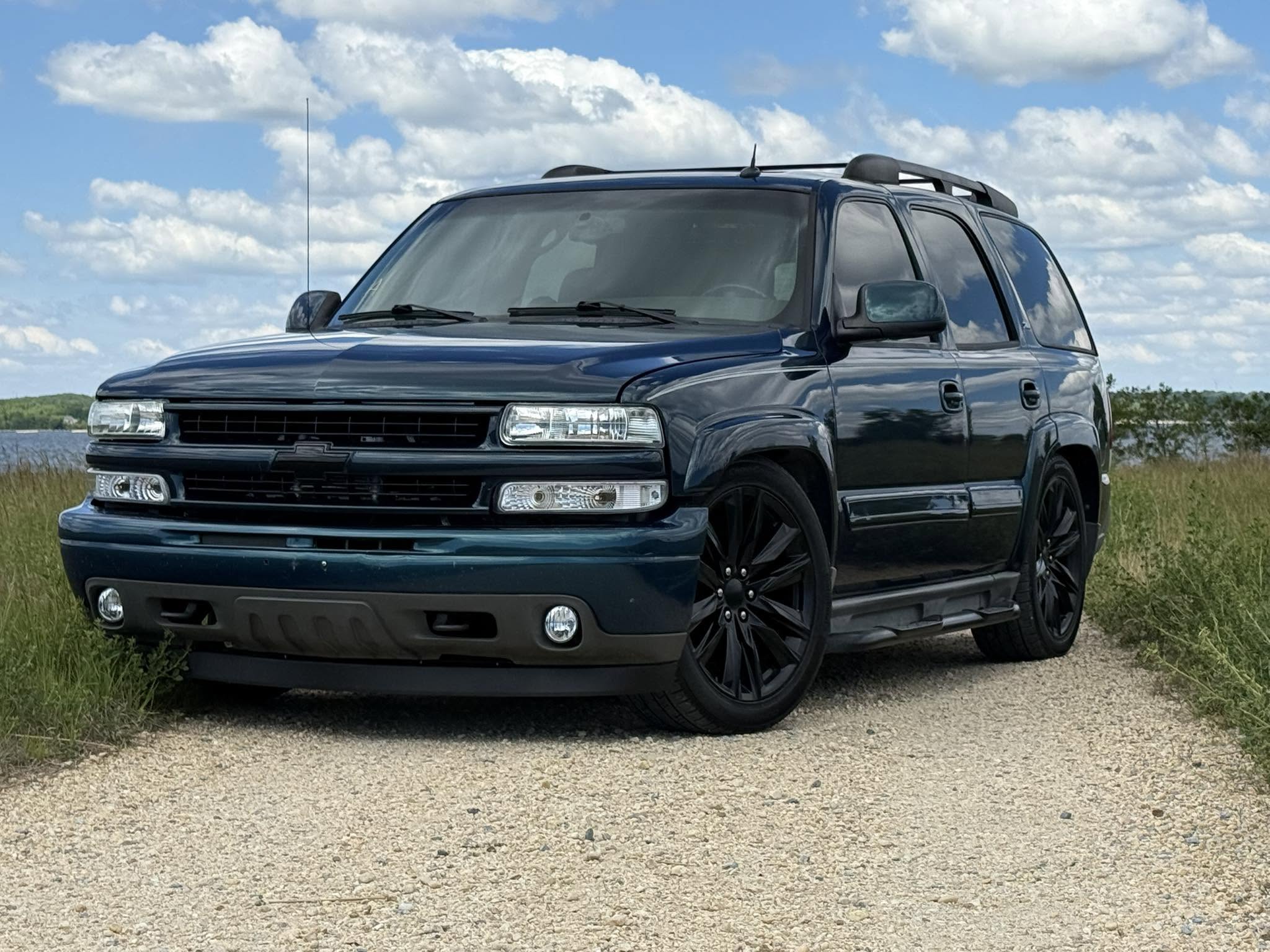
If you are even a casual fan of LSX Magazine or an owner of LS-powered vehicles, you know just how maligned the 4L60E is – and the challenges with swapping in a 4L80E. Sure, GM provided better solutions for Gen V engines, but for LS-powered vehicles, 8HP swaps have become all the rage for their favorable gear ratios, ability to shift like a DCT, and their reliability with a decent amount of power and a light rebuild (or none).
If you aren’t familiar, the 8HP is a family of eight-speed automatic transmissions developed by German transmission manufacturer ZF Friedrichshafen, with the first-generation 8HP entering production around 2009–2010. Designed primarily for longitudinal rear- and all-wheel-drive applications, the 8HP family includes several versions with different torque capacities, including the 8HP45, 8HP50, 8HP70, 8HP75, 8HP90, and others. Over the years, the transmission has appeared in an unusually broad range of vehicles, including BMW 3, 5, and 7 Series models and its X-series SUVs; Jaguar and Land Rover products; Audi, Maserati, Aston Martin, Bentley, and Rolls-Royce models; and numerous Chrysler, Dodge, Jeep, and Ram vehicles. Chrysler/Stellantis also produced versions of ZF’s design under its TorqueFlite branding. Of particular interest to American performance enthusiasts is the 8HP70, which was factory-installed behind Hemi V8s and EcoDiesel engines in vehicles such as the Ram 1500, Dodge Challenger and Charger, Chrysler 300, Dodge Durango, and Jeep Grand Cherokee. The combination of wide-ratio gearing, fast shifts, strong torque capacity, plentiful used transmissions, and sophisticated converter-lockup control has made the 8HP family increasingly popular for modern performance transmission swaps.
The Nuts And Bolts Of It
Even though they have become highly desirable, there are some challenges with swapping in an 8HP. Just bolting in the transmissions requires a new crossmember, new driveshaft, adapter plate for the block, shifter, etc. To make the electronics work, you need something to control the TCU inside the transmission. TurboLamik has been the go-to for years when pairing with a modified vehicle and commanding new shift points and other parameters. Until now, it was thought that the only way to make the TurboLamik work with the ECU was through aftermarket EFI. But hot rodders are a stubborn bunch.
Jeremy Carey’s 8HP70 swap started when the 4L60E in his salvage-auction Tahoe began slipping at higher RPM. Rather than rebuild the 4L60E or go with the more conventional 4L80E swap, Carey decided to try something different: a ZF 8HP70 eight-speed automatic controlled by a TurboLamik standalone transmission controller.
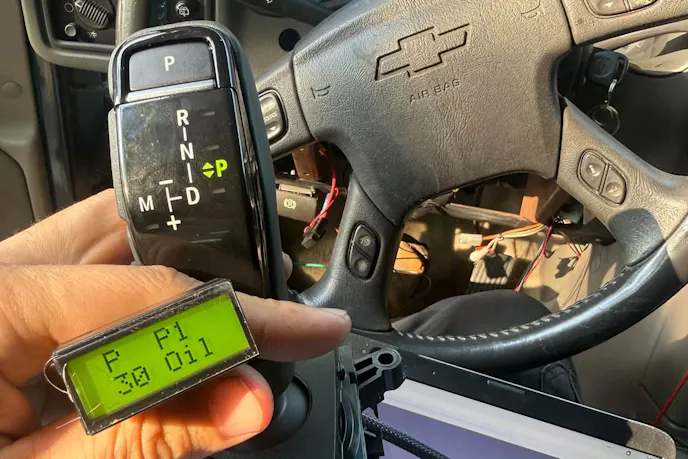
Carey spent $5,133.87 on the major components required for the conversion, not including miscellaneous hardware or dyno tuning. The swap utilized G-Force components, which he reported fit extremely well despite some naturally tight clearances. Guru Autowerks supplied additional components, while JBC3D Printing provided a center-console solution that integrated the new transmission controls into the Tahoe. A custom driveshaft completed the mechanical side of the conversion.
One of the attractions of the 8HP70 is its combination of affordability, strength, and gearing. Used 8HP70 transmissions from Ram applications can often be found relatively inexpensively, and Carey estimates the stock transmission to be capable of supporting around 700 horsepower. Its eight ratios range from a very aggressive 4.71:1 first gear to a 0.67:1 eighth-gear overdrive. That spread allows the truck to leave hard while still using relatively tall rear-end gearing, such as 3.08:1 or even 2.86:1, for comfortable highway cruising. The transmission also provides quick torque-converter lockup.
The more complicated portion of the swap was getting the TurboLamik controller to work properly with the Tahoe’s older P59 factory ECU. This isn’t as much of an issue with aftermarket standalone engine management systems such as Holley, Haltech, or MaxxECU, which have provisions for communicating with standalone transmission controllers.
Problem Solved
The critical issue with the P59 is torque management during shifts. Simply allowing the engine to remain at full torque during an upshift can dramatically shorten transmission life. Rather than using throttle closure to reduce torque, Carey devised a method of having the TurboLamik signal the factory ECU to pull ignition timing during the shift.
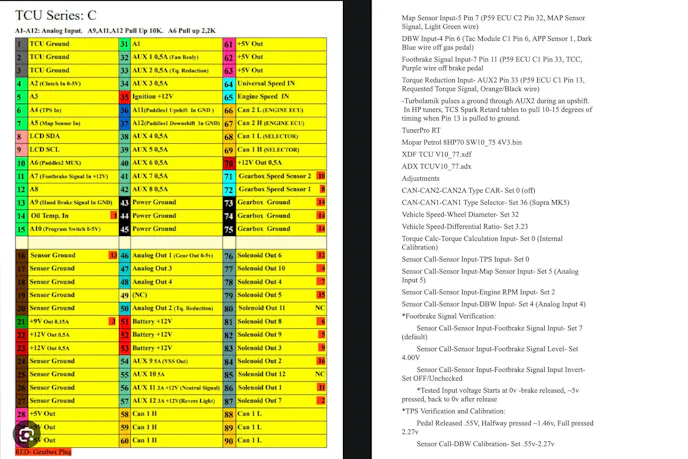
His solution connects TurboLamik AUX2 Pin 33 to P59 ECU C1 Pin 13. A Current Performance crank position signal splitter was used, which tied into Pin 65 (as well as on the TurboLamik). When properly configured through TunerPro, the TurboLamik pulses a ground through AUX2 during an upshift, signaling the P59 to immediately reduce ignition timing. Carey stresses that his initial settings were intended only for startup and light street driving so he could identify installation, wiring, leak, or tuning problems before final calibration.
Beyond basic transmission control, the TurboLamik offers eight selectable driving modes along with performance-oriented features such as a transbrake and bump-box functionality for drag racing applications.
Carey also recommends adding a manual neutral-release setup. While it isn’t required for normal operation, it provides a way to manually place the transmission in neutral if the vehicle loses electrical power.
The Tahoe was ultimately taken to the dyno, but unrelated electrical problems traced to damaged wiring on the salvage vehicle delayed final tuning and testing. Once those issues are resolved, Carey plans to complete the dyno and track testing and provide a more detailed video covering the swap.
Special thanks to Jeremy Carey for the excellent write-up on Facebook that was used to put this together. He did 90% of the work!
You might also like
Cadillac Celebrates 125 Years With A $239,000 Escalade-V Collector Series
Cadillac unveils the 2027 Escalade-V 125th Anniversary Collector Series, a $239,000 supercharged V8 SUV limited to just 252 examples.