

If you own a supercharged GM performance car, specifically a C6 or C7 ZR1, a Camaro ZL1, a CTS-V, or any of the other Corvettes, Camaros, and Cadillacs that rolled out of the factory with a positive-displacement blower bolted to the intake, you already know what it feels like to have real power on tap. The factory supercharger system is genuinely impressive. It was engineered by people who understand airflow, thermodynamics, and the demands of street-driven performance cars.
But here’s the thing: it was also engineered within constraints. Constraints around manufacturing repeatability, cost, fitment, and internal power targets set by marketing teams — not by racers trying to extract every last horsepower from a platform. That gap between factory engineering compromises and real-world performance potential is exactly where supercharger porting lives. And no one has gone deeper into closing that gap on GM’s positive-displacement superchargers than Kong Performance.
Understanding What’s Under The Blower
Every factory supercharged GM high-performance vehicle in the modern era, from the 638-horsepower LT4 in the C7 Z06 and ZL1 to the 755-horsepower LT5 in the C7 ZR1, uses a positive-displacement supercharger. Unlike centrifugal superchargers, which function more like turbochargers and build boost with engine speed in an exponential curve, positive-displacement blowers move a fixed volume of air per revolution. The result is a linear, predictable boost curve with strong low-RPM response: the kind of immediate, authoritative torque delivery that makes these cars feel so effortlessly fast from a rolling start.
The OEM lineup spans displacement from 1.7 liters on the earlier platforms up to the 2.65-liter unit on the LT5-powered ZR1. In the aftermarket, companies like Magnuson and Whipple Superchargers have pushed that envelope further, offering units in the 2.65- to 3.0-liter range with more performance-oriented castings. But whether we’re talking about a factory blower or an aftermarket unit, the core architecture is the same: two interlocking helical rotors that pull air in, trap it between the rotors and the housing walls, and compress it as it moves toward the outlet.
It’s also good to clarify the types of positive displacement superchargers out there.
TVS (Twin Vortices Series): Manufactured by Eaton, who is the tier one supplier for GM superchargers, is technically a highly advanced Roots-style supercharger. It features four-lobe rotors with a 160-degree twist. Instead of compressing the air inside the case, it moves the air from the inlet to the manifold, where compression actually happens. TVS blowers are renowned for their massive low-end torque, high efficiency, and quiet operation.
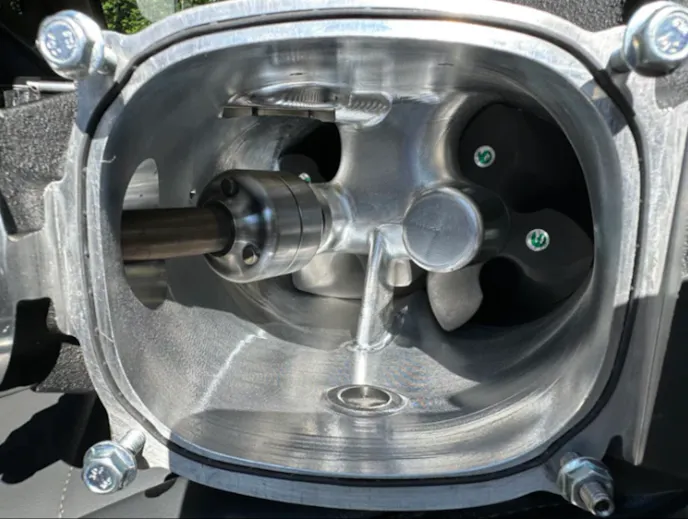
The rotors themselves are precision machined. The housing that surrounds them is cast aluminum. And that casting is where the story of porting begins.
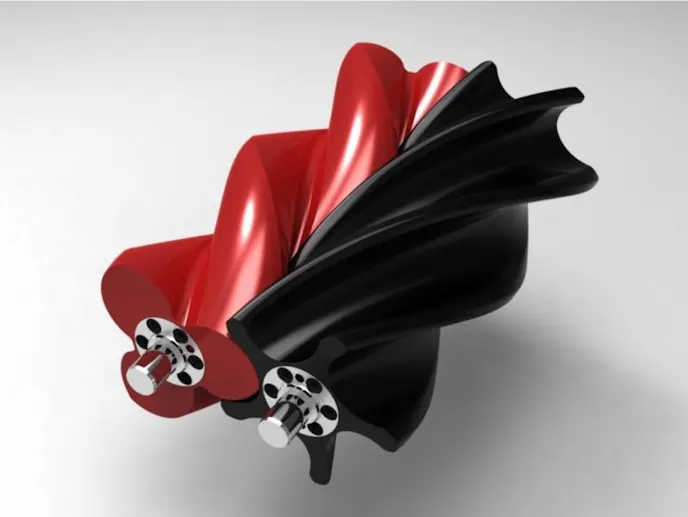
Twin Screw: Uses two interlocking, heavily twisted screws (a male and female rotor) that mesh together. Unlike the TVS, a twin screw internally compresses the air as it travels from the rear of the supercharger to the front, before pushing it into the engine. They are highly efficient at making big boost and produce an aggressive, signature whine. This is what many of the aftermarket companies like Magnuson and Whipple Superchargers offer in their lineups.
The Problem With Castings
Cast aluminum is an outstanding manufacturing material. It’s lightweight, thermally stable, and highly repeatable, meaning you can pour thousands of identical housings from the same die and expect consistent results. For a production vehicle manufacturer, those qualities are essential.
What cast aluminum is not is optimized for maximum airflow efficiency. The nature of the casting process means that inlet ports, outlet passages, and internal transitions are designed around what the casting can reliably produce, not around what an airflow engineer would draw on a clean sheet of paper. The result is a series of compromises built into the housing geometry that restrict how freely air can move into and out of the rotor pack.
These restrictions aren’t catastrophic. The factory supercharger makes impressive power. But as boost pressure increases — whether through pulley changes, aftermarket components, or higher-displacement blower swaps — those restrictions become increasingly significant. You’re asking more air to move through passages that were never designed to accommodate it efficiently. Turbulence increases. Pressure drops at the wrong points. The supercharger has to work harder to deliver the same result, which means more parasitic drag, more heat, and less net horsepower reaching the wheels.
This is the core problem that porting is designed to solve.
What Porting Actually Does
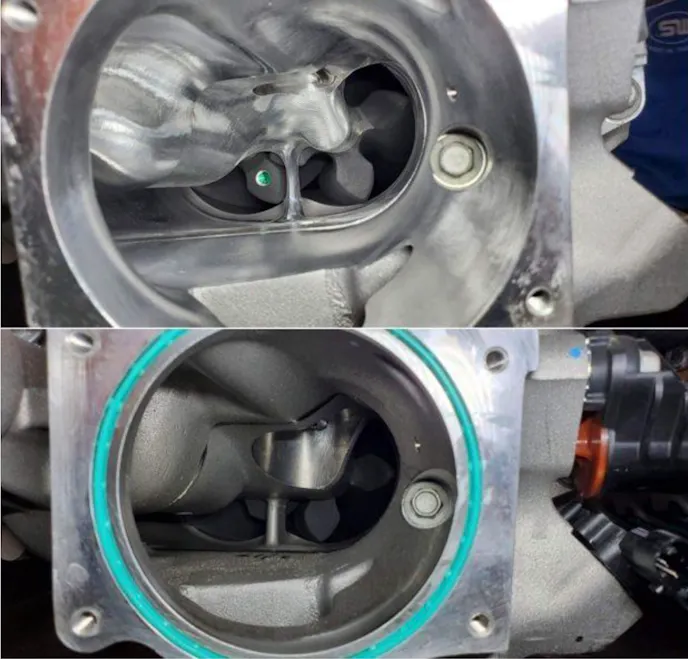
At its most fundamental level, supercharger porting is the process of removing material from the inlet and outlet passages of the supercharger housing in order to reduce airflow restriction. But describing it that simply undersells how technically nuanced the process actually is. There are two primary components to a properly executed port job, and they serve different but complementary purposes.
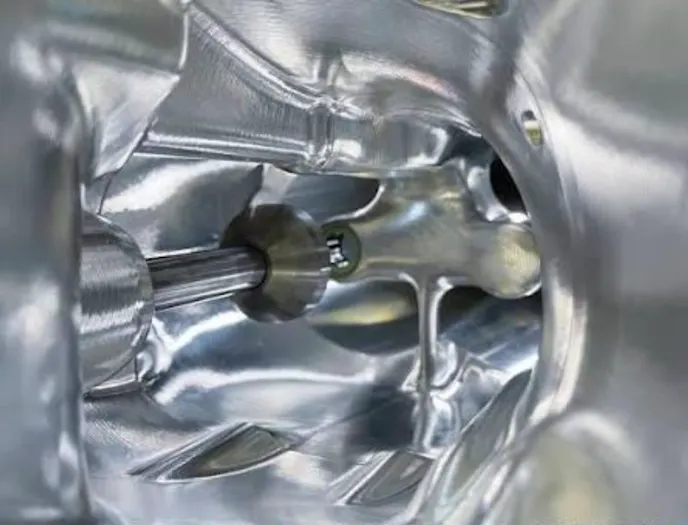
Volume Porting: Volume porting focuses on enlarging the inlet housing and creating a larger mass of air between the throttle body and the rotor bearing cup. Think of it as building a larger reservoir upstream of the rotors. This matters because the rotors themselves are capable of moving enormous quantities of air, but only if that air is available and can enter the rotor pack without restriction. Volume porting ensures that the upstream path into the blower is as open and efficient as possible, supporting what happens next at the rotor face.
This is the most time-consuming part of the port, and the quality of execution here often separates a competent port from an excellent one. Done properly, volume porting improves performance across all applications and RPM ranges.
Rotor Entry Porting: Rotor entry porting is where things get technically complex, and where the expertise of the person holding the tool matters enormously.
When air enters the rotor pack, it isn’t simply flowing in a straight line. The rotating rotors deflect the incoming air charge, creating what’s called rotor wash. The geometry of the rotor entry port — specifically, how much material has been removed and in what profile — directly determines how effectively that air charge fills the rotor lobes and how the resulting power is distributed across the RPM range.
More rotor face duration shifts the power band toward higher RPM, producing a higher peak horsepower number but sacrificing low-end torque. Less duration produces a stronger low-end power band with a softer top-end. The ideal port profile considers the specific supercharger’s efficiency map, its operating RPM range, and the power band the end user actually needs, whether that’s a street car that needs to be drivable every day or a purpose-built race car optimized for a narrow RPM window at the track.
The profile shape also controls how rotor wash behaves as air enters the rotors. Get it right and the air charge fills the lobes efficiently and exits cleanly. Get it wrong and you introduce turbulence that costs power regardless of how much boost you’re running.
Outlet Porting: Outlet porting completes the picture. Properly executed outlet porting in proportion to the inlet work allows air to exit the rotor pack sooner, which in turn allows the next charge of air to fill the rotors before the inlet has closed off. The balance here is critical: too little outlet porting and the gains are negligible; too much and you begin to hurt the power band by disrupting the pressure relationship between inlet and outlet.
If there’s one takeaway from all of this, it’s that supercharger porting is considerably more complicated than grabbing a die grinder and removing as much aluminum as possible. Volume, rotor entry, outlet area, and even the shape of the port can influence how efficiently the blower moves air and where the engine ultimately makes power. And we’re really just getting started.
Understanding what gets changed inside a positive-displacement supercharger is one thing. Understanding whether those changes actually work is another. That requires moving beyond theories about airflow and putting the finished product somewhere it can be measured. In Part 2, we’ll dive deeper into the methods Kong Performance created to extract every ounce of power out of supercharger airflow.
You might also like
The Ultimate Chevrolet Battle: Corvette ZR1 vs Corvette E-Ray At The Drag Strip
A Corvette ZR1 versus Corvette E-Ray drag race illustrates the two cars' distinct performance formats.