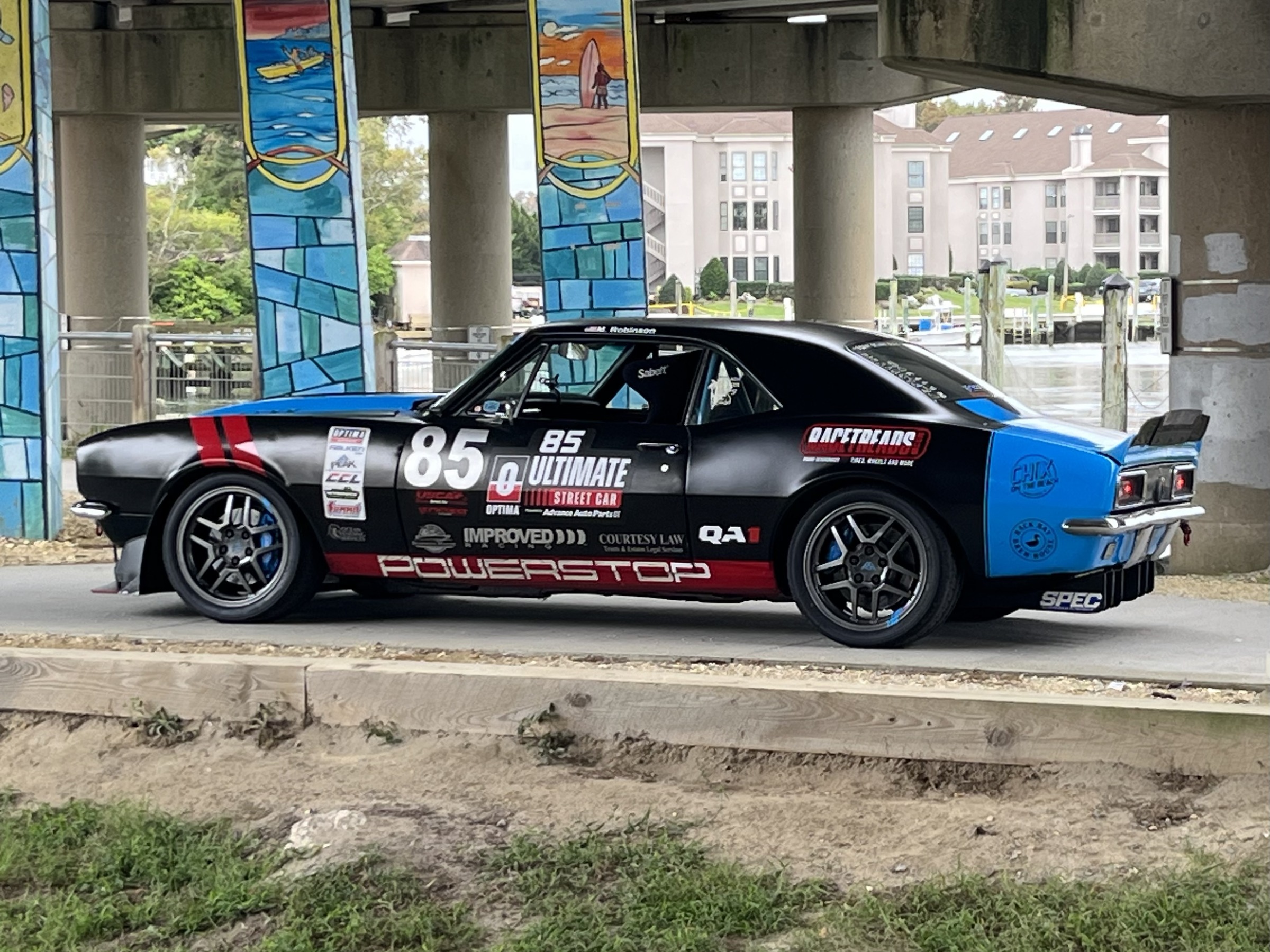
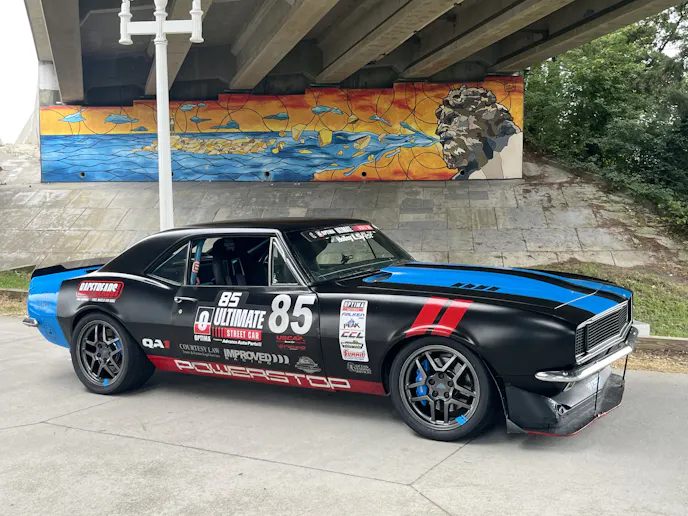
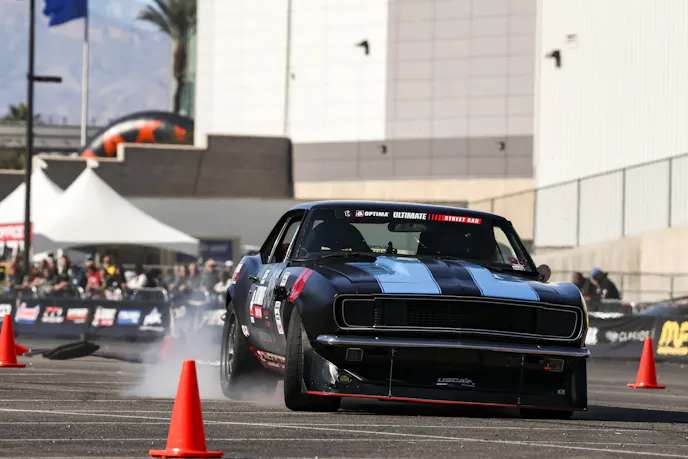
Mills Robinson’s awesome 1967 Camaro has spent a lifetime evolving into something a typical classic car owner might have a hard time even imagining. What started as a high-school hot rod with a warmed-up 307 and a Saginaw four-speed has spent more than four decades being meticulously reshaped into a homebuilt track terror. Today, the car mixes nearly 700 wheel horsepower with a custom pro touring suspension and enough engineering ingenuity to give considerably more expensive builds a serious run for their money.
We were introduced to Robinson through SPEC Clutch, which has supported his racing efforts since 2017. And as it turns out, there’s a whole lot more to this Camaro than the SPEC Stage 3 keeping its 404-cubic-inch LS2 firmly connected to the drivetrain. From the custom independent rear suspension to the Corvette-derived brakes and homegrown aerodynamics, Robinson has engineered much of the car himself while keeping it streetable enough to still drive across the country.
Naturally, we wanted to know more. So, with a little help from our friends at SPEC, we caught up with Robinson to talk about the Camaro’s evolution, what it takes to remain competitive in modern track competition, and how his clutch has survived years of street miles and track abuse.
LSX: You’ve owned your 1967 Camaro since high school. After all these years, what does the car look like mechanically, and how much has it evolved?
Mills Robinson: Mechanically, the car is completely different. I built it in high school, back in 1983, with a potent 307 and Saginaw four-speed. From there, I added big-block front springs, which were cut to lower it, Rancho leaf springs, and Rancho shocks. Next, I added disc brakes from an A-body and taller spindles with the Guldstrand mod. It was pretty trick for the 1980s. Later, I swapped on a set of 15-inch, third-gen Z28 wheels with 255/60s on all corners. It was really a pro touring setup before pro touring was actually a thing.
LSX: The Camaro debuted with an 11:1 LS6, 241 casting heads, and a COMP cam. Are you still running that combination now, and what kind of power is the car making?
Mills Robinson: The car is now running a fully forged LS2 with a stroker crank that makes it 404 cubic inches. The top end is CNC’d 821 rectangular port heads and an LS3 intake. I also run a COMP cam, ARP studs and bolts, and a full Improved Racing oil control system with a CTS-V pan. The engine made 568 wheel horsepower on 93 octane. With a 150 shot of nitrous, it’s just shy of 700 wheel horsepower.
LSX: Your original goal was to build a streetable race car. Has that philosophy changed as the car has gotten faster and your competition has become more serious?
Mills Robinson: The car is still fully streetable! It’s been to all the local cars and coffee meets, cruised up and down Atlantic Ave. in 100-degree heat, and been driven to all the places in between. I’ve driven it from Bowling Green back to Virginia Beach. I’ve also been forced to unload it and drive it from Oklahoma City to Las Vegas, as, apparently, it’s more reliable than my tow vehicle!
LSX: One of the coolest aspects of this Camaro is how much you engineered and fabricated yourself. What parts of the car are you most proud of building, and which ideas have made the biggest difference on track?
Mills Robinson: There are so many aspects of the car that I developed over the years that now seem commonplace on modern builds. I take that imitation as a form of flattery, since what I’ve added to the car certainly works.
The first mod was the independent rear suspension, which eventually evolved into a pushrod bellcrank design that’s housed in the trunk area. After that, I built a front subframe that uses modern Corvette components. That has evolved into C7 knuckles, C7 bearings, and C7 Brembos that make good use of PowerStop Track Day pads and rotors. The latest innovation is the integration of ABS, in the form of a BMW Mark60 system, that uses the C7 hardware for the wheel speed sensors.
Aero is another area I explored earlier than most of my competition. I believe I was one of the first people to use a diffuser on a classic muscle car. I wanted more downforce, but I didn’t want the drag of a big spoiler. Because of the IRS, the driveshaft is fixed, which meant I could tuck the exhaust up in the tunnel and dump it straight into the middle of the diffuser. I use the interior of the frame rails to supply air to ducts that cool the center of the rotors, and there are a ton of other smaller aero tricks that make the car fast while maintaining the classic lines of the 67 Camaro.
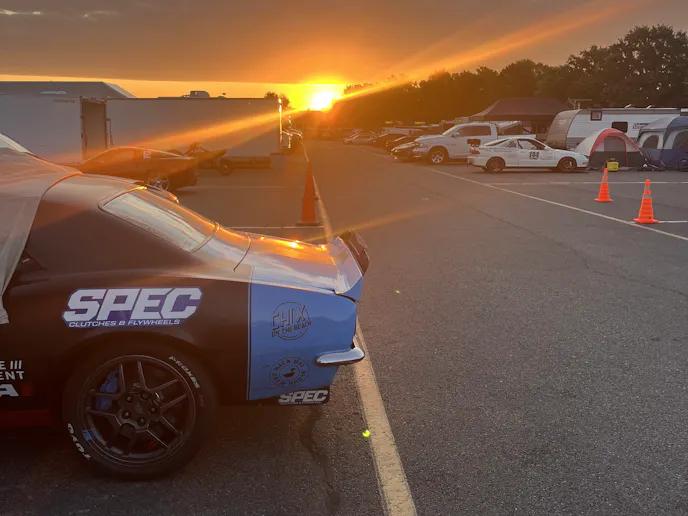
LSX: How did your relationship with SPEC Clutch begin, and at what point did SPEC become involved with the Camaro?
Mills Robinson: I met the owners of SPEC Clutch at VIR at the Grassroots Motorsports Challenge. At that time, I was running a SPEC Stage 1 clutch behind the LS6. Later in 2017, I won my way into the Optima Invitational at SEMA. So I stopped by the SPEC booth and invited them to come check out my car. After we chatted for a while, I told them I was building a bigger motor and could use some help with a clutch that could handle the extra power. SPEC has faithfully supported me ever since!
LSX: What SPEC clutch are you currently running, and what made that particular clutch the right choice for your LS-powered combination?
Mills Robinson: I’m currently running a SPEC Stage 3 6-puck clutch with a lightweight flywheel – a combo I’ve been using since I installed the LS2 stroker. In 2024, I had a ring gear break off the flywheel. When I tore everything down, I discovered that, despite the clutch still working flawlessly, it actually had several broken springs. SPEC rushed the parts out to me in time for us to get the car to SEMA. It’s been flawless ever since!
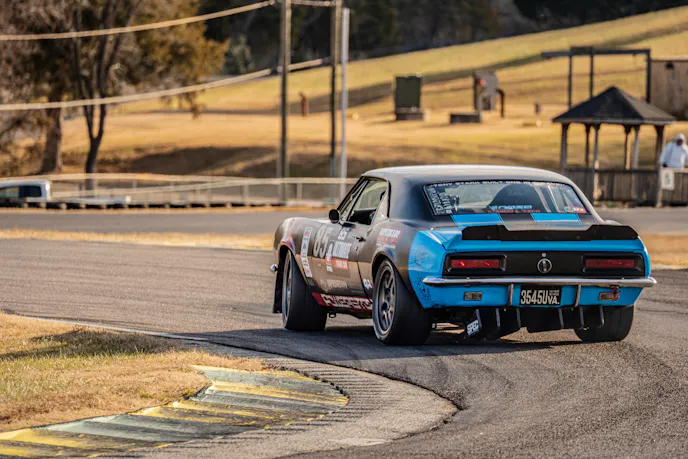
LSX: A Pro Touring car needs a clutch that can survive repeated hard shifts and track temperatures while still working on the street. How does the SPEC Stage 3 balance holding power with drivability in your Camaro?
Mills Robinson: The clutch works flawlessly on the street, yet it will survive any dump I throw at it. It’s a little stiffly sprung for heavy stop-and-go traffic, but moderate street traffic is not a problem.
LSX: Have you worked directly with SPEC to develop or refine the clutch combination, and has anything you learned from racing the Camaro resulted in changes to the setup?
Mills Robinson: Not really. The Stage 3 setup I’m using is an off-the-shelf package, made specifically for big-power LS engines, that’s been performing flawlessly.
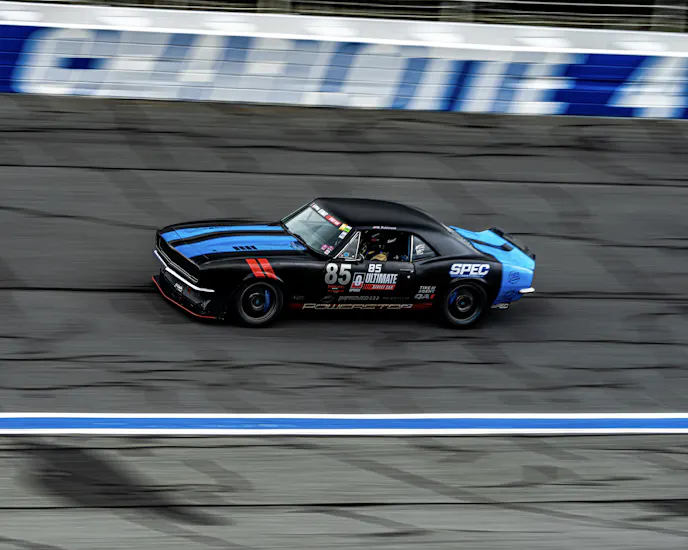
LSX: You’ve been racing this car long enough to watch pro touring evolve dramatically. Where have you seen the biggest changes in the competition, and what does it take for an older, homebuilt car like yours to remain competitive today?
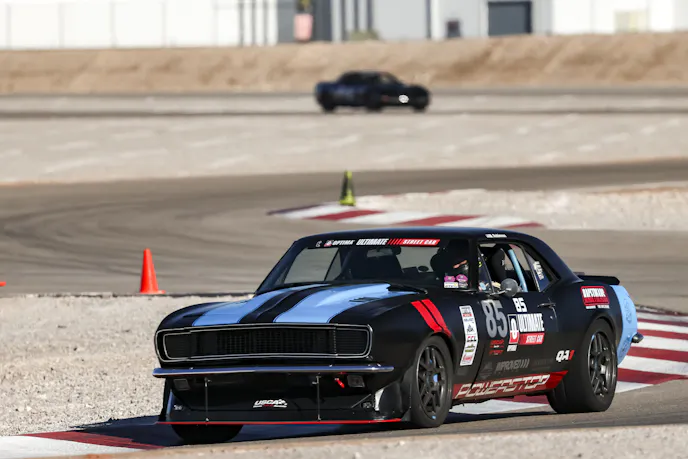
Mills Robinson: Money! It takes a lot of money… Seriously, I’ve made it work with very little money. I’m fortunate that I am able to design and build things myself to keep the car evolving. I do believe the competition has increased exponentially in the last five years. These days, if you don’t have a full custom chassis under your car with the latest high-tech shocks and geometry, you’re gonna get left behind. The biggest advances I’ve seen lately, however, are in the areas of ABS, traction control, launch control, and electronics. For example, aftermarket ECU systems that can control everything have become the norm.
LSX: After decades with the same Camaro, is another evolution coming? What’s next for the car, and where do you see SPEC fitting into whatever you decide to do next?
Mills Robinson: Yes, the car is always evolving! I just finished up my ABS installation and got that dialed in at the Charlotte Roval this past July. I have some suspension damage that I need to repair before the next outing in December at VIR. This winter I have plans to do some bodywork, clean up the gaps and panels on the car, and to redo the wrap.
I’m also building a new motor. The LS2 has given me more than I could have asked for, and it’s running really well at the moment. But they always run great right before they don’t, so I’m getting ready for the inevitable. The new motor will probably get a clutch upgrade to one of SPEC’s twin disc offerings, because it will, of course, be bigger and better than what I have now!
When I’m ready to swap in the new motor, I’ll upgrade the ECM to an aftermarket unit. Then, who knows what else I might throw into the mix? In the meantime, I’m trying to find money. I currently have empty quarter panels for rent, if you guys know of anyone who needs some exposure to hardcore car enthusiasts!
You might also like
Win This Custom 1970 Chevrolet C30 Dually Restomod
A custom V8 hauler headlines the 1970 Chevrolet C30 Dualie Restomod giveaway. Charity donations secure tickets before the fall drawing.