
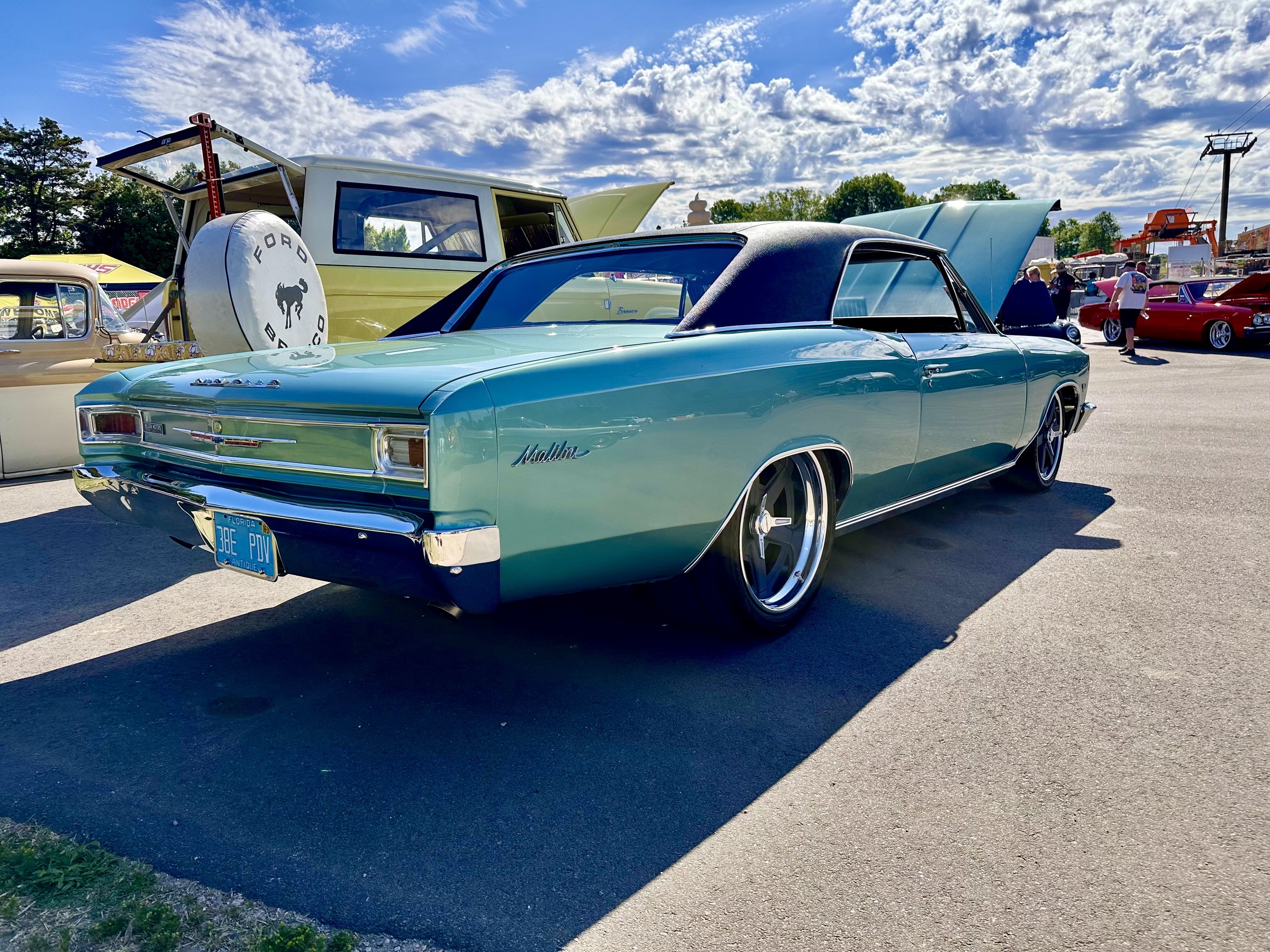
Sometimes deceit is a wonderful thing, especially when it comes to cars. Don’t get me wrong, as a traditionalist who still owns three carbureted classics, it’s always cool to see any Chevelle – especially if it’s rocking a 396, a 402, or a 454. But times have changed, and many enthusiasts simply love to wrap timeless Chevrolet style around easy LS power. That brings us to this sweet 1966 Malibu, old-school vinyl roof and all!
The Best Kind Of First Impression
In this author’s opinion, 1966 and 1967 were the pinnacle of Chevelle design. Sure, the 1970-1972 short-decks are fantastic, but you just can’t beat the proportions of the first-gen car. This particular first-gen started this phase of its life as a clean Malibu coupe that had already been restored. After being purchased by owner, Roger Nelson, the Chevy was separated from its factory frame, dropped onto a fresh Roadster Shop SPEC chassis, and polished into a super cool resto-mod.
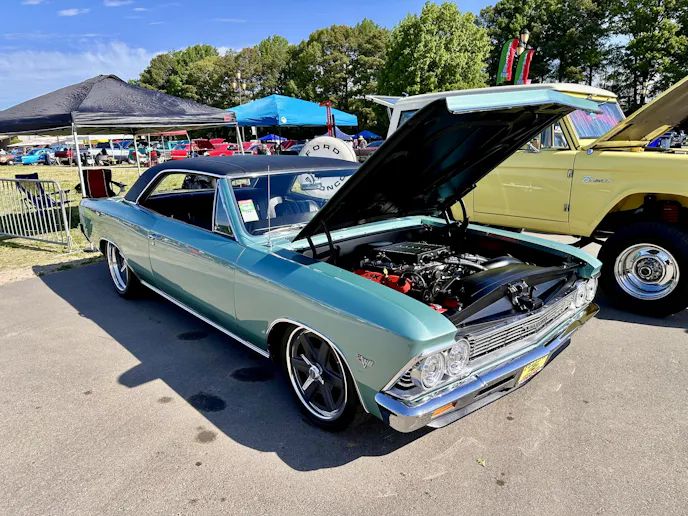
According to Nelson, the point of that process was to avoid the “black hole of paint and body” restoration projects often fall into. Nelson is quick to point out that neither he nor Anthony Barelli, the friend and colleague he collaborated with, are professional restorers. Sourcing a solid cruiser meant that, as opposed to massaging 60-year-old metal and spending months progressing to paint, the build would be much more straightforward. In essence, the Chevelle was a fun side project between friends. Apparently that arrangement worked pretty well, since, once this Chevy was completed, Nelson dropped another project off for Barelli to tackle.
That paint, by the way, is correct Artesian Turquoise, which is nicely accented by a tight vinyl roof. The Chevelle still features all of its tasteful, factory-style trim. Nelson even went to great pains to retain the factory Malibu hood despite hiding supercharged LS power under it.
LSXcellence
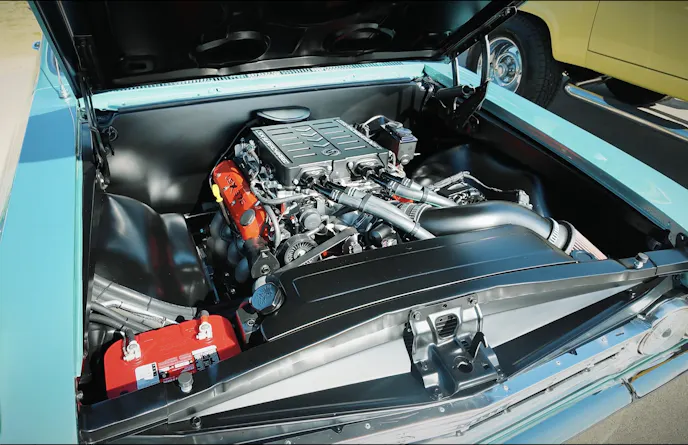
Yep, you read that right! Between the fenders, a supercharged LSX376 utilizes a familiar LSA supercharger to send a massive 638 horsepower directly to the car’s rear wheels. That makes a lot of sense in simplifying the build, because going directly to the source and scoring some prime LS power is much easier than falling into the black hole of junkyard LS swaps. Straight off the assembly line, the internally balanced engine features an iron block, a forged rotating assembly, high-flow rectangular port heads and stout 9.0:1 compression. That’s good for up to 15 psi of boost and, as Nelson put it, is plenty of power and potential for the car.
Getting the LSA blower under the stock Malibu hood did require a little problem solving. No one wanted to ruin the lines of the car by cutting up the hood, and a standard LSA supercharger lid simply wouldn’t clear. Instead, the builders opted to include an XtremeCFM supercharger lid that, similar to GM’s own LS9, swaps the LSA’s chunky intercooler brick for two lower profile units. It’s a relatively small detail, but it speaks volumes about the car’s entire build. There were simpler ways to solve the clearance problem, but Nelson and Barelli are strategists who like to employ logic and common sense.
As for power, well, there are plenty of four-digit LS builds roaming around these days. But 638 horsepower at the wheels in a classic Chevelle is hardly what anyone could consider slow. Plus, the car was built to be driven, not trailered to the strip and enjoyed a quarter mile at a time.The blown LSX offers enough kick to make the go pedal entertaining without turning every trip to the grocery store into a qualifying session.
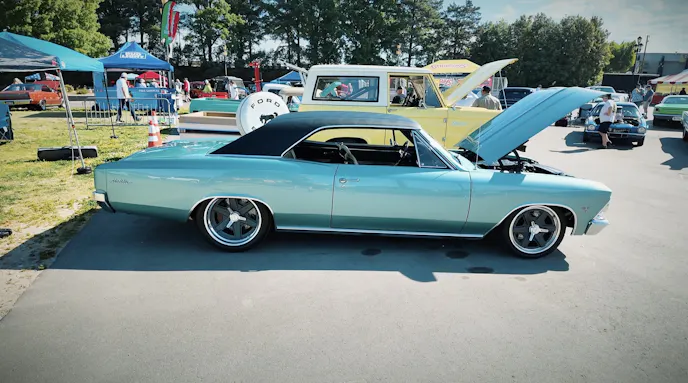
Up To SPEC
What good are 638 horses to the wheels if you can’t control them, or you simply break something every time you whip them? That’s where our friends at Roadster Shop and their awesome SPEC chassis come into the picture. Instead of trying to make this Chevy’s original frame behave like something it was never intended to be, the SPEC chassis introduces the luxuries of modern suspension geometry, improved rigidity, and vastly better overall road manners. But the addition of a new, well-engineered chassis is really so much more than that. It’s the kind of upgrade that fundamentally changes how an old car feels without changing what you see from across the parking lot.
The LSX throws torque through a 4L80 4-speed, giving the car a drivetrain that’s capable of handling plenty of abuse while remaining perfectly comfortable on the street. The engine growls through a fully welded Borla stainless exhaust system. And everything rolls on sweet Forgeline RS6 wheels, which, in addition to giving the car a more contemporary stance without fighting against its traditional bodywork, provide one of the few immediate visual clues that this isn’t just some restored classic.
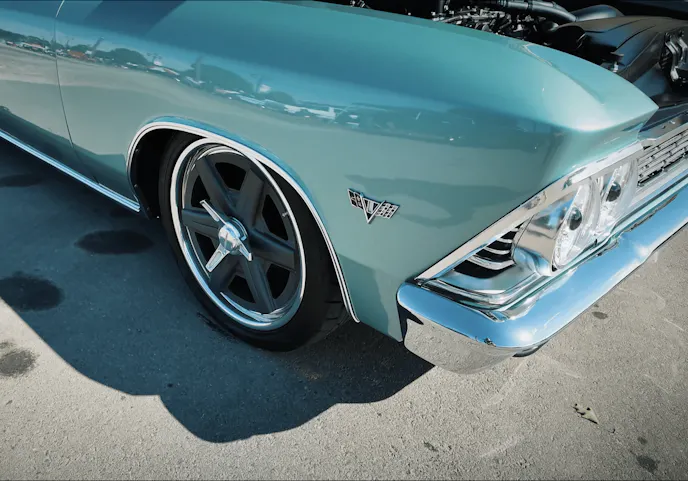
Less Is More
Chevrolet’s timeless 1960s aesthetic is still alive and well throughout this Chevelle’s cockpit. At first glance, the interior appears almost completely factory-spec, and that level of restraint might be one of my favorite aspects of the build. Naturally, the dash has been fitted with a stylish set of Dakota Digital gauges. Vintage Air conditioning makes all-weather cruising a pleasure. A small Kicker head unit bumps up the audio. Other than that, the car is just pure old-school style!
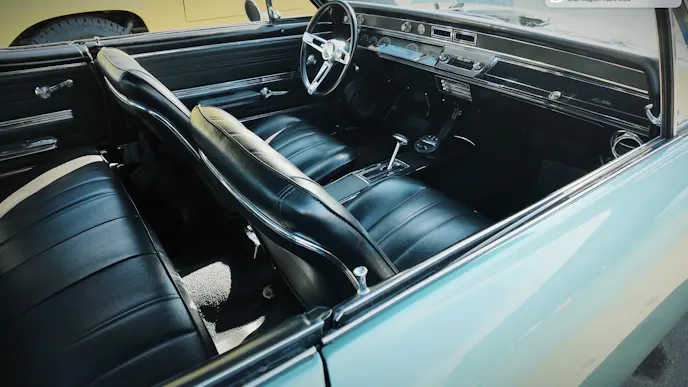
It’s really easy to get carried away building a restomod. The temptation to modernize everything is almost too much to resist, especially if you have the resources to commit to an aftermarket chassis and supercharged LS power. Thankfully, this stellar Malibu takes the opposite approach. The Roadster Shop chassis, 4L80 4-speed, modern electronics, and hotted-up LSX exist to make the car faster, stronger, and better to drive. But none of those upgrades required turning the Chevelle into something unrecognizable.
From across the parking lot, it’s still a beautifully finished Artesian Turquoise ‘66 Malibu with a vinyl roof and stock hood. That said, fire the car up and put your foot in it, and you’re quickly reminded that this ain’t 1966 anymore. The best part is that Nelson actually intends to enjoy the Chevy as, according to him, it’s simply a good-driving classic.
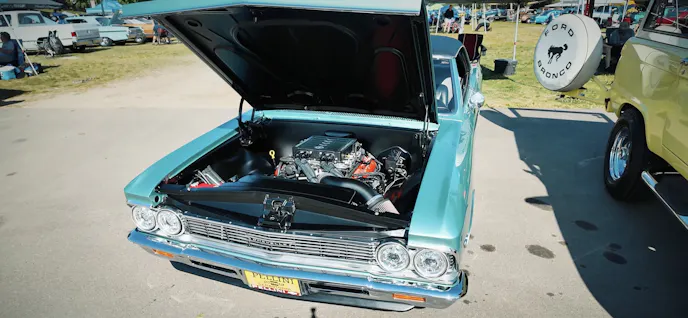
There will always be something cool about an immaculate, numbers-matching restoration. But there’s also something deeply satisfying about a classic that preserves everything people loved about the original while quietly eliminating most of the reasons old cars can be frustrating to drive. Timeless looks, a modern chassis, a comfortable interior, and 638 horsepower at the meats: sometimes building the perfect muscle car really is that simple.
You might also like
Cadillac Celebrates 125 Years With A $239,000 Escalade-V Collector Series
Cadillac unveils the 2027 Escalade-V 125th Anniversary Collector Series, a $239,000 supercharged V8 SUV limited to just 252 examples.