

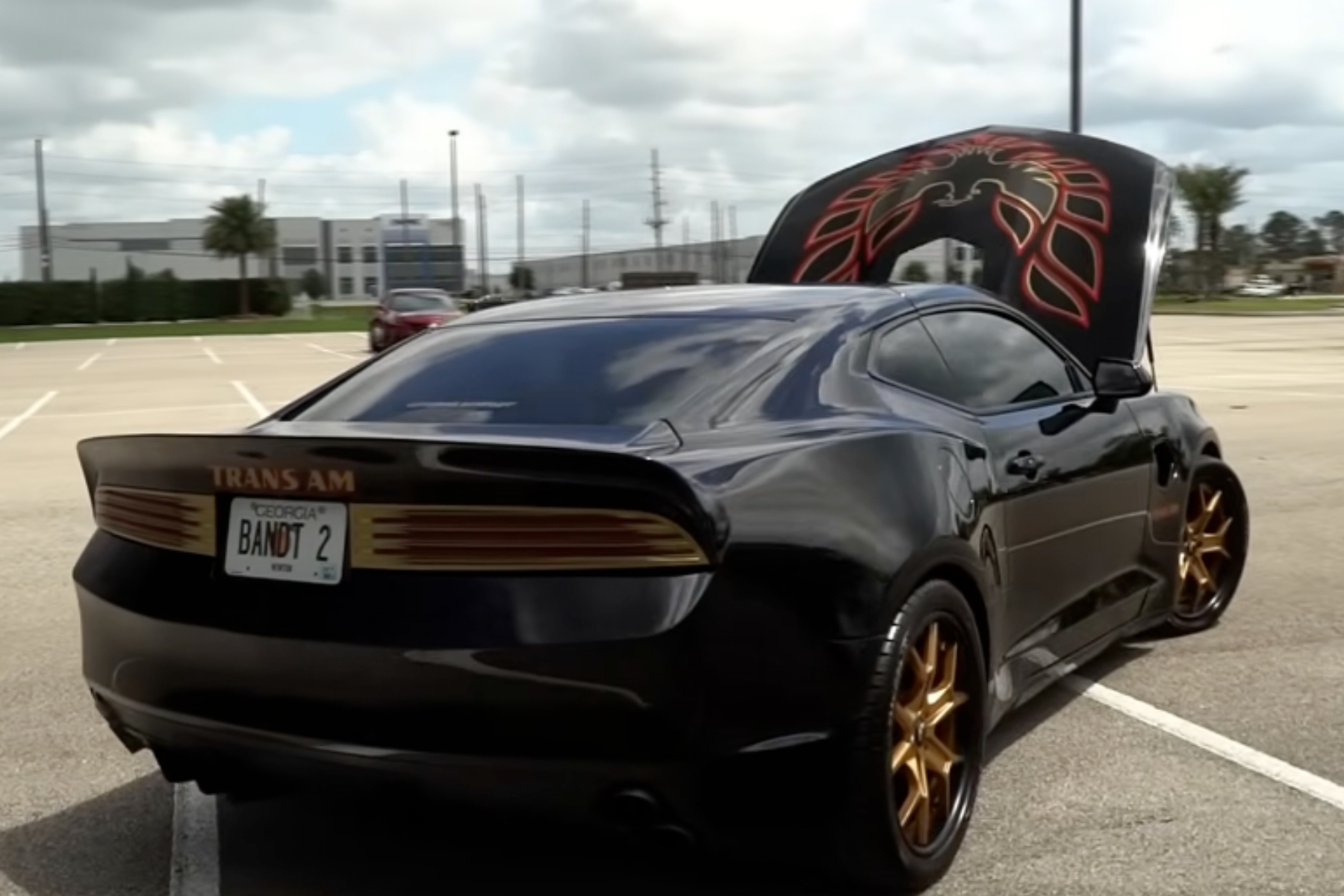
Pontiac has been gone since 2010, and the car community has never quite gotten over it. The Trans Am in particular left a hole that nothing has filled, and for a generation of enthusiasts who grew up watching Smokey and the Bandit or seeing black Firebirds parked at car shows, that absence is felt every time someone asks why GM let it die. The Late Model Racecraft Trans Am is about as close to an answer as anyone has come.
The shop converted a 2018 Camaro into a modern interpretation of the iconic Pontiac Firebird Trans Am, and the attention to detail on the exterior is hard to miss. Rather than a loose tribute, this build commits fully to the aesthetic, giving enthusiasts something that looks the part while hiding serious modern performance underneath.
The body carries all the right visual cues, from the front splitter and updated headlights to the rear taillights, spoiler, and exhaust tips. Gold wheels, rear quarter panel treatments, and a full rear diffuser round out the look, with color-matched gold and red details tying everything together. The interior received the same treatment, with Recaro seats featuring custom stitching, a Firebird logo, and matching gauge and steering wheel finishes.
One of the more notable features is the T-top roof. The sixth-gen Camaro does not come from the factory with T-tops, so this conversion makes the car genuinely unique. That detail alone will stop any Trans Am fan cold, and it goes a long way toward making this feel like more than just a body kit on a Camaro.
Late Model Racecraft Trans Am: 396 ci And Forced Induction
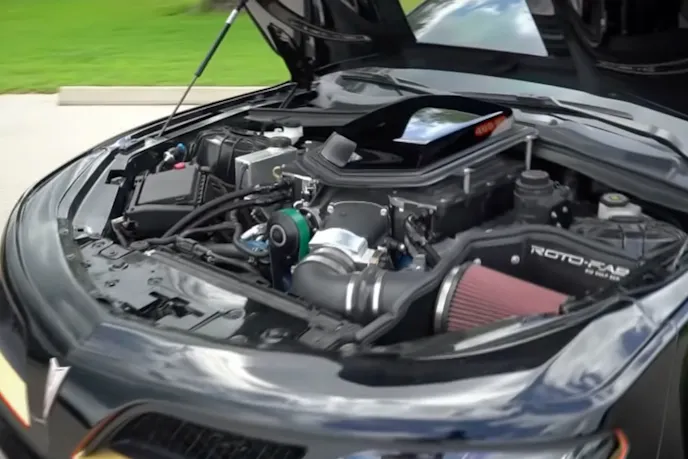
The car’s retro shaker hood hides a built, 396 cubic inch engine that’s paired with a 2650 supercharger, a custom hydraulic camshaft, long-tube headers, and an upgraded fuel system. Late Model Racecraft describes this as their standard 1,000-horsepower package, one they also run on C7 Z06 builds and CT5-V platforms.
On 93-octane pump gas, the car produced 840 rear-wheel horsepower on the dyno. The shop notes that output could climb with more boost, but the current tune keeps the build streetable and reliable for its role as a weekend toy. Because of the larger displacement engine, custom camshaft, and long-tube headers, the supercharger is not being pushed anywhere near its limit to make that power.
A coil pack relocation kit keeps the engine bay looking clean by moving the coils out of sight while still leaving the valve covers visible. The car has just over 2,300 miles on the odometer, making it a low-mileage, well-presented package that backs up its looks with genuine performance credentials.
Sorting Out The Electrical Gremlins
The car arrived with problems that other shops had not been able to resolve. The factory automatic transmission had been swapped for a manual unit before it came to Late Model Racecraft, and the module communication between components had never been properly dialed in. That left the car with a handful of electrical gremlins that had stumped previous shops.
Late Model Racecraft reprogrammed the modules, replaced the clutch, and added a smooth boost bypass valve for improved drivability. Once everything was sorted, the car drove the way a build like this should. It pulls cleanly from low RPM and still manages to spin the tires in second, third, and fourth gear when the driver gets into it.
The windows were also tinted during the shop visit, and the team notes that the current rear tires will not hold up long once the owner starts getting brave with the go pedal. According to the shop, the customer was impressed enough with the work that he is also sending in a Cadillac Escalade V and a CT5-V for future builds.
In a world where so many modern muscle car builds lean heavily on nostalgia without delivering substance, this Late Model Racecraft Trans Am manages to do both. It captures the attitude and unmistakable presence that made the original Trans Am an icon, while backing it up with the kind of power, drivability, and refinement enthusiasts expect from a modern performance car. More importantly, it feels like something Pontiac itself might have built had the brand survived long enough to evolve into the modern era.
You might also like
Check Out The 602hp Chevy Silverado Launch Edition By Callaway Cars And Waldoch Crafts
Poised to dominate the street, the 2026 Chevy Silverado Launch Edition, by Callaway and Waldoch, features 602 supercharged horses.