


If you’re a GM fan, you know the company’s legacy of legendary performance. From fuel-injected Bonnevilles and the small-block Bel Air they called “The Hot One” to Blackwing Cadillacs and America’s favorite sports car, The General has certainly given enthusiasts a lot to love. What rarely gets love is the place where nearly every one of those legends earned its stripes. The place where an entire army of engineers has run, slid, crashed, and dissected virtually every one of the company’s creations for over a century: Milford Proving Ground.
It’s been 102 years since GM opened Milford’s gates, making the facility the oldest dedicated automotive proving ground in the world. While Milford has tested everything from family sedans to autonomous vehicles, it’s also, without a doubt, one of the most important pieces of the development of the awesome V8s we all know and love. For LS and LT enthusiasts, that’s certainly a big deal. By the time a modern Corvette, Camaro, Cadillac V-series, or Silverado rolled off the assembly line, countless prototypes had already spent thousands of miles being punished at Milford. For engineers, the goal was simple: make sure those engines can survive the abuse that power-hungry enthusiasts are sure to throw at them in almost every form of motorsports competition.
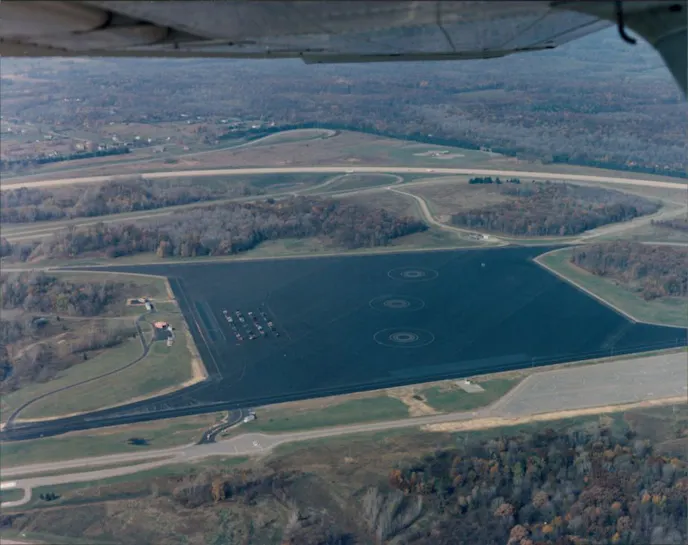
Today, spanning more than 4,000 acres, Milford Proving Ground features 150 miles of test roads that include everything from old-school gravel paths to smooth highways and punishing durability loops. Within those confines, GM engineers log more than 15 million test miles every year, exposing new powertrains to conditions few owners will ever experience. The team can even adjust things like temperature, altitude, humidity, and sustained wind speeds to ensure every design performs consistently regardless of the environment it’s sold into. For modern V8 engines that are required to meet EPA standards while providing exceptional power and durability, that kind of testing truly matters.
Now more than ever, a high-performance V8 isn’t just expected to produce impressive dyno numbers. First and foremost, the V8 has to be compatible with multiple vehicle styles to justify development costs. The engine has to comfortably idle through traffic in a Suburban with the air conditioning blasting. It needs to be able to tow heavy loads in both light and heavy-duty trucks. At the same time, it needs the ability to survive repeated wide-open-throttle pulls and endure countless hours on the racetrack in sports cars, sedans, and coupes. Milford gives GM engineers one location where all of those scenarios can be evaluated before production begins.
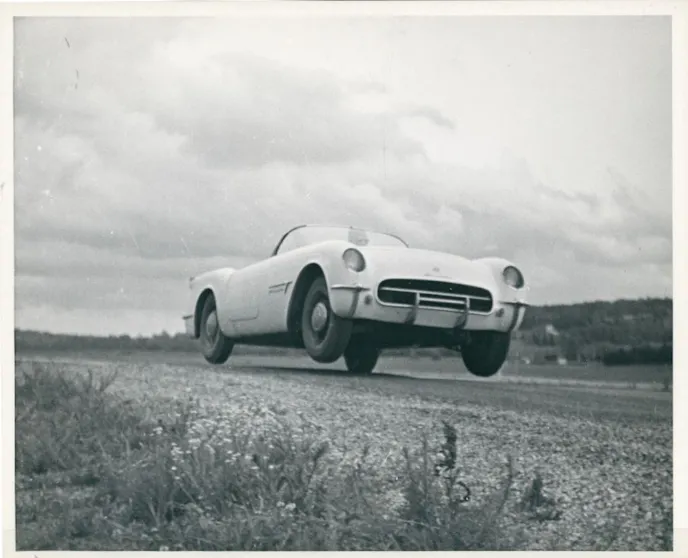
One of Milford’s crown jewels is its 2.9-mile road course. The circuit incorporates 17 different turns modeled after famous racetracks around the world, along with a long straightaway capable of speeds exceeding 150 MPH. Every generation of Corvette has turned laps there, including today’s fire-breathing C8 ZR1. It’s also safe to assume plenty of LS-powered Camaros, CTS-Vs, and Cadillac Blackwings have spent long days attacking those same corners while engineers refined cooling systems, suspension calibrations, and power delivery.
Milford’s influence stretches far beyond outright performance. Long before the LS became the world’s favorite swap engine, GM engineers were developing innovations there that changed the entire automotive industry. The proving ground hosted some of the earliest rollover testing, helped develop the Hydra-Matic automatic transmission, pioneered guardrail design, refined catalytic converters, and even served as the testing ground for technologies like Super Cruise.
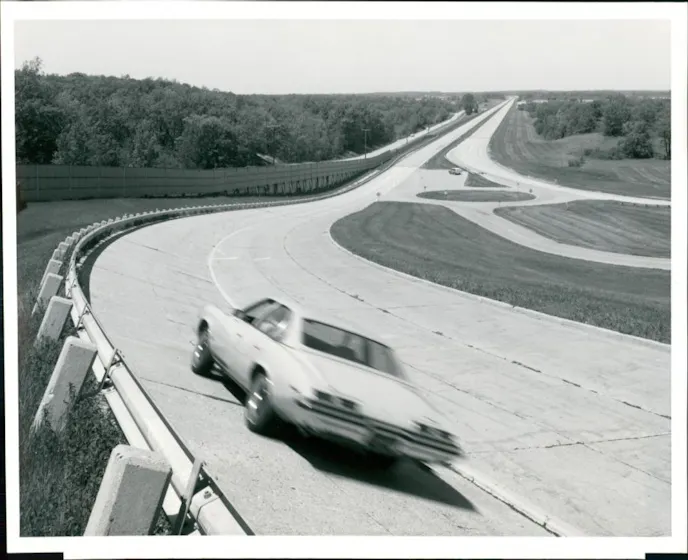
The next time you see an LS-powered project making four-digit horsepower or watch a stock, LT-powered Corvette dominate a road course, remember that neither happened by accident. Before those engines became favorites among enthusiasts, they first had to survive one of the toughest proving grounds in the automotive world. For over a century, Milford Proving Ground has quietly helped create the performance vehicles we celebrate.

You might also like
JEGS Makes Shopping For Your Next LS Or LT Build Easier
JEGS launches a redesigned website with improved search and fitment tools to make finding parts for LS and LT builds easier.