

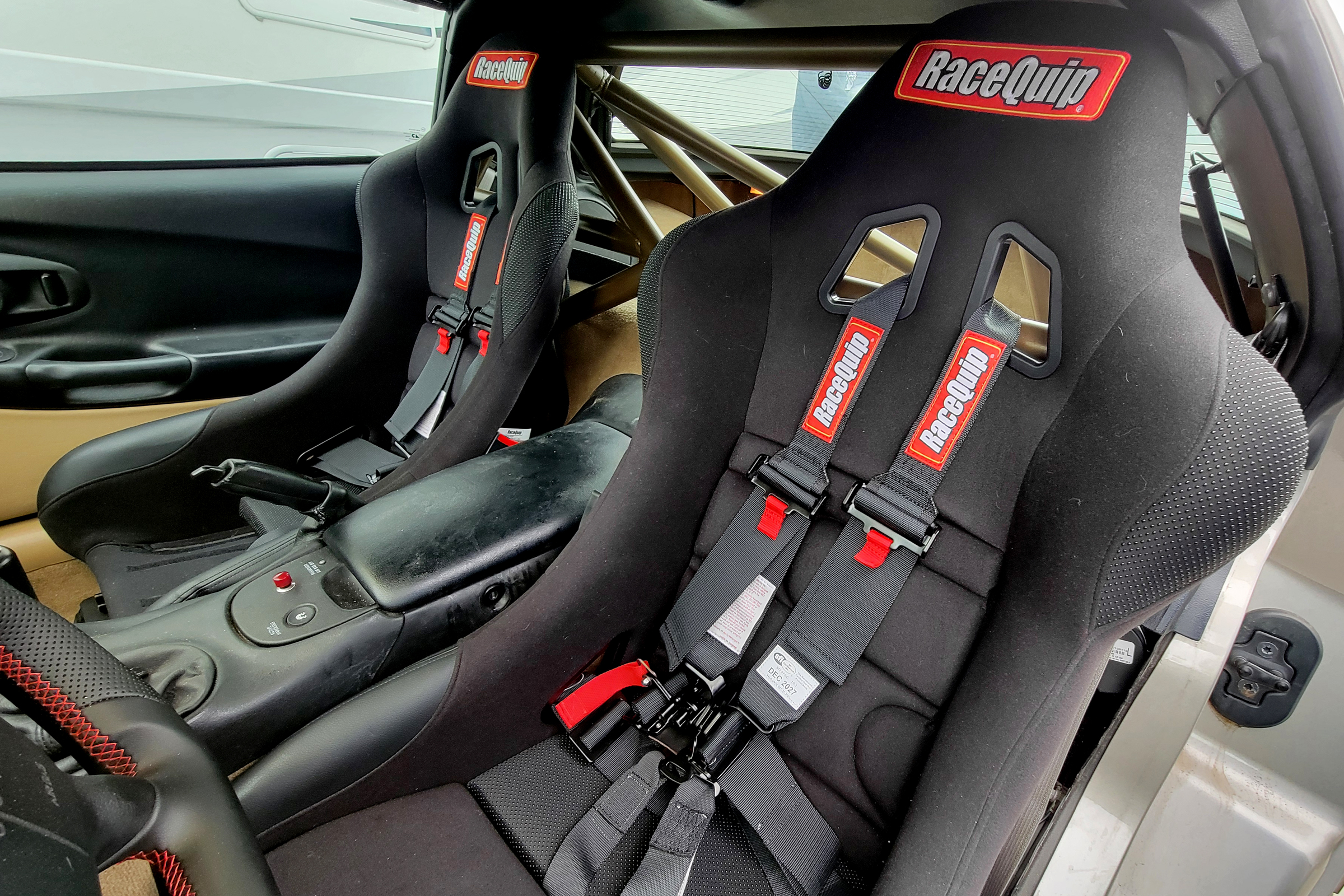
As we talked about a few months ago, we take safety more seriously than the average bear. That mantra doesn’t just apply to our person, but the car as well. So, it’s time to upgrade Project Honey Badger into the ultimate road and track (that’s the road course version of street/strip) platform.
To do this, we plan to add a pair of composite fixed-back race seats and six-point harnesses from RaceQuip, along with a four-point roll bar from Studio RSR. This will not only increase safety on the road course and increase the connection between the driver and the chassis, but it will also replace the aging, heavy C5 leather power seats.
Like our last safety article, a quick bit of background for a frame of reference. In my late teens to mid-twenties, I commuted between 120 and 160 miles a day to the magazine office, in a completely gutted, caged car, with the window net tucked away on the street, in a fixed-back race seat. So to say I’m not averse to some NVH and loss of creature comforts is an understatement.
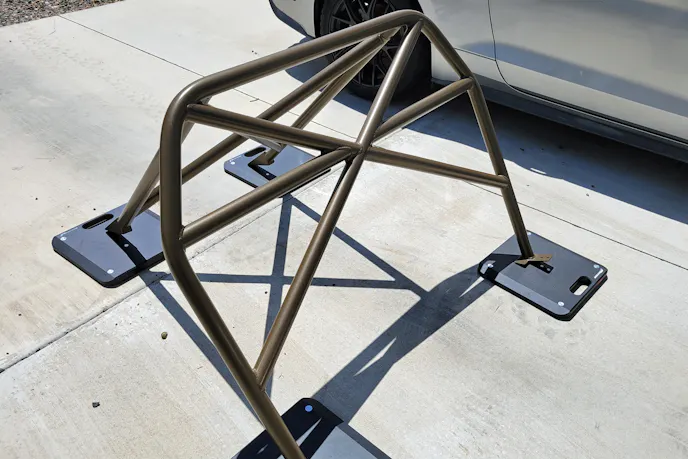
Studio RSR 4-Point Roll Bar For C5 Coupes
Once the original decision was made for the course of Honey Badger — converting from a street/strip car to a road and track car — there was no doubt that the car would get a roll bar. First, because the car’s previous owner helped install the roll bar two decades ago in my road race car, and second, because, well, we take safety extra seriously.
So, the hunt began. There are a lot of options available with a few clicks on the internet, from simple bolt-in options to full-on weld-in Formula Drift-legal roll cages, thanks to the C5 Corvette’s popularity across a large swath of motorsports. However, one lesson we learned from our previous experience was that a four-point roll bar has a significant increase in comfort on the street over a full roll cage. We checked all the safety regulations of the relevant sanctioning bodies (SCCA, NASA, Global Time Attack, and LS Fest), and since there are zero plans for wheel-to-wheel racing with Honey Badger, a four-point structure is more than adequate per the rules.
While we were searching, we came across a completely unrelated video one night of a Japanese Porsche 991 GT3 Cup EVO with a Studio RSR bolt-in roll bar that led us to look them up. We were initially disappointed when we didn’t see a C5 Corvette application listed. A quick message to the Studio RSR tech team confirmed what we suspected by looking at the product page: The C6 roll bar would fit a C5 coupe.
Not only is the Studio RSR roll bar aesthetically pleasing, with the double X-braces, but there were a couple of other options that sealed the deal for us. The first was that there was an upgrade option for 1.75-inch-diameter 4130 chromoly tubing over the standard DOM steel tubing. Chromoly tubing is allowed to have a thinner wall than mild steel, reducing its weight while being stronger.
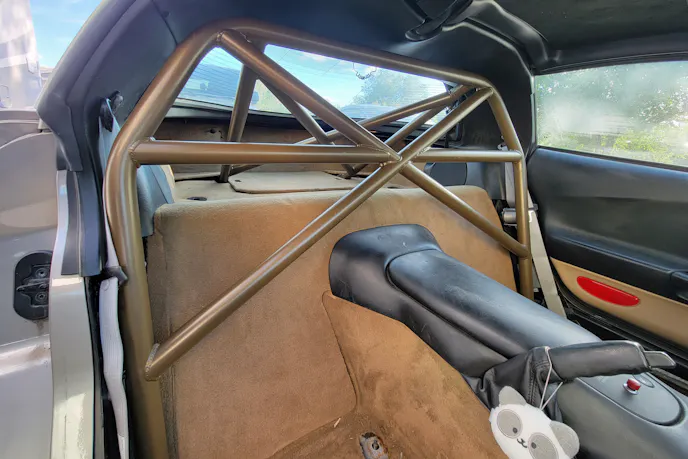
The second, and this is purely aesthetic, is Studio RSR’s ability to custom powdercoat the roll bar any color in the Prismatic Powder catalog. Since the entire bar is fabricated and coated in-house, you can get the bar in one of four colors (black, white, red, or yellow) at no extra cost, or you can crack open the powdercoat catalog and go wild. As the Studio RSR team can attest, picking the right color took the longest part of the order process. We settled on Highland Bronze to complement the car’s Pewter Metallic paint and Light Oak interior.
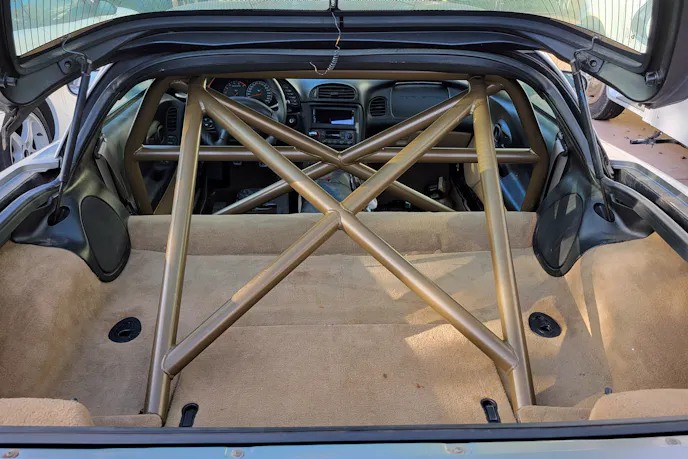
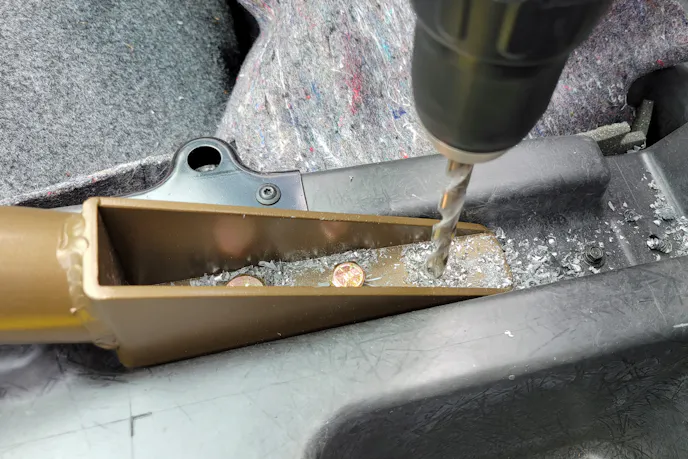
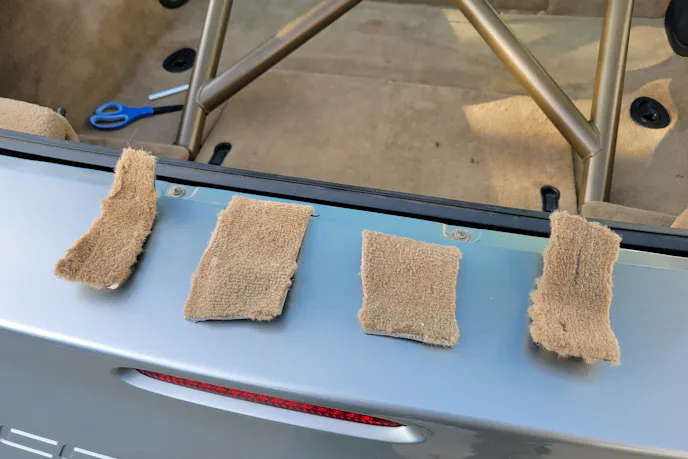
The installation of the four-point roll bar is truly 100-percent bolt-in. Remove the carpet, set the main hoop and rear kickers in place, drill a dozen holes, and tighten a dozen bolts. In a testament to Studio RSR’s design and fitment, the factory carpet only had to have four small pieces notched to be reinstalled. With the roll bar bolted in place and the carpet reinstalled (per the GTA Enthusiast class rules), it was time to address seating.
RaceQuip FIA-Rated Composite Racing Seats
For a lot of people, a fixed-back race seat is a huge mental jump from an adjustable street seat. That gap is mainly in perception, not reality. As someone who has commuted well over 100,000 miles in a fixed-back race seat, as long as you find one that fits properly, longer drives aren’t really an issue.
However, what can be an issue in any Corvette — especially a C5 — is actually getting a seat that fits in the car. The C5’s double retractor OEM seatbelt takes up precious floor width that the Corvette really doesn’t have to spare. Now, combine that with being a portly fellow, and getting a seat that fits both the car and the driver can be a challenge.
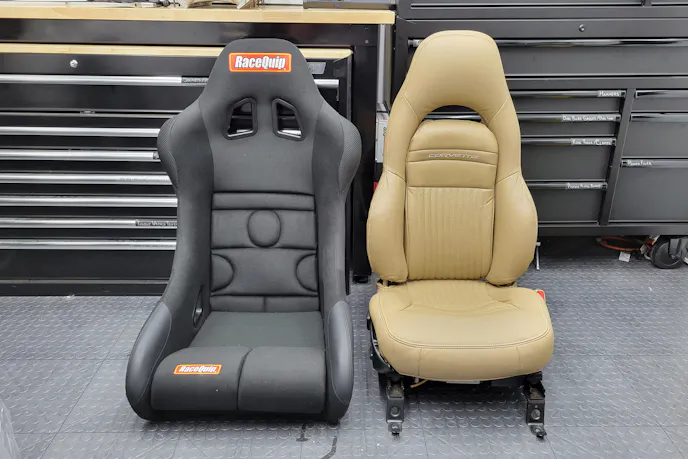
The RaceQuip FIA-approved composite racing seat is available in three sizes based on inside hip width: 15-inch Medium, 16-inch Large, and 17-inch X-Large. RaceQuip provides all of the dimensions of the various seats, so after scouring forums and social media to see what seats people had successfully installed, and then creating a matrix of all of those seats’ measurements, we determined that the Large RaceQuip seats would fit the C5.
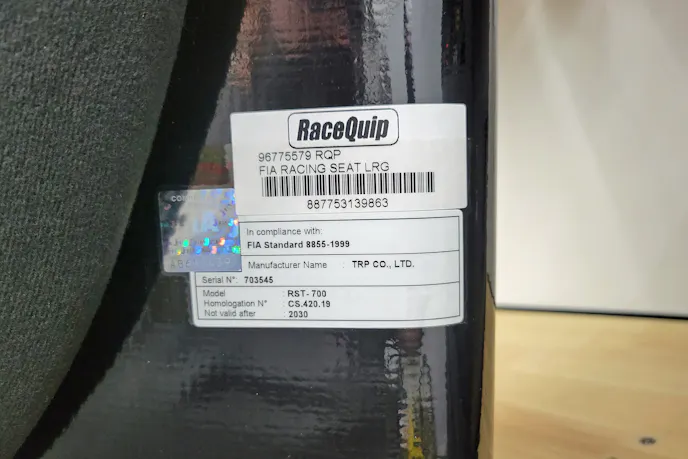
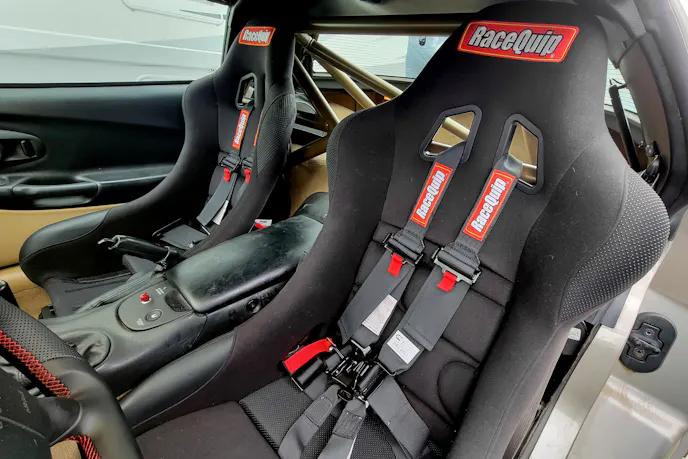
Certified to FIA 8855-1999 specification, the RaceQuip seat is based around a composite bucket seat shell that offers increased hip and thigh support, as well as rib and shoulder support to keep you firmly planted in the seat under lateral loads. The seat has five belt openings for use with 5- and 6-point harnesses, and mounts to the vehicle with industry-standard 8mm side bolts. The seat itself weighs in at a scant 17 pounds — a far cry from the Corvette’s power leather seats.
In order to mount the seats in the car, there are several other parts required. A seat bracket or base, which bolts to the original seat studs in the car. Sliders are optional, but they allow front-to-rear adjustment of seat positioning at the cost of about an inch of headroom (a precious commodity for some folks in a C5). Finally, you need a set of side-mount brackets to connect the seat to the sliders (or to mount directly to the seat bracket if no sliders are used).
For the seat brackets, after some research, we opted to go with Planted Technology premade seat brackets. They are driver- and passenger-side-specific brackets, designed to give you as much headroom clearance as possible. They are made from 3/16-inch-thick steel and come in several bolt pattern options, with a built-in mount for the factory seatbelts (which also works great as a lap-belt mounting point for your harnesses). We opted for the standard bolt pattern as it fit the Sparco sliders we had on hand that we planned on reusing for this project.
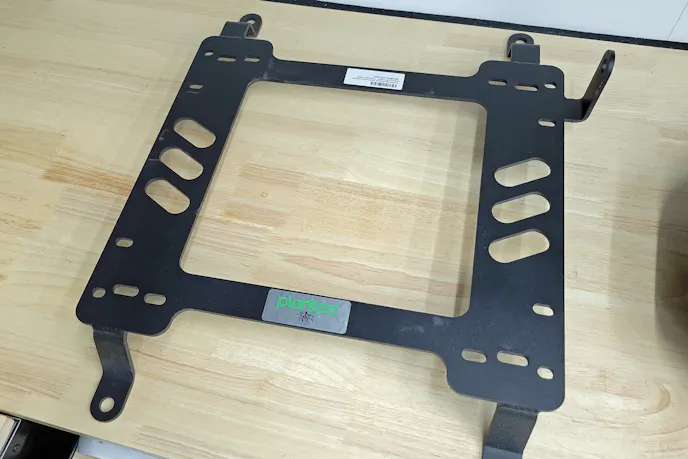
The original plan was to use the Sparco sliders on the driver-side seat and direct-mount the passenger seat. However, when test-fitting everything, we realized that there was going to need to be some significant lateral offset to fit the wider seats in the car (space that was available now, thanks to the C6 seatbelt conversion). So, we ordered another set of the Sparco sliders from Summit, as the Planted Technology brackets have built-in lateral adjustment in the Sparco pattern already built into the bracket.
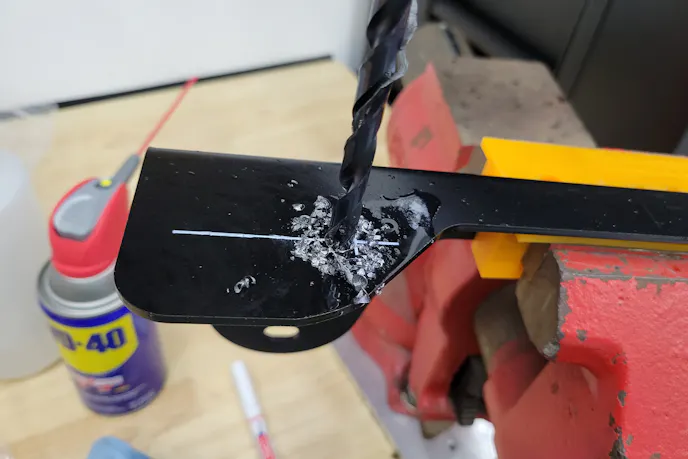
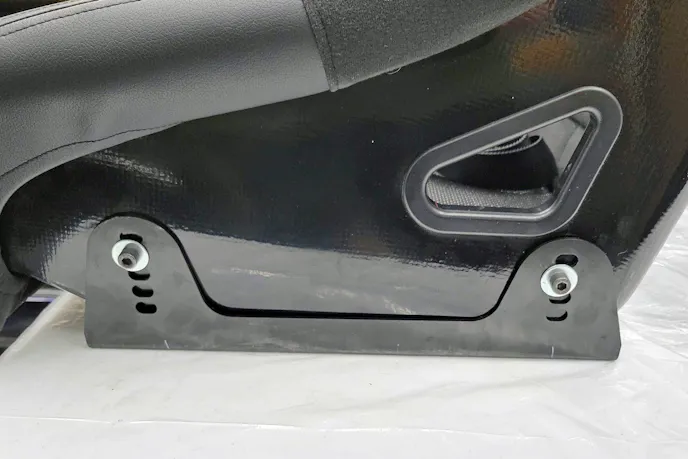
From there, we used a set of RaceQuip steel short seat mount brackets. Since headroom is a concern, we opted for the shorter version of the steel brackets, with the trade-off that the bottom of the brackets requires drilling your own holes to match the sliders. They allow for a seat height of between one and four inches off the slider, and up to 30 degrees of layback to be dialed in.
The one other trick we employed was to swap the standard C5 seatbelts for updated, traditional single-retractor C6 seatbelts. This requires very minor modification to the C6 assembly and is a very simple swap offering a lot of extra room (about 2.5 inches) at the bottom seatbelt mount. One caveat here is that if you want a specific color, be prepared to spend about $300 for the belts. If you aren’t picky, search the big GM parts websites, and you can find unpopular colors brand new for significantly cheaper. The pair of brand new GM belts cost us $14 each on clearance.
Strapping In With RaceQuip 6-Point HANS Harnesses
As we showed you in our previous safety equipment article, we’ll be using a HANS IV head and neck restraint. One innovation in harness design to work with the HANS is shoulder belts that narrow from three inches wide to two inches wide where it goes over the shoulder and the HANS device. This provides a more secure fit with the HANS while also increasing comfort.
The lap belt in the HANS-specific harness kit uses the traditional three-inch webbing and is double adjustable — that is, adjustable at the mounting point, as well as being pull-down adjustable up at the buckle. Since we opted for the six-point option, the anti-submarine belts consist of dual two-inch-wide straps with an integrated strap spreader buckle.
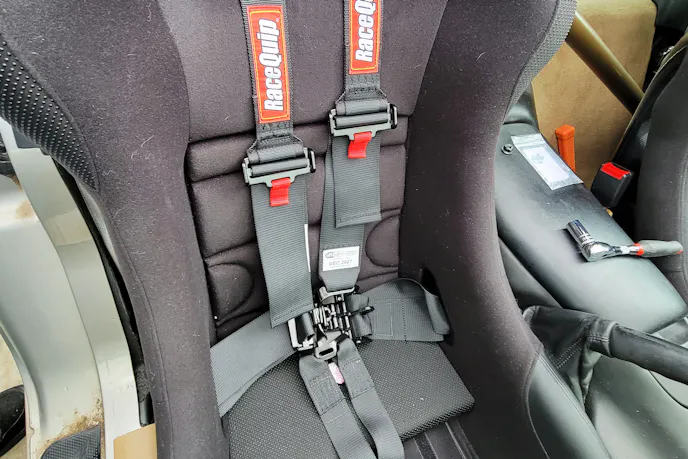
When choosing your harness, there are two latch styles available: latch and link, and camlock. The latch and link is the less expensive option, where the shoulder straps and anti-submarine belt is retained by a male end of the lap belt, which then gets latched to the other end of the lap belt. Everything is released by pulling up on the latch. It is an incredibly simple, tried-and-true system.
The second, a cam lock, uses a spring-loaded latch mechanism where each belt clicks into the main buckle like a standard seatbelt and is released by rotating a knob on the buckle mechanism. It makes for much easier donning, but the added complexity of the mechanism increases manufacturing cost. Since we’ve always had latch and link systems in our previous cars, we kept the tradition alive and went with the more affordable option.
Thanks to the Planted Technology bracket, mounting all the belts was super simple, with the anti-submarine straps mounting to pre-drilled holes in the bracket, and one of the lap belts tied into the seatbelt mount. The other lap belt is tied into the lower seatbelt mount on the chassis, and the two shoulder belts are securely wrapped around the harness bars built into the Studio RSR roll bar.
And with that, Project Honey Badger is ready to take on the track safely while holding its driver securely under high lateral g-forces. But there’s one more project we have to get done before the car is really ready for the track, so stay tuned.
You might also like
Check Out The 602hp Chevy Silverado Launch Edition By Callaway Cars And Waldoch Crafts
Poised to dominate the street, the 2026 Chevy Silverado Launch Edition, by Callaway and Waldoch, features 602 supercharged horses.