

Making massive horsepower is easier today than ever before, but transferring that power to the ground without breaking parts is another story entirely. The factory drivetrain in many classic vehicles was simply not engineered to handle modern turbocharged LS output. When we realized the factory axles in Project Swedish Meatball were living on borrowed time behind a 600-horsepower LS, we knew adding a stronger rearend was mandatory. Instead of pulling a rusty junkyard core, we partnered with Moser Engineering and Big 3 Racing to build a bulletproof custom setup.
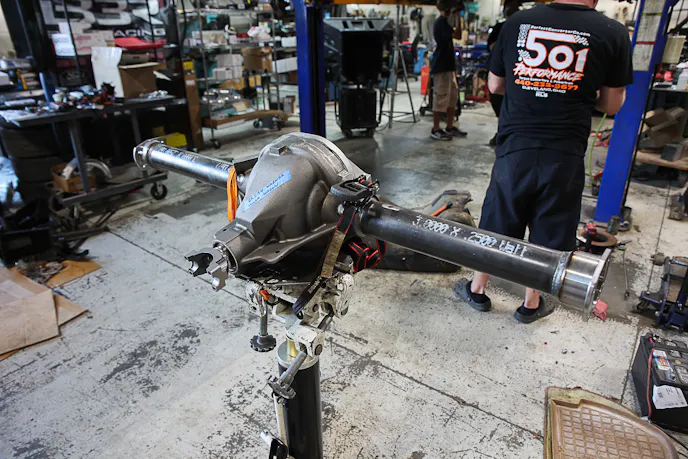
The First Step In Adding A Stronger Rearend
We opted for a blank Moser M88 housing rather than trying to salvage an OEM Ford 8.8 unit. This aftermarket housing is cast from premium nodular steel and features reinforced webbing that makes it significantly tougher than a factory piece. It also uses heavy-duty seamless steel tubes. Starting with a blank canvas saved the crew at Big 3 Racing hours of grinding off old brackets and allowed them to weld custom mounts exactly where the Volvo chassis required them.
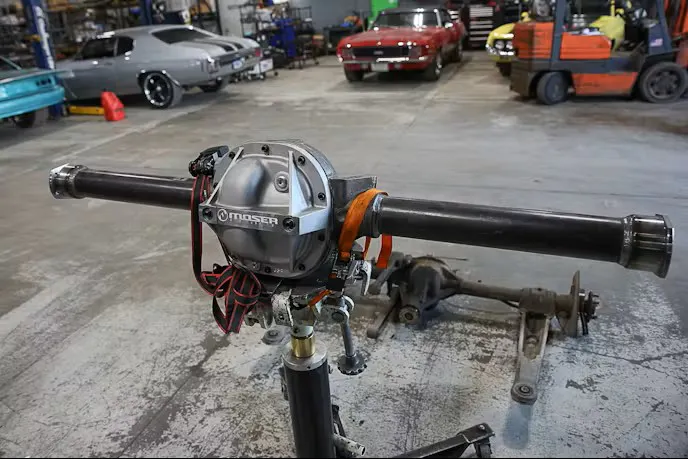
The Importance Of Precise Measurements
Swapping a custom axle assembly requires absolute precision. Shane St. Myers from Moser emphasizes that builders need accurate wheel-to-wheel dimensions and correct pinion offsets to ensure proper fitment. You have to measure flange-to-flange distances and account for brake clearance before placing an order. Being off by even a fraction of an inch can cause massive alignment and suspension headaches down the road.
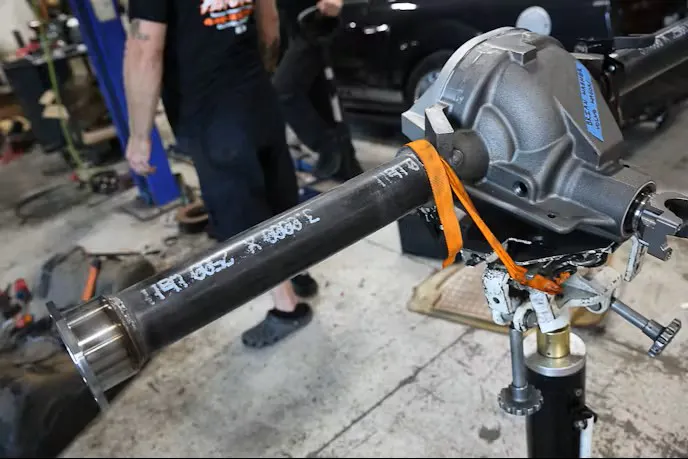
Bulletproof Internals For The Street
Because this car will see plenty of street miles, we selected a Wavetrac differential. It handles up to 1,000 horsepower smoothly without the harsh ratcheting noises common with traditional lockers. We paired it with 33-spline induction heat-treated axles and a set of 4.10 street gears. Having Moser set up the ring and pinion at their facility saved us the hassle of buying specialized setup tools and fighting gear mesh patterns.
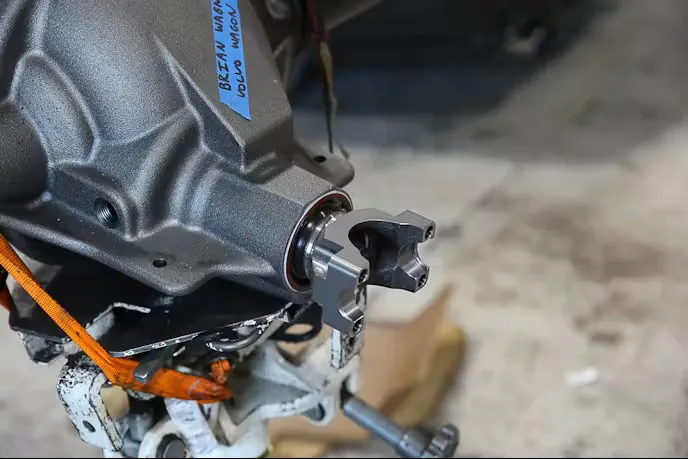
Custom Suspension Fabrication
With the M88 built, Chuck Stefanski at Big 3 Racing mapped out the suspension geometry. They decided to retain a torque arm style layout paired with custom QA1 coilover shocks and Wilwood brakes. Welding the brackets onto the blank housing required careful planning to ensure the control arms and panhard rod cleared the chassis without binding. The result is a rock-solid foundation capable of handling all the boost we plan to throw at it.
At this point, Project Swedish Meatball’s turbocharged LS has plenty of ways to make power, and now we have a rearend that should actually survive putting it to the pavement. More importantly, we didn’t have to compromise the wagon’s street manners to get there. The Wavetrac differential, 33-spline axles, 4.10 gears, and custom torque-arm suspension give us the strength we need without turning the car into something miserable to drive anywhere but the track. After all, making 600 horsepower with a turbo LS is the easy part these days. Building everything behind it to survive 600 horsepower, and whatever future bad decisions we make with the boost controller, is where the real work begins.
You might also like
LS Oil Pans: Moroso Adds Four New Wet-Sump Designs
Moroso added four new LS oil pans for sand rails, street/strip, road race and drag race builds, including Dart LS Next non-skirted blocks.