
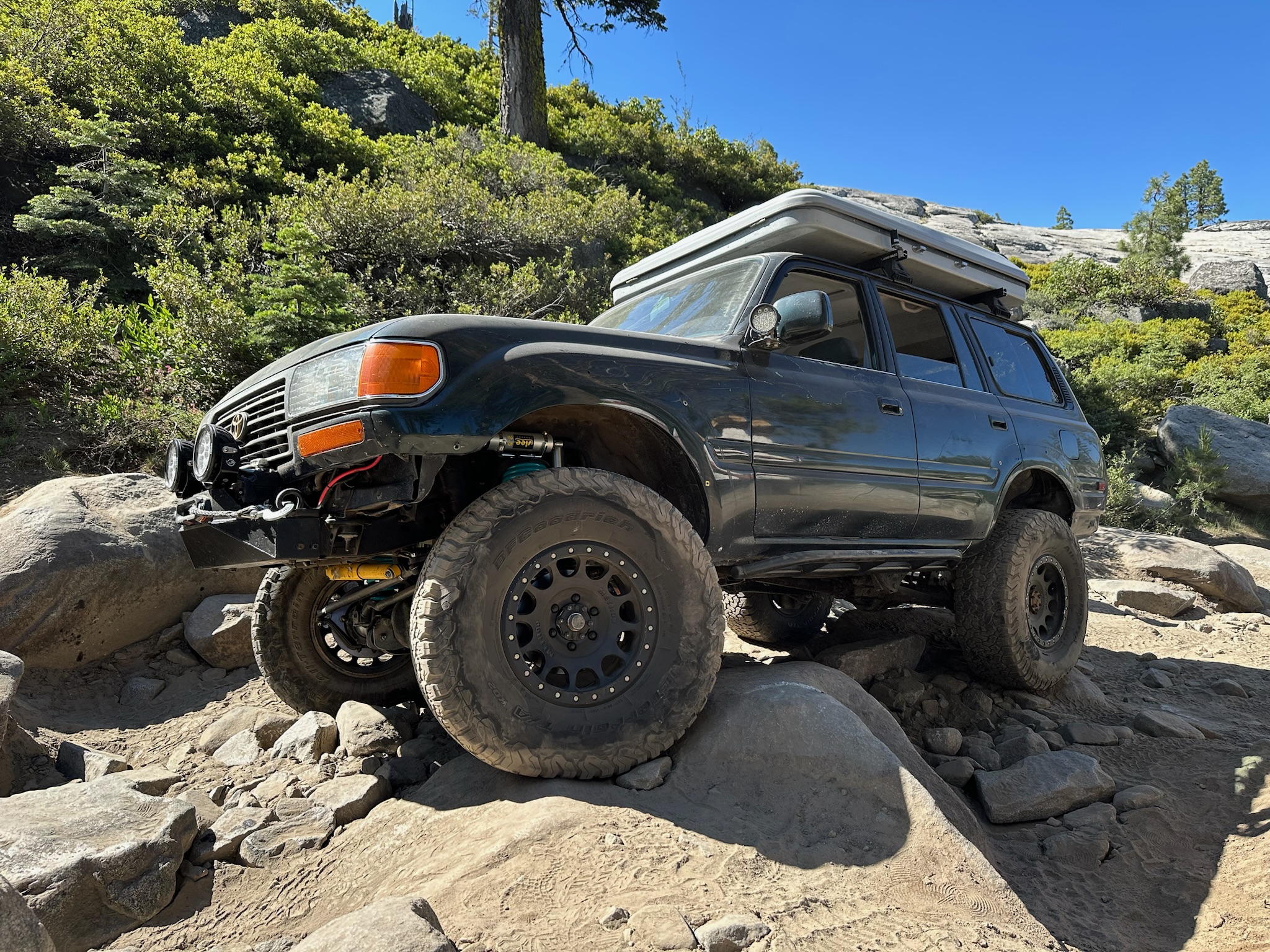
Any time spent hanging around the LS-swap community provides quick answers to a variety of questions. For example, it’s fairly easy to explore topics like engine mounts, transmission adapters, ECU issues, cooling, and exhaust. But while LS swaps have become even more common than old school small-block swaps, every application still throws builders unique curveballs–especially if the world’s greatest swap engine is being dropped into something that didn’t roll off a GM assembly line. That’s exactly what the LSX staff ran into with this 1994 Toyota Land Cruiser. We sorted the engine, dialed in the tune, then hit the highway for a long joyride, only to realize that there’s no cruise control.
Okay, we admit this sounds like a small inconvenience. But it grows into a large pain in the rear wheels when you’re on a six-hour highway run, with your right foot locked in place, miserably failing to maintain a steady 75 MPH over the hills and through the woods. It’s common knowledge that for anyone daily driving an LS-swapped, non-GM vehicle, finding a reliable, clean cruise control solution has historically been a game of compromise. While universal kits do exist, they often require abandoning factory switchgear for something that was clearly designed for a 1990s street rod.
From The Dakotas And Beyond
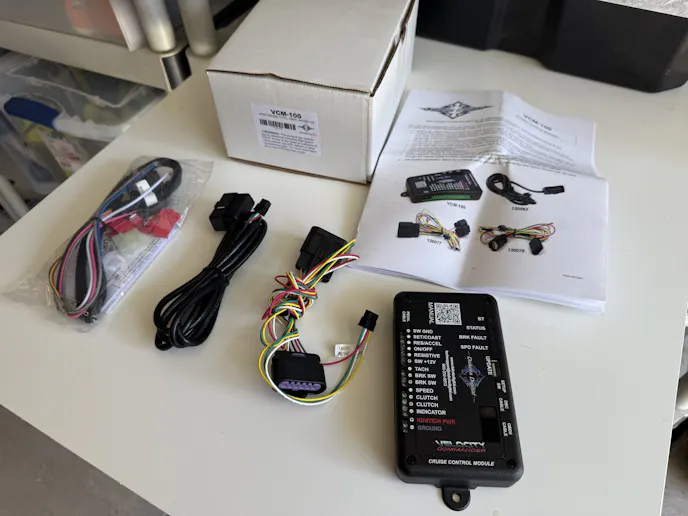
Dakota Digital, the Sioux Falls, South Dakota-based electronics purveyor that’s spent decades building high-quality instrumentation for the performance aftermarket, appears to have cracked the code. Its new Velocity Commander VCM-100 Series is purpose-built for exactly this scenario: a drive-by-wire GM drivetrain living inside a modern, non-GM host vehicle.
To understand why the VCM-100 is such a big deal, you have to appreciate how fragmented the cruise control landscape is in the world of LS swaps. Most OEM cruise setups are so deeply integrated into the factory body control module and steering column that pulling them into a swap requires either extensive custom work or abandoning them altogether. Universal aftermarket units are available, but compatibility with drive-by-wire throttle systems, which are standard on virtually every late-model LS vehicle, can be hit or miss.
Velocity Commander Cruiser Cruise
Our real-world example, the 1994 Land Cruiser, employs a drive-by-wire Gen III LS V8. The swap itself was fairly straightforward. Adapters are available, it’s easy to hook up all the factory gauges, and all in all, the powerplant appears as if Toyota itself rolled it straight out of the factory.
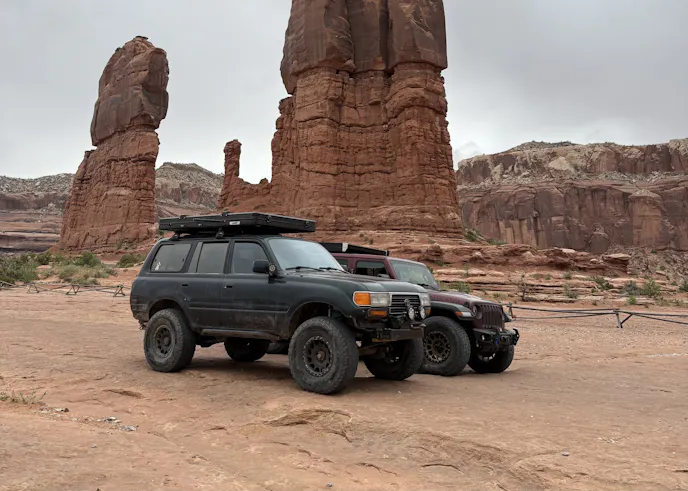
But, like most late-model metal, the Land Cruiser has its own factory cruise control switch built straight into the steering column. It’s a clean, well-integrated piece that most owners would want to keep. As you might imagine, there is no simple way to pair this switchgear with the signals the GM ECU needs to control cruising speed. On top of that, most cruise control modules have no way to interpret OEM-specific resistance signals from the switchgear.
This is where the Velocity Commander really earns its keep. Rather than forcing you to scrap your factory switches or bolt on a generic aftermarket piece, the VCM-100 is designed to actually learn the resistance values of virtually any OEM or aftermarket resistive cruise switch. That single capability changes everything for the non-GM swap builder.
The Simplistic Beauty Of The Dakota Digital Velocity Commander VCM-100
Once the power, ground, and brake switch are connected, setup is handled through Dakota Digital’s mobile app, which guides you through a built-in installation and troubleshooting wizard. If you’ve ever wrestled with a generic cruise module that came with a six-page photocopied instruction sheet, you’ll appreciate this immediately. Additionally, onboard diagnostics are available through a built-in display and separate LED indicators, so if something isn’t right during setup, you know about it quickly rather than blindly chasing gremlins.
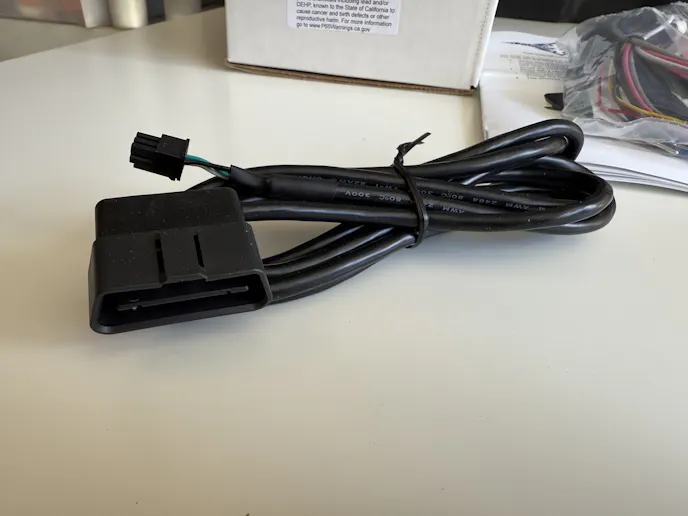
Speed and tachometer signals can come from a variety of sources, including direct OBD-II Controller Area Network (CAN), an aftermarket EFI system via CAN, or direct speedometer and tachometer connections. For builders running Holley, Haltech, AEM, FiTech, MegaSquirt, or other popular EFI systems, a direct CAN connection harness simplifies installation further. User-configurable CAN messages are supported from 250k to 1M baud with both standard and extended IDs–a level of flexibility that matters to builders who have already invested heavily in their EFI setup.
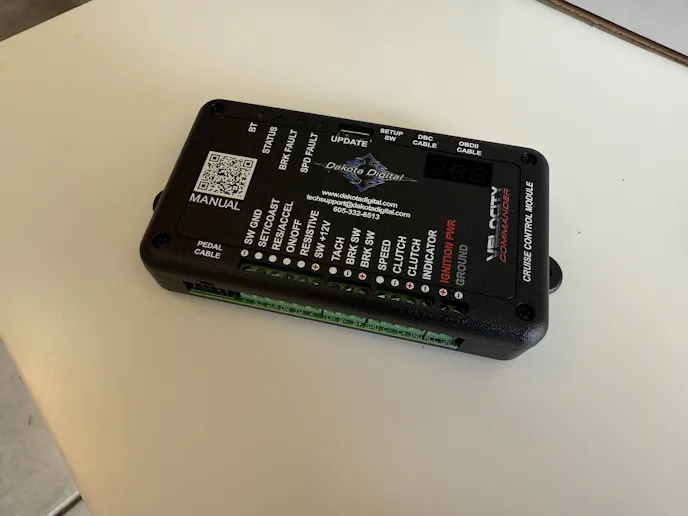
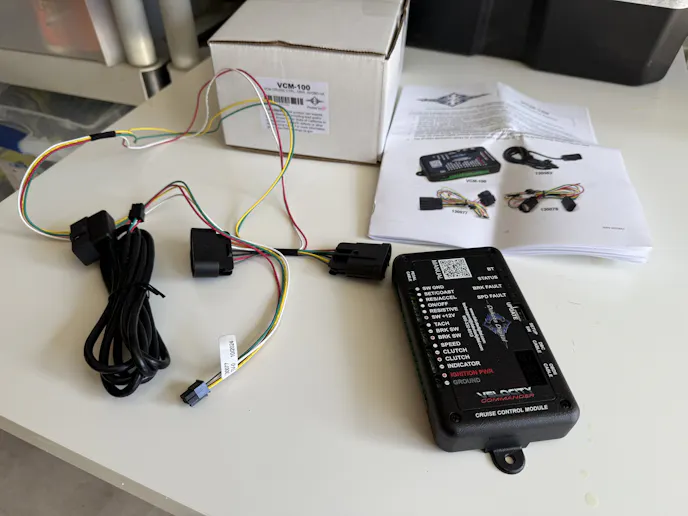
Additional features include a clutch switch input for manual transmission applications, an activation output wire for any dash-mount cruise indicator light, plug-and-play compatibility with LED tail lights, and redundant safety features integrated throughout. Plug-and-play drive-by-wire harnesses are available for GM, Ford, and MoPar pedal assemblies, covering the most common setups encountered in LS swaps.
Making The Toyota Switch Work
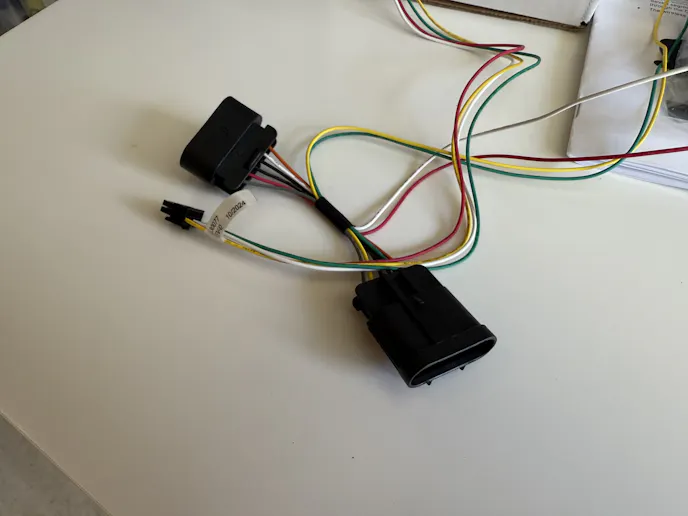
For our Land Cruiser build, the installation centered on finding the OEM Toyota cruise control module. From there, we identified the wires we needed for the VCM and connected the VCM-100 to the OBD-II port to gain speed and tach data from the GM side. Then we used the app’s wizard to teach Toyota switch resistance values to Dakota Digital’s system.
The Toyota unit sends a different resistance signal for each function: set, resume, cancel, and coast. The VCM-100’s learning mode walks you through pressing each button in sequence and stores the corresponding values. That results in the truck’s factory cruise control stalk operating exactly as intended, with absolutely no modification to the steering column.
Dakota Digital: The Best Solution
The ability to retain factory switchgear from a non-GM donor is not a minor convenience. It’s the difference between a finished, professional installation and one that always has an asterisk next to it. Every enthusiast wants to maintain or increase the ergonomic and visual appeal of their ride, especially if they’re driving the vehicle on a daily or semi-daily basis. Not to mention, no one wants to explain to passengers why there’s a random stalk zip-tied to their steering column.
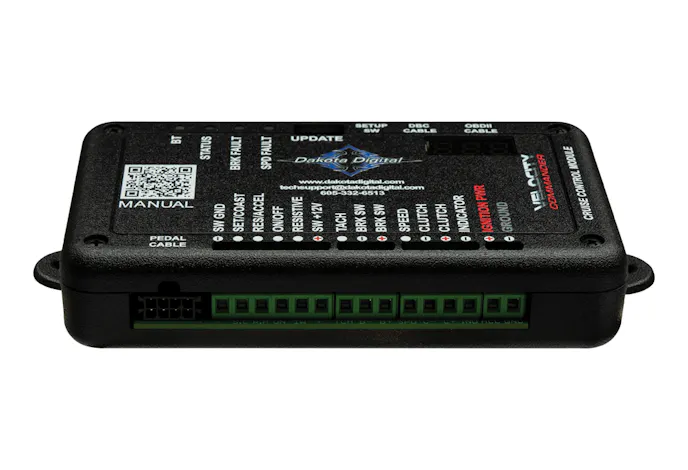
The Dakota Digital Velocity Commander VCM-100 is manufactured in America and backed by a five-year limited warranty. Dakota Digital has been in the game long enough to stand behind their products, and for technology that’s going to sit behind your dash for the long haul, that matters. If you’ve got an LS-swapped daily driver sitting without cruise control because you couldn’t find a clean solution, the Velocity Commander VCM-100 deserves a serious look!
You might also like
Mills Robinson’s 1967 Camaro Is A 700-RWHP Pro Touring Machine
Mills Robinson's 1967 Camaro packs a 404-cubic-inch LS2, nearly 700 WHP, a custom suspension, and decades of homebuilt pro touring innovation.