


One project that has been steadily taking shape behind the scenes at LSX Magazine is our 2023 Camaro 2SS. One of the first changes we knew the car needed was a proper stance. Anyone who has spent time around a lowered Camaro understands how much ride height influences both appearance and performance. While we have teased parts of the build on social media, suspension was an early priority, especially before revealing what is coming together under the hood. The factory ride height left a noticeable wheel gap and did not inspire confidence when pushing the car harder through corners, making lowering springs a logical starting point.
The sixth-generation Camaro is already a capable chassis, but the stock suspension setup is clearly designed to appeal to a broad audience. That means comfort and compliance take priority over aggressive handling. For a performance-focused street build, tightening up the suspension and lowering the center of gravity can completely change how the car behaves. That realization led us straight to BMR Suspension.
Why Lowering Makes Sense For This Build
Coming from a classic muscle car background, lowering my car is never something I thought I would do. Traditionally, muscle cars were tall, stiff, and happiest when driven straight. The sixth-gen Camaro, however, is a very different animal. With its independent suspension, wide factory tires, and modern chassis tuning, it responds well to thoughtful suspension changes.
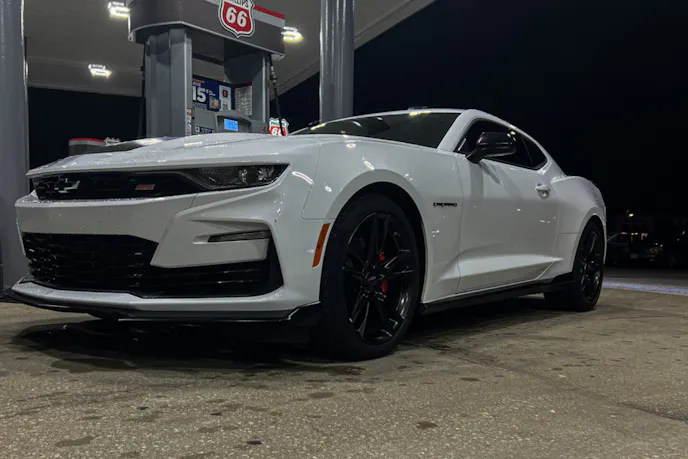
The factory wheel gap stood out immediately, especially when paired with the Camaro’s aggressive body lines. Beyond aesthetics, the car also felt unsettled when transitioning through corners at higher speeds. There was more body movement than expected, which reduced driver confidence and made the car feel less precise than it should. A lowered Camaro setup promised to address both concerns by improving stance while reducing body roll and improving overall balance.
Lowering springs offered the right balance for our goals. I did consider coilovers, but for a street-driven car that still sees daily use, springs provide a simpler solution with fewer compromises. BMR’s reputation for quality and engineering made the choice even easier.
Exploring BMR Suspension Spring Options
BMR Suspension offers several spring options for 2016-newer V8 Camaros, giving builders flexibility depending on how they plan to use the car. That range of options is especially appealing when building a lowered Camaro that still needs to function well on real roads.
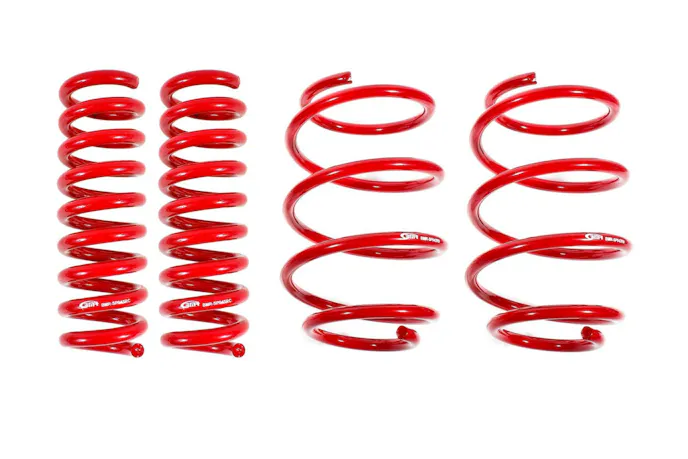
The most comprehensive option is BMR’s full lowering spring kit (P/N SP041). This kit includes both front and rear springs and lowers the Camaro approximately ¾-inch in the front and 1 inch in the rear. That drop provides a noticeable improvement in stance without pushing the car into impractical territory. It is a setup designed for street performance enthusiasts who want better handling and a more aggressive look without sacrificing ride quality.
BMR also offers the same springs individually for those who want more control over ride height. The front springs are available as (P/N SP042), while the rear springs are offered as (P/N SP043). This allows builders to lower only the front or rear, depending on wheel and tire combinations, weight distribution, or personal preference.
For those who want improved handling with only a minimal drop, BMR offers the SP364 spring option. This spring focuses more on suspension performance than visual stance and is designed with supercharged and turbocharged applications in mind. It provides improved cornering ability while maintaining near-stock ride height, making it a solid choice for performance-first builds.
Inside BMR’s Spring Manufacturing Process
One of the standout aspects of BMR Suspension is its attention to manufacturing detail. All BMR springs are made from chrome silicon high-tensile spring wire and are cold-wound on CNC coiling machines. The CNC process allows the spring diameter to be adjusted in real time, ensuring consistency between every spring produced.
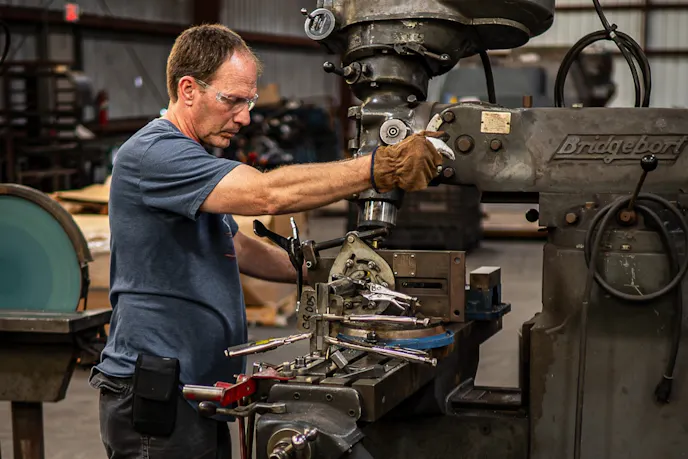
Each spring is compressed solid twice at the factory to establish its permanent set and eliminate the risk of sag over time. After winding, the springs are stress-relieved at 750 degrees Fahrenheit to remove internal stresses created during manufacturing. The process of shot-peening follows, which improves fatigue resistance and long-term durability.
Unlike many manufacturers that rely on batch testing, BMR computer-tests every single spring. Each spring is compressed and measured to verify accurate height and spring rate. This process allows BMR to confidently offer a lifetime warranty against spring sag. For anyone planning a lowered Camaro that will see spirited driving, that level of quality control adds peace of mind.
Front Spring Installation Breakdown
Installing the front lowering springs is a straightforward process that can be completed with basic hand tools. While a lift makes the job easier, it is not required. I was able to install these springs using jack stands and a standard floor jack.
To remove the factory front strut, there are six bolts and three nuts per side. The first bolt secures the ABS and speed sensor wire to the strut housing. Once that is removed, the sway bar end link nut connecting it to the strut can be taken off.
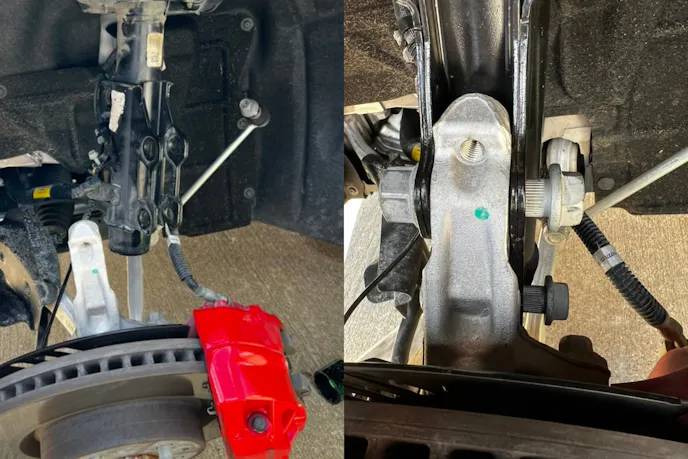
Next, disconnect the strut from the spindle by removing the two bolts and two nuts that secure it. With those out, the only remaining attachment points are the three strut tower bolts located in the engine bay. When removing the final bolt, it is important to support the strut from underneath to prevent it from dropping.
With the strut assembly removed, a nut at the top of the strut holds the factory spring under compression. Using a spring compressor is strongly recommended at this stage. While it is possible to remove the nut without one, doing so carries risk and should be approached with caution. Once the nut is removed, the factory spring can be replaced with the BMR spring.
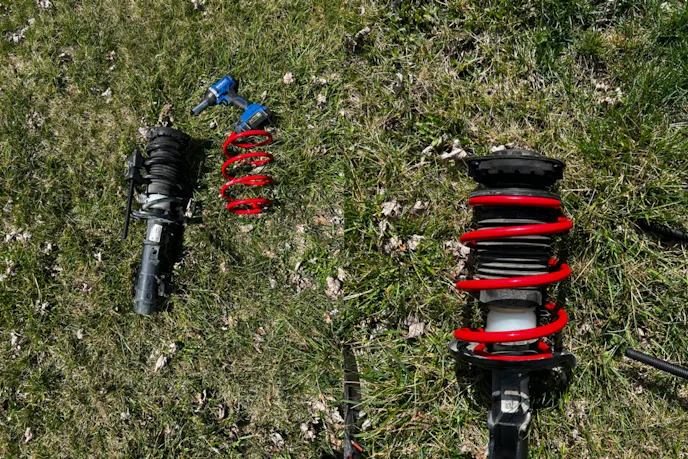
Because the BMR springs are shorter, they do not need to be compressed to reinstall the top nut. Once secured, the strut can be reinstalled by reversing the removal process. Starting with the strut tower bolts helps hold everything in place during reassembly.
Rear Spring Installation Breakdown
The rear suspension requires slightly more patience but remains manageable for a home installer. The process begins by removing the plastic cover over the lower control arm, which is held in place by four plastic clips.
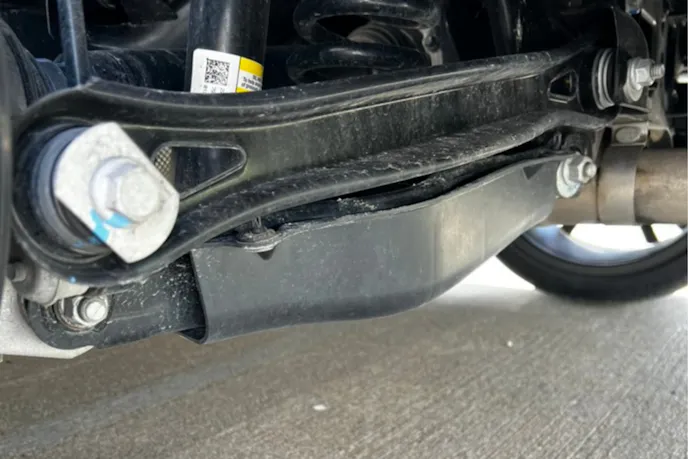
Next, remove the bolt connecting the shock to the lower control arm. With the car on jack stands, position a floor jack under the control arm and raise it slightly until it applies light pressure. This step helps control the arm as hardware is removed.
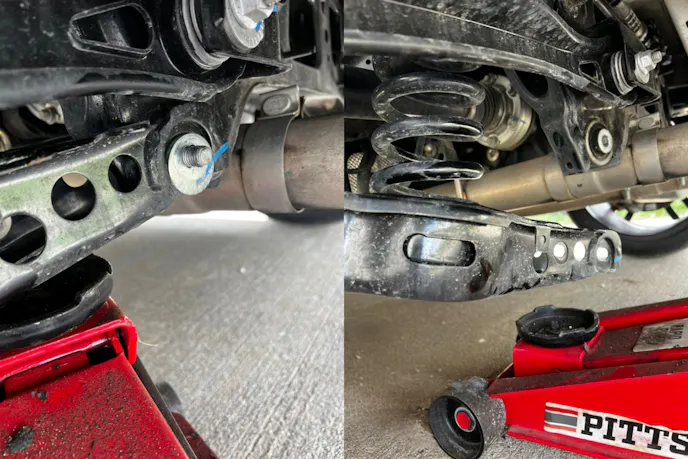
Loosen the front bolt connecting the lower control arm to the hub, but do not remove it. Then remove the rear bolt and nut completely. With the rear bolt removed, slowly lower the floor jack to allow the control arm to drop. This creates enough clearance to remove the factory spring.
Installing the new lowering spring is the most challenging part of the rear process. The control arm must be pulled down while carefully positioning the new spring so it seats correctly. Once the spring is properly aligned, use the floor jack to raise the control arm back into position and reinstall the rear bolt. The process is then repeated on the opposite side.
Settling Time And Final Adjustments
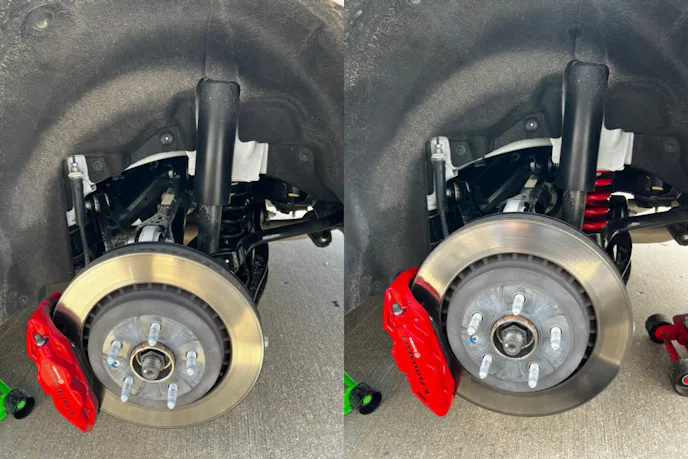
It is important to remember that lowering springs take time to fully settle. After installation, the car may not sit at its final ride height immediately. Over the next few drives, the springs will seat themselves, and the car will gradually settle into its final stance.
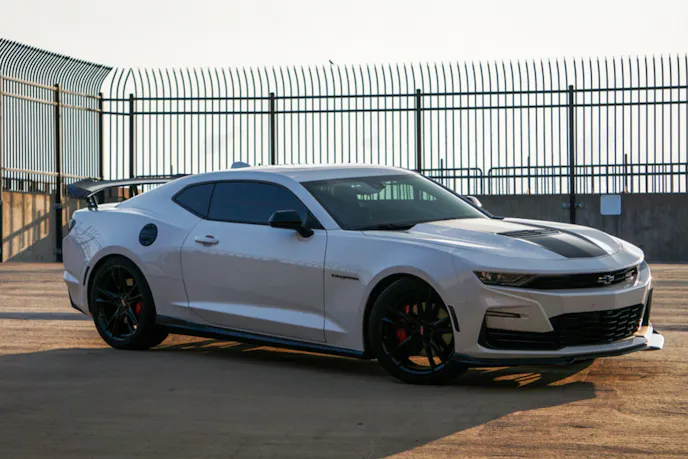
Once the suspension has settled, a wheel alignment is mandatory. Lowering the Camaro alters suspension geometry enough to cause rapid tire wear if alignment is not corrected. This is not a step to delay. Proper alignment ensures the lowered Camaro handles correctly and protects your investment in tires.
Final Thoughts On The BMR Setup
Lowering our 2023 Camaro 2SS with BMR Suspension springs transformed the way the car looks and feels. The improved stance gives the car a more aggressive presence, while the reduction in body roll and improved cornering confidence make it more enjoyable to drive.
The installation process was smoother than expected and completed in just over an hour without the use of a lift. For a modification that delivers noticeable visual and performance gains, lowering springs are difficult to beat.
As this build continues and power upgrades come into play, having a solid suspension foundation will be critical. For anyone considering a lowered Camaro that still works as a street car, BMR Suspension delivers a well-engineered solution that balances performance, reliability, and drivability.
You might also like
LS7-Powered "Elegant Lady" Bel Air Wins The 2026 Ridler Award
Packing 1,100 horsepower from a supercharged Don Hardy LS7, Rex Satterfield's 1956 Chevrolet Bel Air claimed the 2026 Ridler Award.