

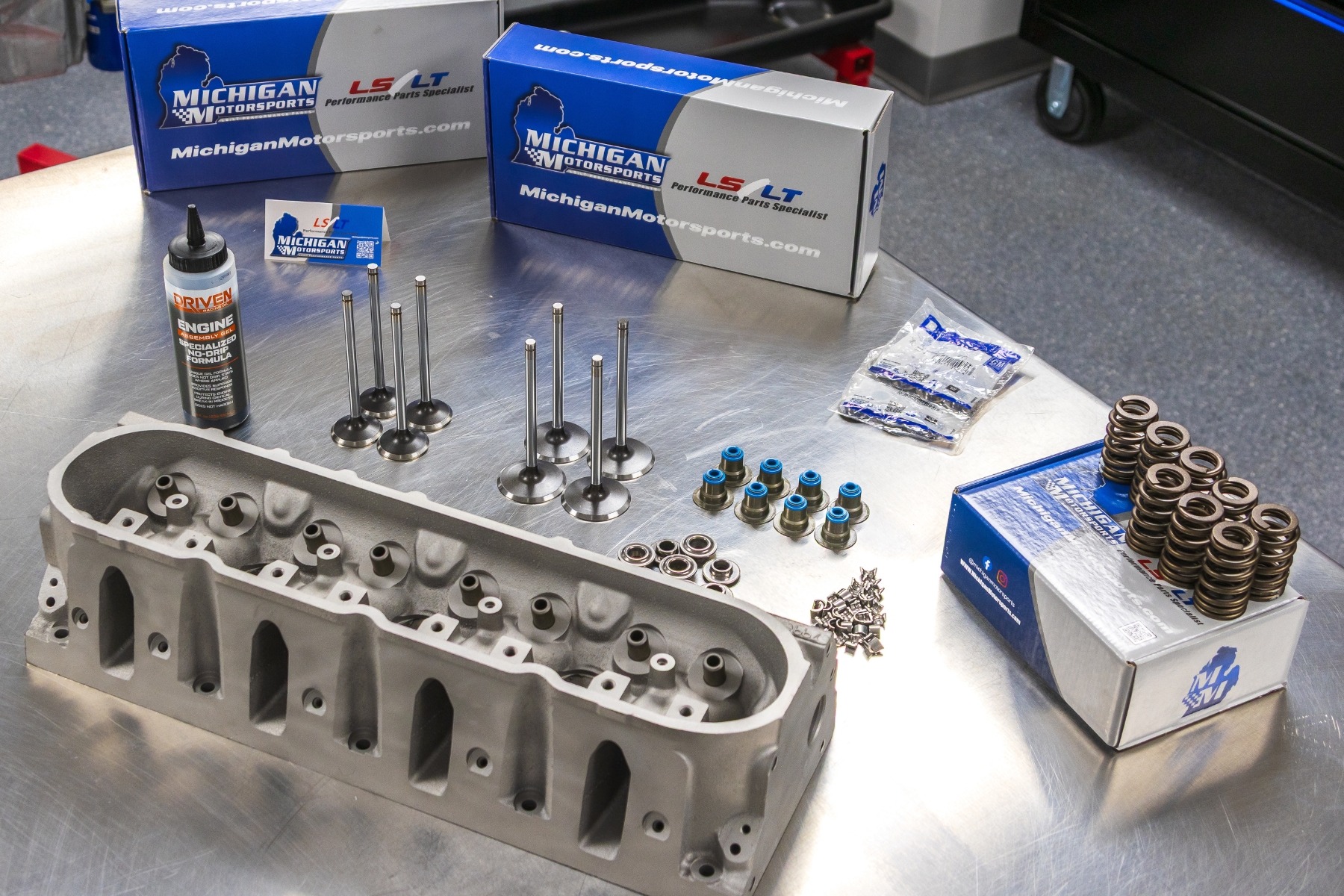
GM’s LS platform earned its reputation because it delivers real-world power without needing exotic parts. The cylinder heads are a big reason why. Factory LS castings have efficient ports, strong chambers, and enough airflow to support stout street combinations when they are rebuilt and matched to the right valvetrain pieces. A thoughtful LS cylinder head rebuild that starts with a stock casting and layers in quality hardware can easily support modern camshafts, more rpm, and better durability, all while keeping the budget in check.
A lot of LS cylinder heads don’t need to be replaced; they just need the right components and proper assembly. Once valve control is addressed, they’re capable of handling serious power and rpm without giving up street reliability. — Dan Baber, Michigan Motorsports CEO
That is exactly the territory Michigan Motorsports lives in. Instead of discarding used heads and jumping straight to high-dollar replacements, the team at their facility takes a stock LS head, tears it down, and builds it back up using components they offer every day. Every step is deliberate. Each part number exists in the process for a reason, and the order of installation matters just as much as the parts themselves. The result is a head that looks familiar on the outside, yet is ready for a very different level of abuse once it is bolted back onto an engine.
Why Rebuilding Stock LS Cylinder Heads Still Makes Sense
GM’s LS cylinder heads were engineered to balance airflow, efficiency, and durability across millions of engines. Cathedral-port castings such as the 706, 862, 243, and 799 already provide strong port velocity and efficient chambers that respond well to camshaft upgrades and improved valvetrain control. In many street-driven and street-and-strip applications, the casting itself is not the limiting factor.
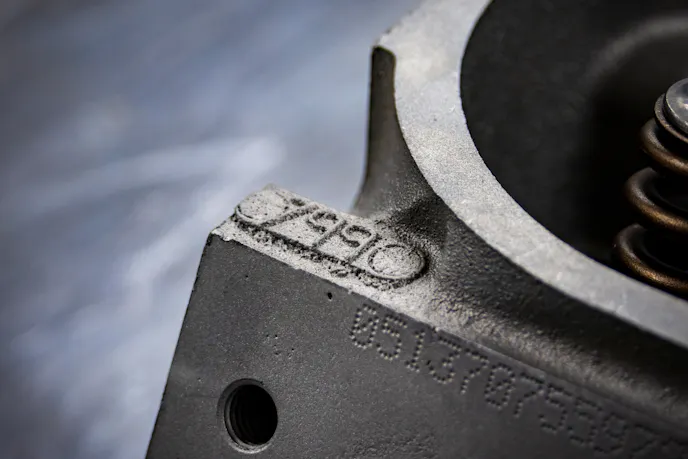
Where factory heads tend to fall short is in the components that control valve motion. Over time, valve seals harden, guides get worn out, and stock valve springs struggle to maintain control as lift and rpm increase. These limitations show up as oil consumption, unstable valve motion, and a power curve that falls off sooner than it should. Addressing those areas transforms how the head behaves without changing the fundamental characteristics that make LS engines so easy to live with.
A stock LS cylinder head rebuild also makes sense financially. Refreshing and upgrading an existing casting allows builders to allocate budget toward camshaft selection, fueling, or induction rather than replacing parts that are still doing their job. When done correctly, a rebuilt stock head becomes a solid foundation for future upgrades rather than a temporary solution.
Preparing The Cylinder Head For Assembly
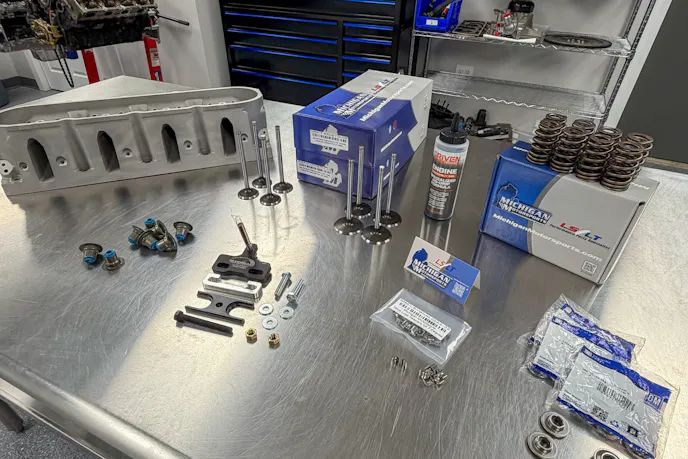
Before assembly begins, the cylinder head is cleaned, inspected, and verified to be a good candidate for reuse. Valve guides, seats, and deck surfaces are checked to ensure there are no underlying issues that would compromise the rebuild. Once the head is confirmed to be sound, the assembly process starts at the valve guide and works outward, adding control and stability at each step.
Installing The Valve Seals
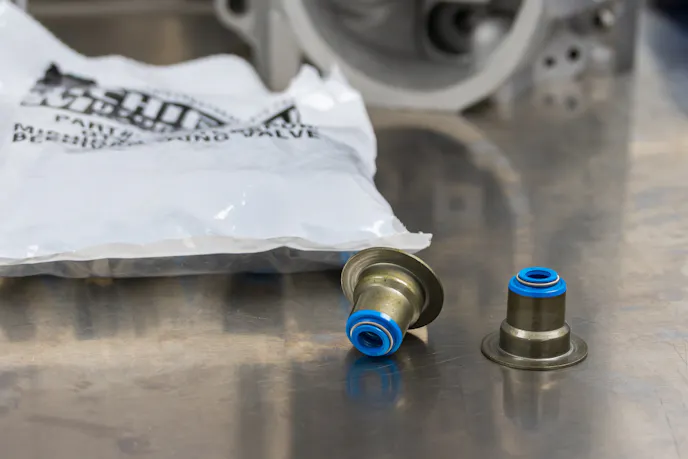
The first components installed are the valve seals. Michigan Motorsports uses its LS OEM-style hat seals (P/N H7100) for this step. Each valve guide receives a light coat of oil to help the seal slide into place without damage. The seal is then pressed firmly onto the guide until it seats squarely against the machined surface.
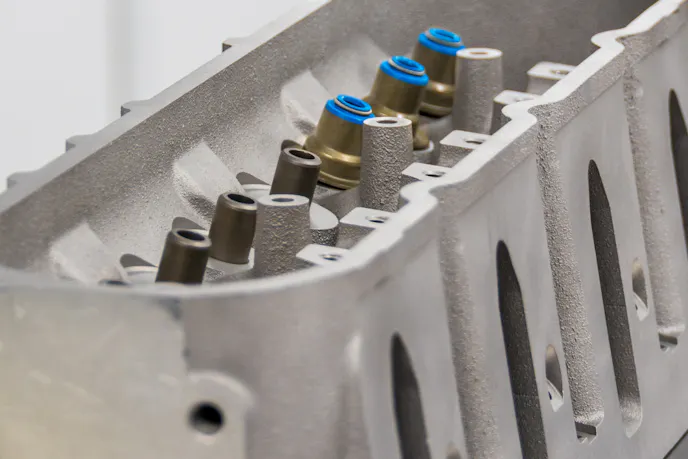
This step establishes proper oil control from the start. Fresh seals regulate the amount of oil that reaches the valve stem, preventing both dry guides and excessive oil consumption. Starting the rebuild here restores one of the most critical functions of the cylinder head and sets the tone for the rest of the assembly.
Lubricating And Installing The Valves
With the seals installed, the valves are prepared for installation. Each valve stem is coated with Driven engine assembly lube (P/N 77000), which provides protection during initial startup before oil pressure fully stabilizes. This lubrication step reduces the risk of scuffing and premature wear between the valve stem and guide.
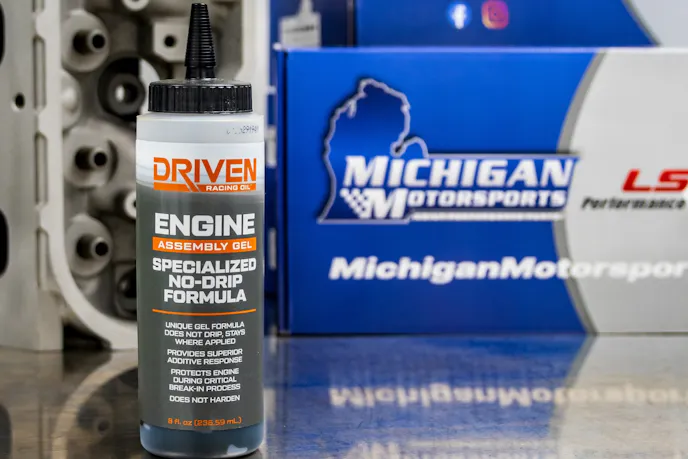
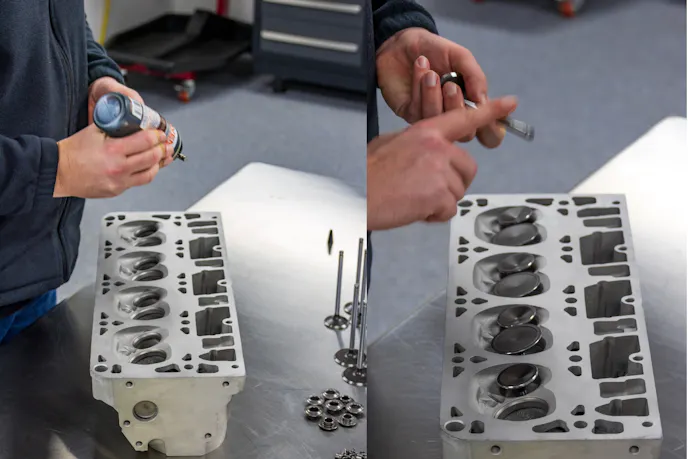
On the intake side, Michigan Motorsports standard replacement intake valves (P/N MM-2.000STD-08) are installed. These retain the factory 2.000-inch valve diameter, preserving port velocity and maintaining the airflow characteristics the casting was designed around. Exhaust positions receive the matching standard replacement exhaust valves (P/N MM-1.550STD-08), which restore a clean sealing surface without altering the balance of the cylinder heads’ airflow.
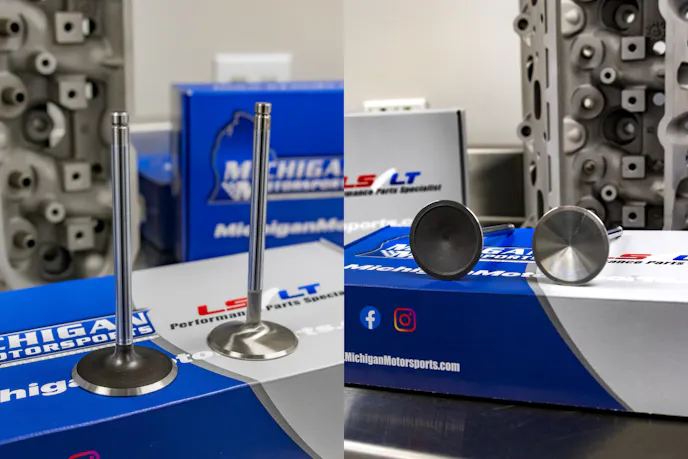
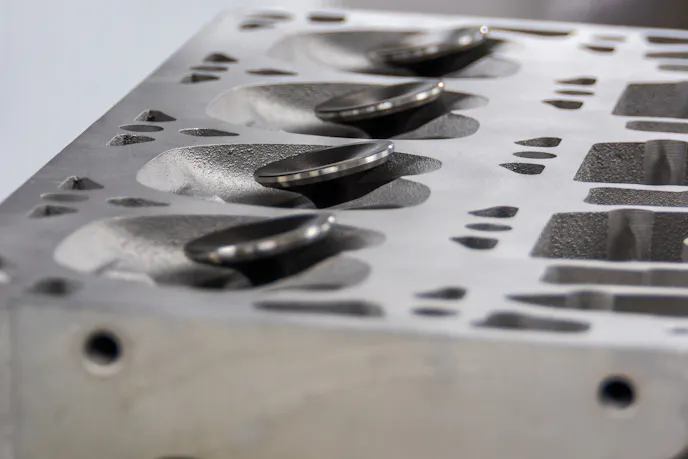
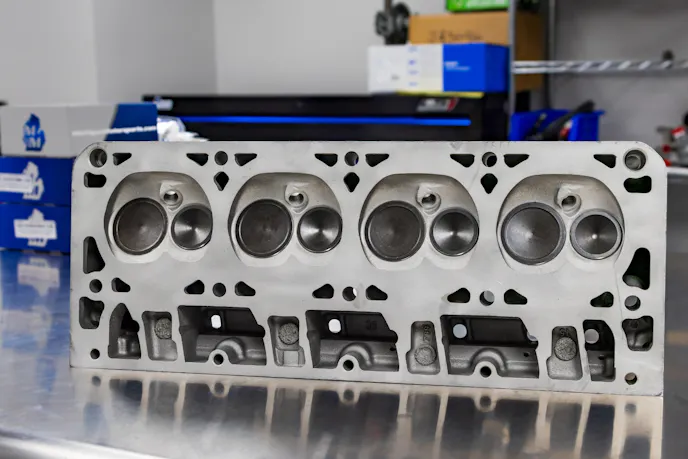
Each valve is carefully slid through its seal and into the guide, then gently seated. At this stage, attention is paid to smooth movement and proper seating rather than speed. A clean, controlled install here ensures the valves will remain stable and consistent once the engine is running.
Installing The Valve Springs
Once all valves are in place, the rebuild moves to the valve springs. Michigan Motorsports specifies its .550-inch beehive valve springs (P/N MM-12713265-16) for this application. Each spring is placed over the valve stem and seated against the spring pocket in the head.
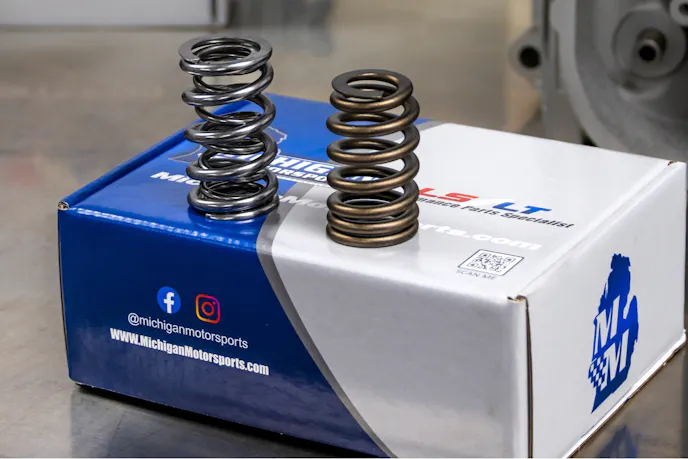
Beehive springs are chosen for their ability to reduce mass at the top of the valvetrain and improve stability at higher engine speeds. Their tapered design helps control valve motion with modern camshaft profiles while remaining compatible with stock-style heads. Proper orientation matters, and each spring is installed according to manufacturer guidance to ensure correct load distribution.
Installing The Spring Retainers
With the springs in position, genuine GM beehive spring retainers (P/N 10166344) are placed on top of each spring. The retainer interfaces directly with the valve locks and plays a key role in maintaining proper installed height and geometry.
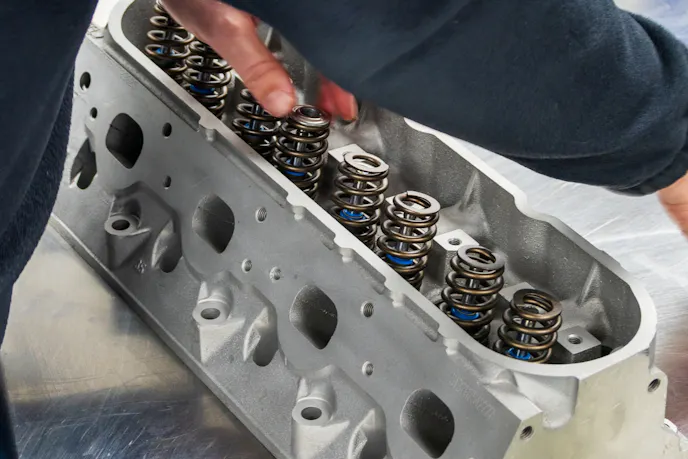
Using a GM retainer ensures predictable fitment and compatibility with the chosen springs and valves. At this point, the head has valves, springs, and retainers staged in place, ready for final assembly.
Compressing The Springs And Installing The Locks
To secure the assembly, the springs must be compressed so the valve stem grooves are exposed. Michigan Motorsports uses the Bluegrass Performance LS valve spring compressor tool (P/N A5100) for this step. The tool is positioned on the head and aligned with the valve being worked on, allowing the spring to be compressed in a controlled and stable manner.
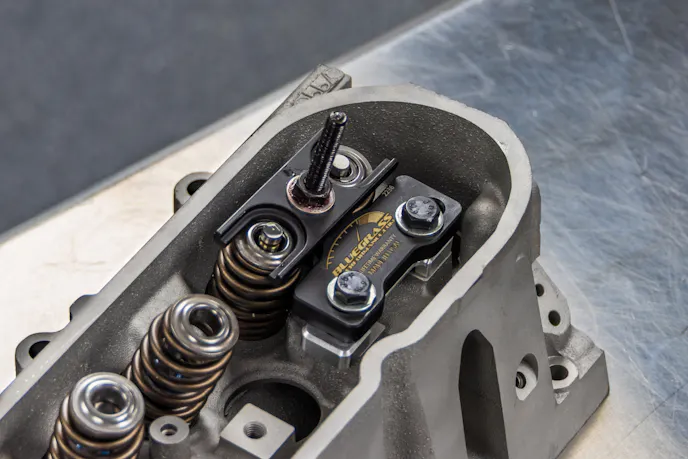
As the spring compresses, the retainer moves downward, exposing the grooves at the tip of the valve stem. With the grooves visible, Michigan Motorsports titanium valve locks (P/N MM-LSValveLocks-32) are installed. Each valve uses a matched pair of locks that seat into the grooves and nest inside the retainer.
Titanium locks reduce mass at the very top of the valvetrain, improving stability as engine speed increases. Once the locks are properly seated, the compressor tool is slowly released. As the spring expands, the retainer rises and captures the locks, securing the entire assembly.
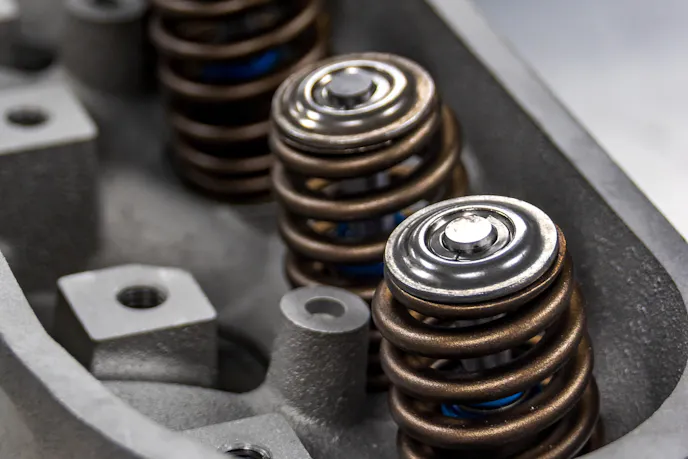
This process is repeated for every valve. Compress the spring, install the locks, and carefully release the load until the retainer is fully seated. Consistency and patience here are essential, as improper lock seating can lead to catastrophic failure.
Final Inspection And Verification
After all valves, springs, retainers, and locks are installed, the head undergoes a final inspection. Each spring is checked to confirm it is fully seated in its pocket. Each retainer is verified to be centered and flat. Lock engagement is inspected visually to ensure even seating in the valve stem grooves.
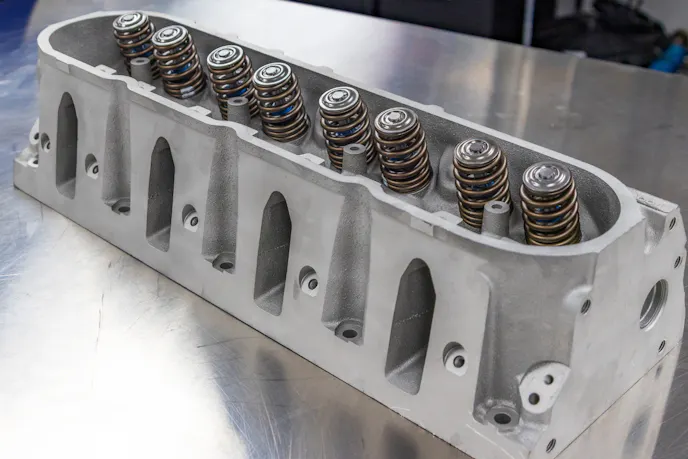
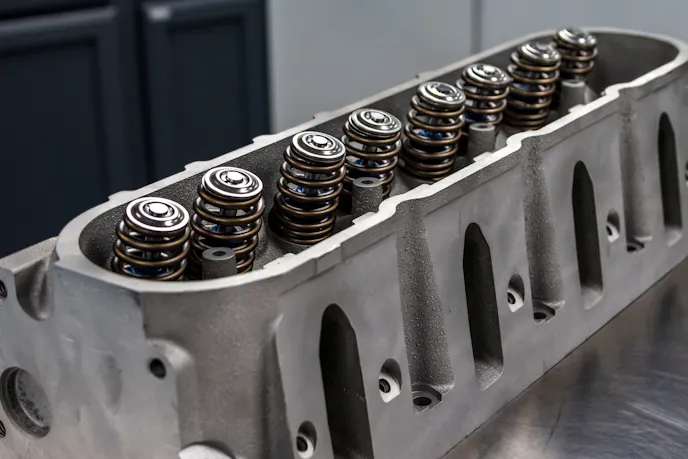
This step should not be rushed or be a quick lookover. A careful final check ensures that every component is secure and that the head is ready to handle increased rpm and spring pressure without issue.
Assembled Head Options For Different Budgets
Not every project starts with a rebuildable core. For builders who need a ready-to-run solution, Michigan Motorsports also offers already assembled LS cylinder heads from various manufacturers at different price points. Those packages allow customers to choose between refreshed stock-style assemblies, performance-oriented castings, and combinations tailored to specific power goals or applications.
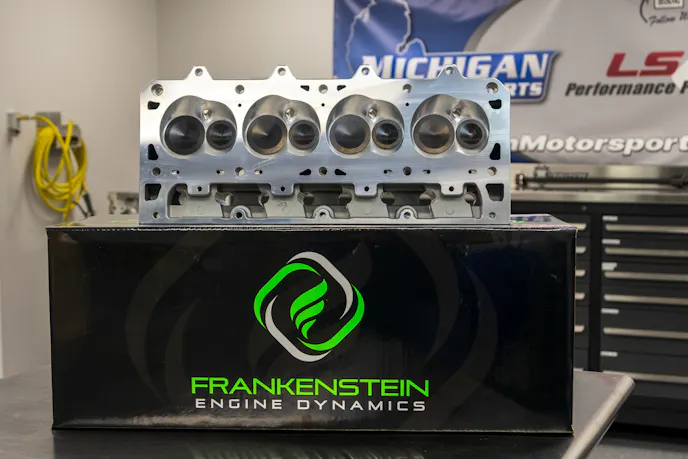
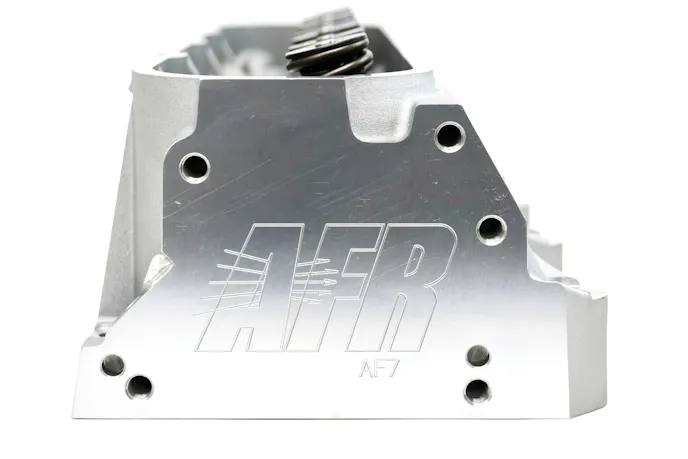
What ties those options together is the same knowledge used in this stock LS cylinder head rebuild. Parts selection, valvetrain geometry, and assembly practices are informed by hands-on experience rather than theory. Whether a customer wants to rebuild a head they already own or step into a complete assembly, Michigan Motorsports can point to a proven combination and the experience behind it.
For DIY builders, understanding this process makes it easier to decide which path makes sense for their project. A stock LS cylinder head rebuild, done correctly, can support real horsepower and long-term reliability, while assembled heads provide an efficient option when time, tooling, or core condition dictates a different approach. In both cases, the foundation is the same: parts that work together, installed with intention, and backed by experience rather than hype.
You might also like
LS6 Legacy Lives: The 2027 Corvette's New V8 Honors A Heavyweight Name
Fittingly debuted in the 2027 Corvette Grand Sport and Grand Sport X, the latest LS6 features 535 horsepower.