

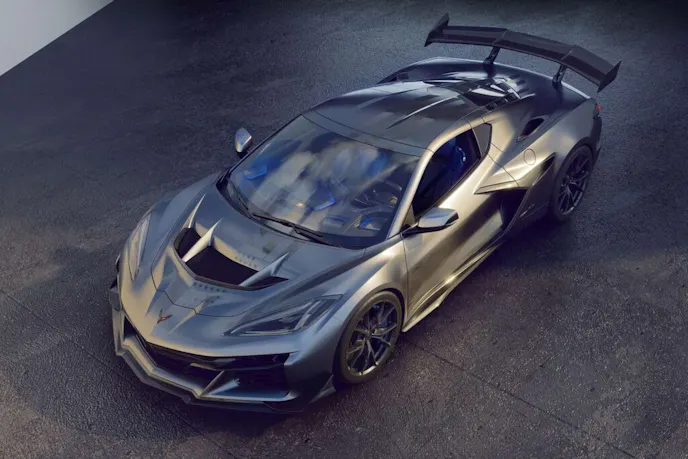
When General Motors unveiled the eighth-generation Corvette in 2019, it did so with a bombshell revelation that divided the enthusiast community: for the first time since 1982, America’s sports car would not offer a manual transmission. The decision was not a concession to comfort — it was a statement of intent. In choosing to pair the new mid-engine C8’s 6.2-liter LT2 V8 exclusively with a dual-clutch transmission (DCT), GM signaled that the future of Corvette performance lay in technology that could outperform even the fastest human hands.
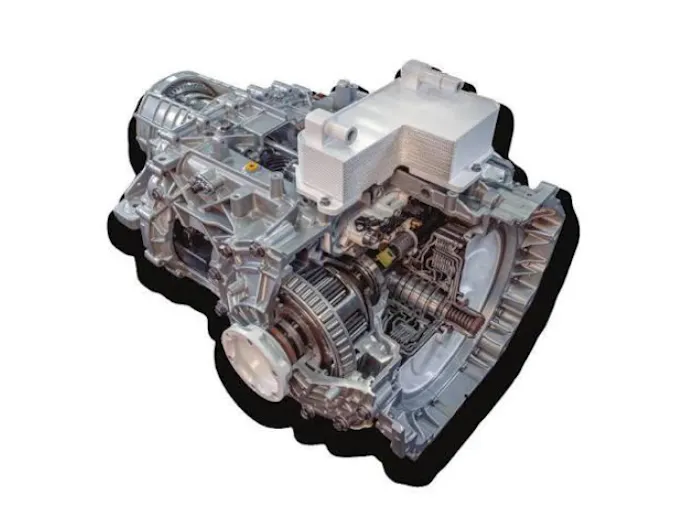
At the heart of that technology is the TREMEC TR-9080 — an eight-speed wet-clutch DCT transaxle developed specifically for the C8 Stingray and engineered to a level of precision that few production gearboxes have ever achieved. This article explores why GM made the pivotal decision to go DCT-only, how TREMEC brought the TR-9080 to life, and the remarkable mechanical and electronic systems that make it one of the most sophisticated transmissions ever fitted to an American production car.
The Shifting Landscape Of Corvette Buyers
The decision to drop the manual gearbox was data-driven. According to C8 global chief engineer Tadge Juechter, the take rate for stick-shift Corvettes had been declining for years. Following the introduction of the C7 Corvette in 2014, the manual transmission’s share of sales fell from roughly 50 percent to less than 20 percent. Customer behavior was speaking clearly: buyers wanted the engagement of a performance transmission without the workload of a clutch pedal.
At the same time, Juechter’s engineering brief for the C8 was remarkably demanding. The car needed to achieve 30 miles per gallon on the highway, accelerate from 0 to 60 mph in under three seconds, provide genuine daily-driver comfort, and retail at a base price of approximately $60,000. Achieving all four goals simultaneously required a transmission solution that was not just fast, but intelligent, and one that could manage power delivery, fuel economy, and driver experience with equal competence. A traditional torque-converter automatic was ruled out early for its inherent efficiency losses. A conventional manual, while beloved, simply could not match the shift speeds needed for the performance targets.
Our customers began requesting a dual-clutch automatic transmission several years ago. Following the introduction of the C7 Corvette in 2014, our take-rate for sticks fell from 50 percent to less than 20 percent this year. — Tadge Juechter, C8 Corvette Global Chief Engineer
The Search For A Suitable Gearbox
With a DCT identified as the right architecture, GM engineers searched the world for an off-the-shelf solution. The benchmark was clear: Porsche’s PDK (Porsche DoppelKupplungsgetriebe) had demonstrated what a DCT could achieve at the highest levels of performance and refinement, and it served as the key competitive target for GM’s engineers. The problem was torque capacity. The LT2 V8, producing 495 horsepower and up to 470 lb./ft. of torque with the performance exhaust demanded a gearbox that could not only survive those outputs but do so reliably for the life of the vehicle — including track use.
No existing off-the-shelf DCT on the market had sufficient torque capacity to handle the LT2’s output in a transaxle configuration. The search led engineers to their long-standing manual transmission supplier: TREMEC, the Mexico City-based company that had been building manual gearboxes for GM, Ford, and Chrysler for more than two decades. The question was whether TREMEC had the capability to design and build an entirely new DCT from the ground up.
TREMEC’s Strategic Transformation
TREMEC had the mechanical expertise to engineer the gears, shafts, and housings of a dual-clutch transmission, but the automated “mechatronics” side, meaning the electronic actuators, software algorithms, and solenoid control systems needed to operate a DCT, was outside their established capabilities. To bridge that gap, TREMEC’s parent company, Grupo KUO, made a decisive strategic acquisition. In 2012, it purchased Hoerbiger Drivetrain Mechatronics: a Belgium-based specialist that had developed electronic dual-clutch actuator systems for some of the world’s most exclusive performance cars, including the Ferrari 458 Italia, the AMG SLS, and the McLaren MP4-12C.
The combination proved transformative. By merging TREMEC’s world-class mechanical manufacturing heritage with Hoerbiger’s cutting-edge mechatronics expertise, the company now had everything needed to develop a complete DCT in-house. Grupo KUO officially announced its investment in DCT technology in 2016, and work on the TR-9080 began in earnest. The result was a transmission where every critical element, from the friction material in the clutch packs to the algorithms running on the 32-bit control module, was developed internally by TREMEC with a singular focus on maximum performance.
The Mid-Engine Factor
The C8’s fundamental architecture change, moving the engine from the front to behind the driver, also played a direct role in the transmission selection. A mid-engine layout demands a transaxle configuration, where the transmission and differential are integrated into a single unit positioned at the rear of the car. This configuration has packaging advantages (better weight distribution, shorter driveshafts) but demands a compact, highly integrated gearbox design. The TR-9080’s concentric clutch arrangement and integrated differential made it ideally suited to this layout in a way that a conventional gearbox with a separate rear differential would not have been.
Two Gearboxes In One: How A Dual-Clutch Transmission Works
A dual-clutch transmission is best understood as two separate manual gearboxes sharing a common housing, each operating in turn to deliver uninterrupted power flow during gear changes. Unlike a conventional automatic transmission, which uses a torque converter and planetary gearsets to transmit power through hydraulic coupling, a DCT uses actual clutch packs and parallel gear shafts — much like the internals of a manual gearbox — but automates the clutch actuation and gear selection process electronically.
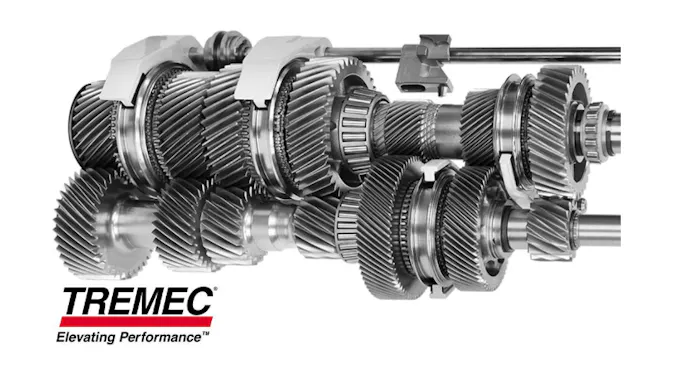
The core architecture splits the eight forward gears across two independent input shafts. One shaft and its associated clutch pack manage the odd-numbered gears (1st, 3rd, 5th, and 7th), while the other shaft and clutch manage the even-numbered gears (2nd, 4th, 6th, and 8th). Each shaft connects to its own multi-disc wet clutch. At any given moment, one clutch is actively transmitting engine torque to the drive wheels, while the other is pre-selecting the next anticipated gear ratio — ready to engage the instant a shift is commanded.
The Wet Clutch Advantage
The TR-9080 uses wet clutch packs, which are multi-disc clutch assemblies that are bathed in transmission fluid. This differs from the dry clutches used in some lower-output DCTs such as those found in many mainstream European vehicles. The choice between wet and dry clutches is fundamental to a transmission’s character and capability.
Dry clutches are lighter and more fuel-efficient at low torque levels because they eliminate fluid drag losses, but they generate significant heat during slip events (such as low-speed maneuvering and launch sequences) and have limited torque capacity. Wet clutches, by contrast, are continuously cooled and lubricated by the surrounding transmission fluid. This makes them far more thermally robust, capable of sustained slip without overheating, and able to handle substantially higher torque levels — critical requirements for a high-output V8 sports car that will also see track use.
The TR-9080’s wet clutches are arranged concentrically, nested inside one another within the same housing, rather than side-by-side. This concentric arrangement is a significant packaging achievement. The outer clutch, which drives the main shaft carrying the odd gears, contains five friction plates. The inner clutch, which drives the shaft carrying the even gears, contains six friction plates, with the additional plate compensating for the smaller diameter of the inner clutch by maintaining a comparable clamping force. Both clutches are engaged by hydraulic pistons that rotate with the clutch assembly and are commanded by the electronic control module.
Flywheel Pendulum Damper
One often-overlooked element of the TR-9080 system is the centrifugal pendulum damper integrated into the flywheel assembly. The C8’s LT2 engine features cylinder deactivation technology, switching between 4-cylinder and 8-cylinder operation to improve fuel efficiency during light-load cruising. This mode switching generates torsional vibration pulses that can translate into unpleasant NVH (noise, vibration, harshness) in the drivetrain. The pendulum damper, operating on the same principle as the pendulum dampers used in modern torque converters, absorbs and cancels these vibration frequencies before they can propagate into the transmission or vehicle structure
The TREMEC TR-9080 represents far more than a transmission; it’s one of the primary reasons the C8 Corvette has completely rewritten expectations for American performance cars. By combining TREMEC’s decades of gearbox expertise with cutting-edge dual-clutch technology, Chevrolet created a transaxle that delivers lightning-fast shifts, remarkable drivability, and the durability to withstand everything from grocery runs to track days. It may have marked the end of the manual Corvette, but it also ushered in a new era of performance that simply wouldn’t have been possible with three pedals.
You might also like
Flowmaster American Thunder Exhaust Wakes Up Our 5.3L Silverado
We install a Flowmaster American Thunder cat-back on our 5.3L Silverado for classic V8 sound without annoying highway drone.