


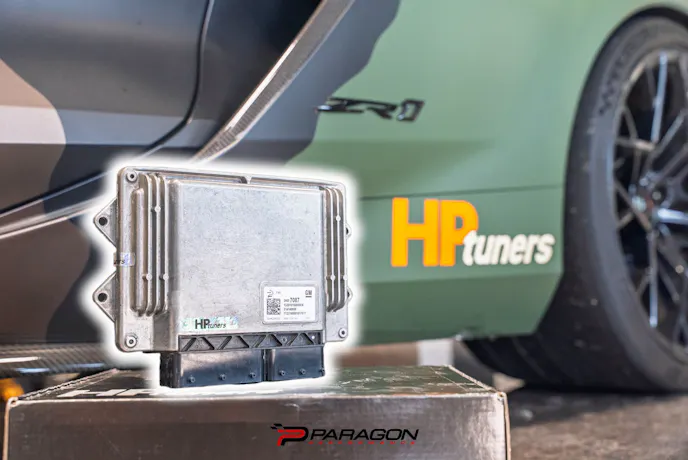
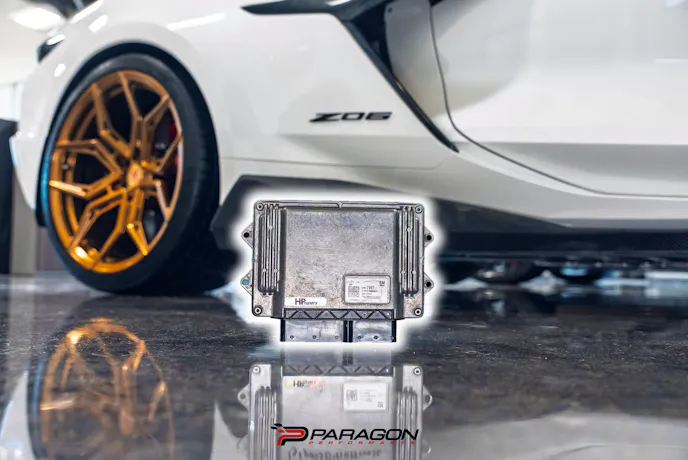
With HP Tuners’ recent and highly anticipated release of Transmission Control Module (TCM) tuning support for the C8 Corvette’s transmission, a major gap in C8 tuning can finally be addressed. Previously, only the Engine Control Module (ECM) was unlocked, and the TCM’s shift and clutch-pressure behavior could not be directly modified. The new T46 support is described as applicable to every C8 Corvette model except the Grand Sport and Grand Sport X, pending validation on those variants.
Why TCM Tuning Matters
Without TCM access, tuners could increase ECM-side torque and horsepower but ran into a transmission-side limit: the TCM would not apply higher clutch clamping pressure to match the added torque, leading to clutch slip under boost. The common workarounds were:
- Reporting artificially inflated torque values to the TCM to trick it into applying more pressure (effective only for smaller power gains)
- Installing upgraded aftermarket clutches (adds cost and can make lower-speed shifts feel harsh/clunky)
- Using aftermarket clutch-pressure controllers to override pressure at specific throttle/RPM conditions
With direct TCM access, the TREMEC TR-9080 8-speed’s actual pressure, torque-limit, and shift-scheduling tables can be edited natively, meaning the fix can be tailored instead of layered on top of the factory logic. Here are some key functions on how to control C8 calibrators to bring C8 performance to the next level!
Key Areas That Can Now Be Tuned
Launch Control
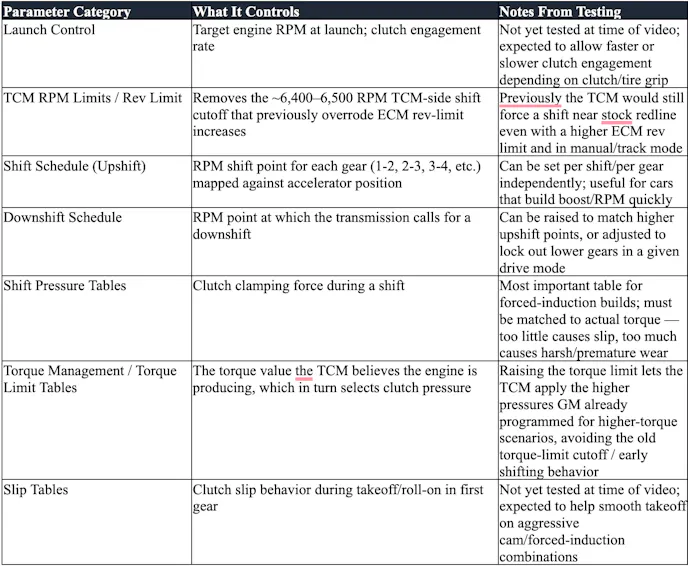
In the newly released software, there are two launch-control parameters that were identified: the target engine RPM at launch and the clutch engagement rate. A faster engagement rate suits stronger aftermarket clutches (harder launches) while a slower rate can help avoid slipping factory clutches on high-grip tires. Combined with shift-pressure changes, this may improve 0-60 times even on factory clutches.
RPM Limits and Shift Scheduling
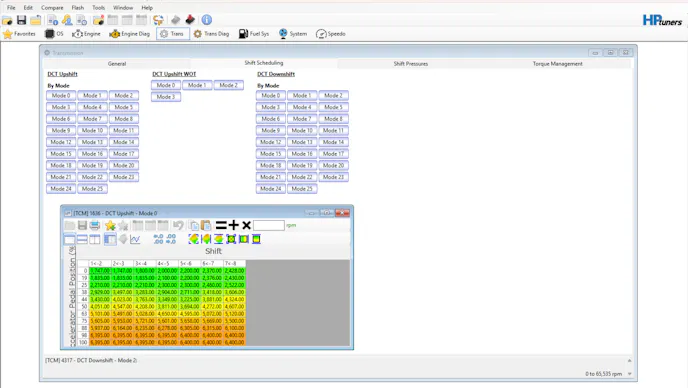
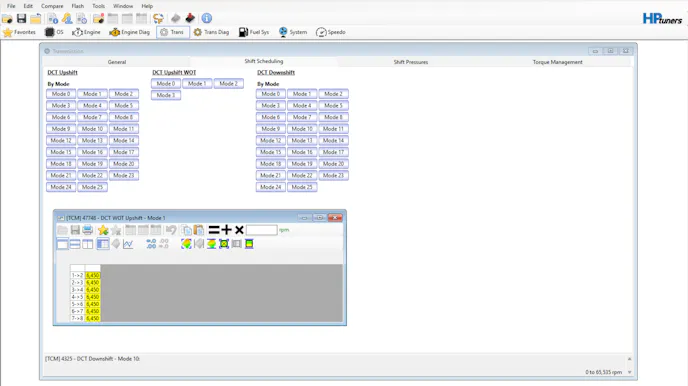
Previously, even with an ECM rev-limit increase (e.g., from a cam/head package or forced induction), the TCM would still force a shift around 6,400-6,500 RPM in Drive, and manual mode in Track setting did not fully override this. With TCM tuning, the shift-schedule tables (RPM shift point per gear vs. accelerator position) can be edited directly, including independently for each gear change (1-2, 2-3, 3-4, etc.), allowing:
- Earlier shift points in lower gears for cars that accelerate hard enough to hit the limiter quickly
- Higher shift points in later gears to use more of an extended rev range
- Matching downshift RPM points to the new higher upshift points
- Locking out certain (typically low) gears in specific drive modes so the transmission does not hunt down into gears the driver doesn’t want
Shift Pressure and Torque Management
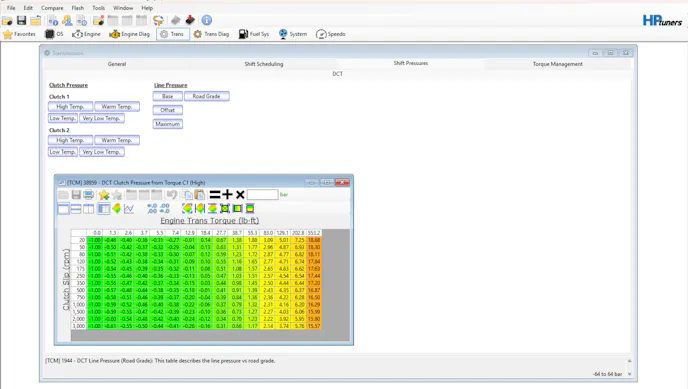
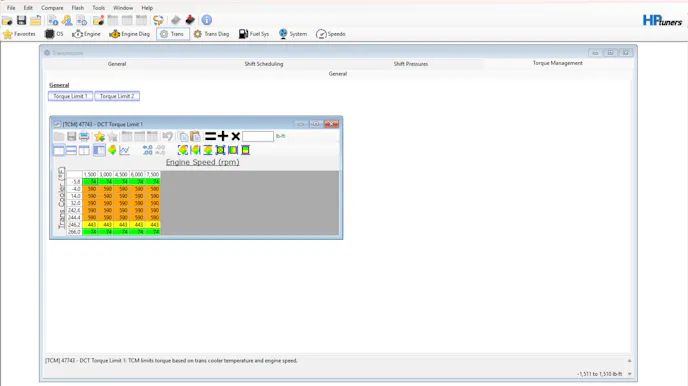
Shift pressure, or how hard the clutches are squeezed during a shift, has been noted as the most important and most impactful table needed. Rather than only raising pressure directly, the workflow is to raise the torque management/torque limit tables so the TCM “believes” the correct (higher) torque figure. GM’s factory shift-pressure tables already contain appropriate pressure values for higher torque levels, and raising the torque limit lets the TCM reach those pre-existing higher-pressure regions instead of clipping early. Certainly, this will be an area of great caution, as maximizing pressure unnecessarily can also cause other issues. The applied pressure should be matched to the actual torque delivered — too little pressure causes slip between gears, too much causes harsher shifts and added wear.
Slip Tables
There are also parameters to control clutch slip behavior specifically during takeoff/roll-on in first gear. These tables will certainly help to smooth out low-speed takeoff on aggressive cam or forced-induction setups.
For years, the C8’s dual-clutch transmission has been one of the last major obstacles to unlocking the platform’s full performance potential. Engine tuning was only half the equation, leaving builders to rely on workarounds whenever horsepower climbed beyond what the factory calibration expected. With native TCM access now available, that changes in a big way. Tuners can finally calibrate the TR-9080 the way they always wanted, optimizing clutch pressure, launch control, shift scheduling, torque management, and drivability from within the transmission itself. As C8 horsepower numbers continue to climb, proper transmission tuning will become just as important as engine tuning. In many ways, this isn’t just another software update; it’s the next major step in the evolution of the C8 aftermarket.
You might also like
LS Oil Pans: Moroso Adds Four New Wet-Sump Designs
Moroso added four new LS oil pans for sand rails, street/strip, road race and drag race builds, including Dart LS Next non-skirted blocks.