
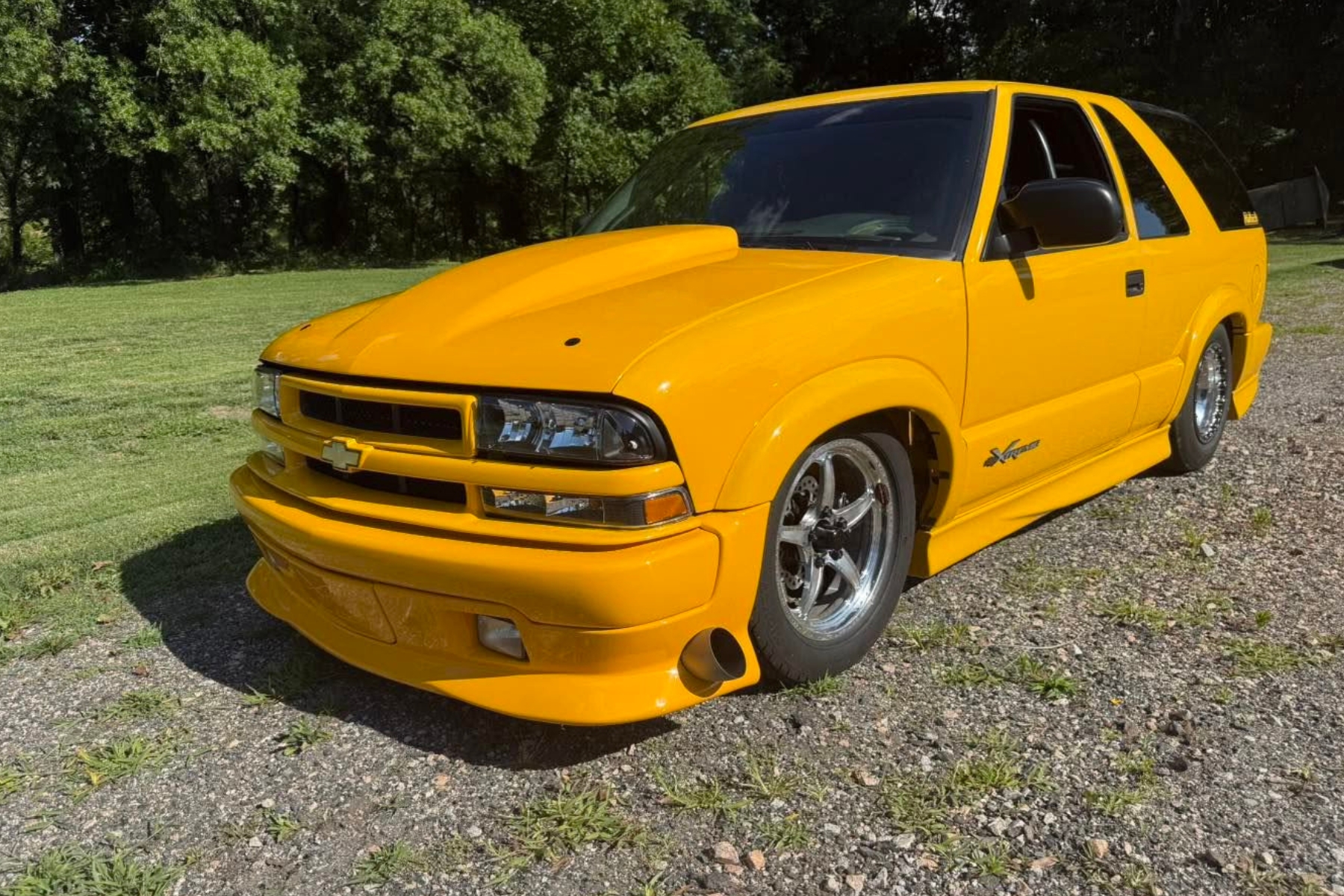
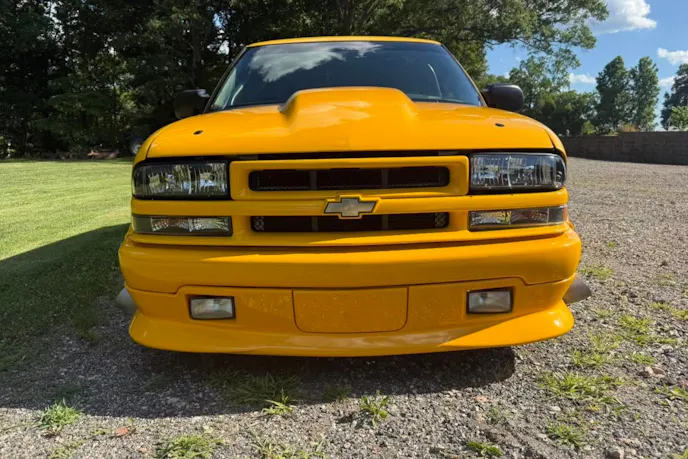
Customs by Bigun just wrapped up a twin-turbo Blazer build that reads like a wish list pulled straight from a half-dozen catalogs. After posting the finished yellow brick to social media, the shop showed off a project that pulls heavily from Motion Raceworks, Rife Sensors, TBM Brakes, Mark Williams, and Fluidworks. While the Blazer keeps most of its factory creature comforts intact, the goal is clear: it’s headed to a Drag and Drive event in the near future, and it has the hardware to keep up.
Twin-Turbo Blazer Electronics and Fueling
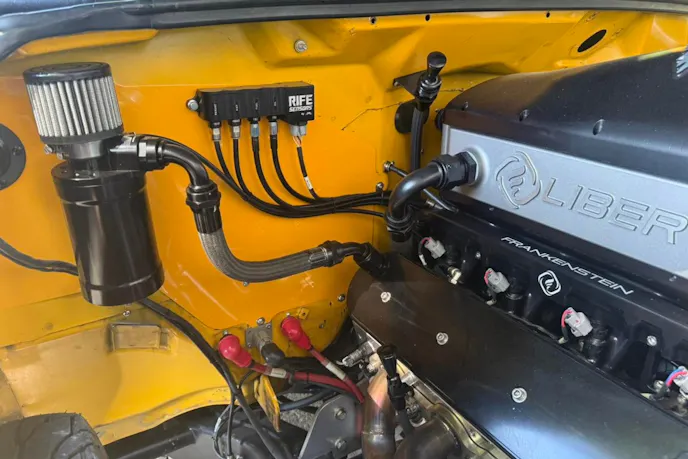
According to the builder, the Haltech Nexus R5 ECU and its matching Power Distribution Module (PDM) are running at their limit, handling input from a wall of Rife Sensors. That list covers shock sensors, front wheel speed, a driveshaft sensor, fuel pressure on both fuel systems, a g-meter, IAT sensors before and after the intercooler, and an external crank sensor. It’s the kind of data-logging setup you’d usually find on a dedicated race car rather than a street-driven Blazer.
On the fuel side, two completely separate systems run side by side. One handles pump gas, while the other moves E85 through a Fluidworks mechanical pump. Both feed Frankenstein billet fuel rails mounted to the Iceman Intercooled LS/LT Billet Intake Manifold from Frankenstein Engine Dynamics, which handles up to 2,000 hp through a 102 mm throttle body opening. PRC cylinder heads finish off the top end of the combination.
Brakes, Boost, and Daily Usability
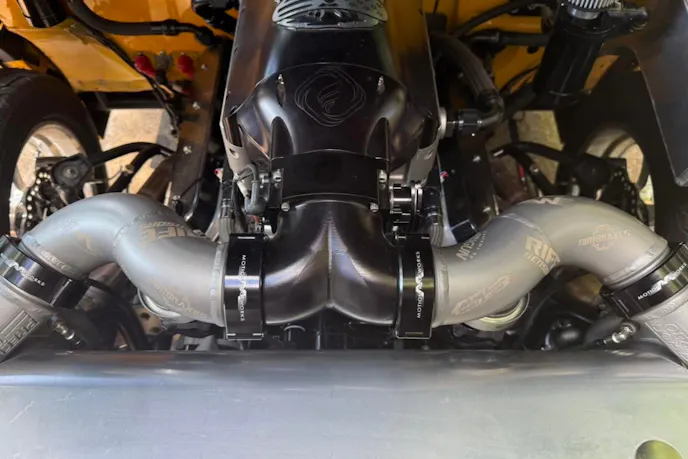
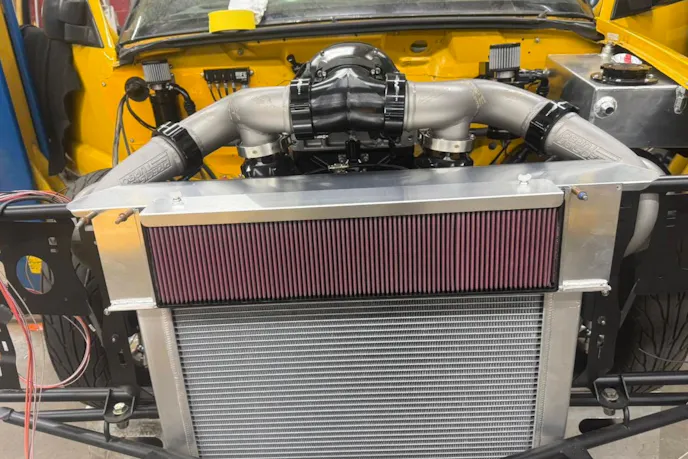
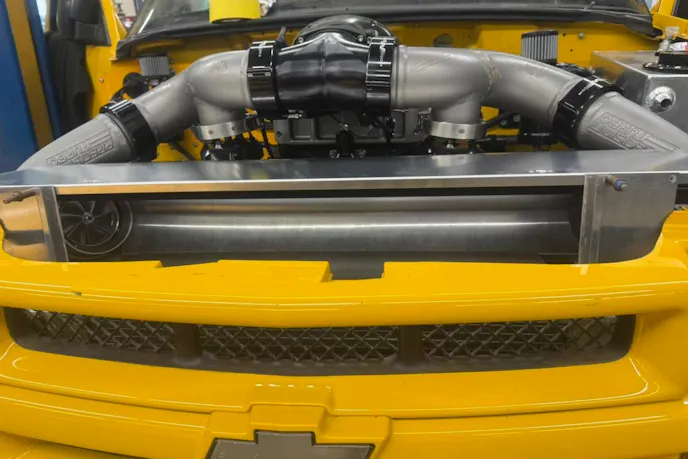
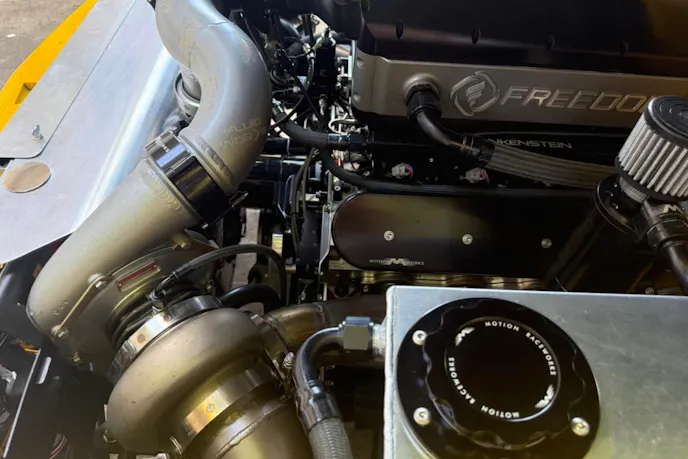
A pair of Precision Turbo & Engine 76 mm turbos handles the forced induction. On the street, a removable air filter feeds the system, and once the filter comes off at the track, it converts the inlet into a ram air feed. Mark Williams hardware also makes the cut, which is a name you don’t tend to bolt onto a build unless it’s going to see real abuse.
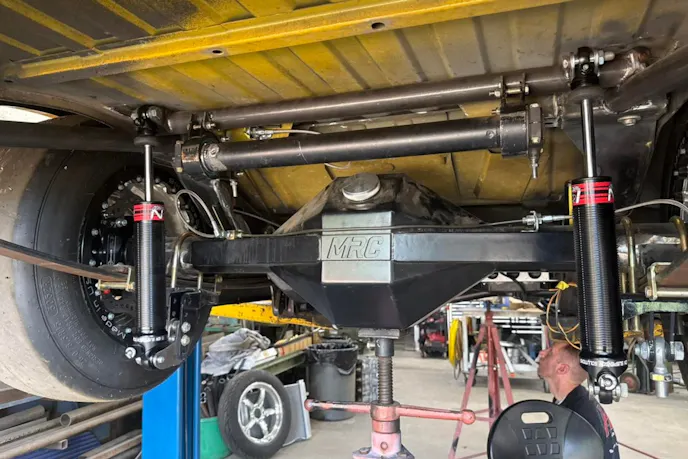
When it’s time to slow down, TBM Brakes carries the load with a blacked-out caliper package and the company’s new master cylinder. Even with all of the race-focused upgrades, the Blazer didn’t lose its street manners either. The power windows, power sunroof, power rear hatch, and factory dome lights all still work as they should. With a Drag and Drive entry on the horizon, this one is worth watching.
What makes this Blazer so impressive isn’t any single component—it’s how well everything works together. Plenty of builds make big power, and plenty of others retain street-friendly features, but very few manage to combine race-car-level electronics, a twin-turbo LS platform, dual-fuel capability, and modern creature comforts in one cohesive package. From the Haltech-controlled data acquisition system to the Precision turbos and Drag and Drive-ready hardware, every part of the build appears to have been selected with a purpose.
You might also like
Check Out The 602hp Chevy Silverado Launch Edition By Callaway Cars And Waldoch Crafts
Poised to dominate the street, the 2026 Chevy Silverado Launch Edition, by Callaway and Waldoch, features 602 supercharged horses.