

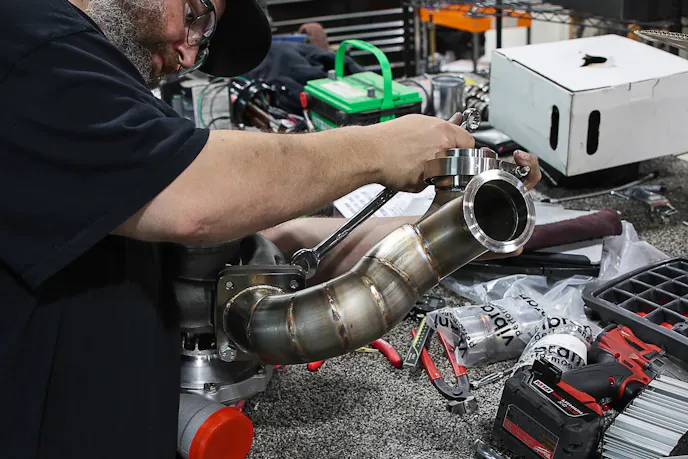
Completing a V8 swap transforms the personality of any classic chassis, but things reach an entirely new level when you start adding a turbo kit to the mix. For our Project Swedish Meatball Volvo wagon, we decided the LS engine needed a massive, 76-millimeter turbocharger from Summit Racing. Since a 1994 Volvo never came with a turbocharged V8, there were no off-the-shelf options available. Rick Trunket from Big 3 Racing stepped in to handle the custom fabrication and shared his blueprint for successfully building a forced induction setup from scratch.
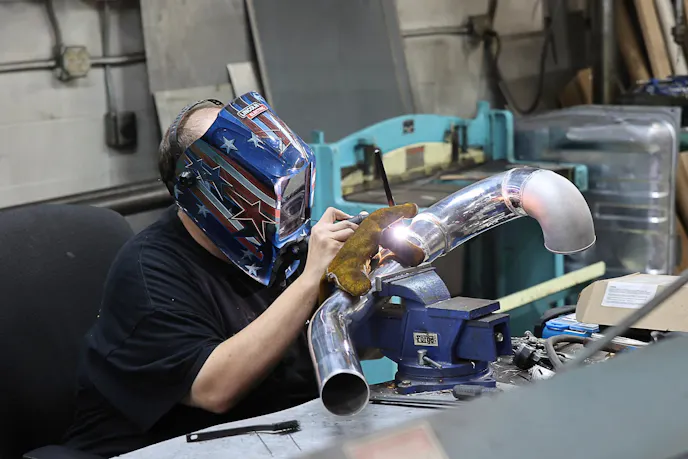
Planning Before Adding A Turbo Kit
Before you cut metal or fire up the welder, you must visualize the layout. Trunket emphasizes that builders often forget about routine maintenance during the design phase. You must consider how difficult it will be to change spark plugs or remove valve covers later. Heat management is also critical. Routing hot exhaust pipes too close to the brake master cylinder or the wiring harness will quickly ruin your day and cause major failures on the street.
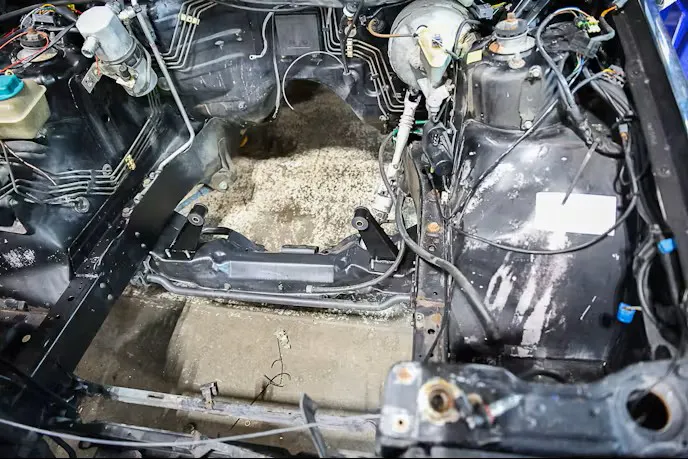
Sizing The Hot Side Piping
Many enthusiasts assume they need massive tubing to feed a big turbo, but that is rarely true. Oversized exhaust piping increases the internal volume, causing lazy spool times and terrible throttle response. Trunket often uses a 2.5-inch crossover pipe even on race setups making immense horsepower. A properly sized hot side keeps exhaust gas velocity high so the turbo spools instantly when you put your foot down.
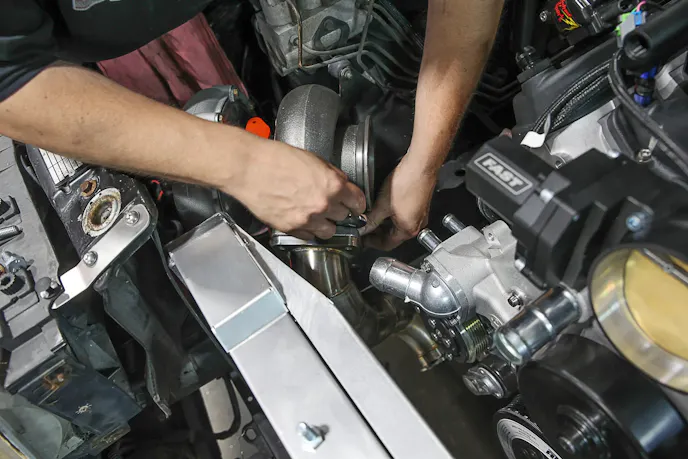
Working Around Engine Swaps
Packaging is extremely tight when stuffing an American V8 into a foreign engine bay. The trick is to build the system around the immovable objects. Trunket recommends installing all accessories, belts, and cooling components before mocking up the pipes. During the test fitting phase, he uses a very simple rule. As long as he can fit his fingers between the hot pipe and the chassis, there is enough clearance to prevent issues.
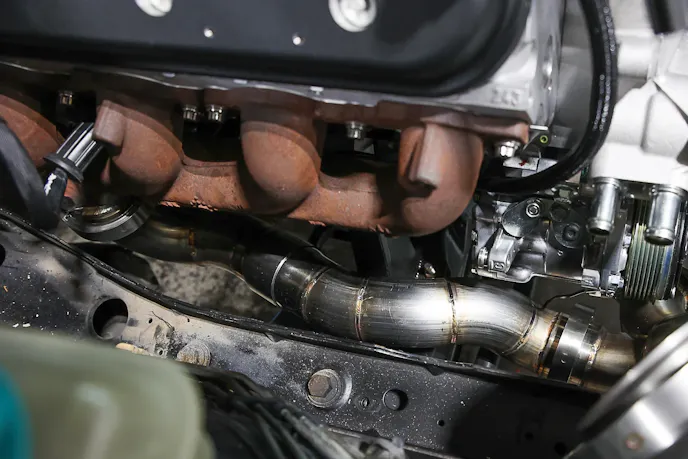
Fabrication And Final Welding
Patience is mandatory during final assembly. Trunket advises against taking shortcuts when space gets tight. Relocating a steering shaft or notching a frame rail is a much better solution than building a compromised exhaust route. Tack weld the pieces on the bench, test fit the entire assembly in the car and then do the final welding to prevent the flanges from warping.
Where there is a welder and an angle grinder, there is a way to boost almost any vehicle. Taking the time to map out the plumbing properly ensures that adding a turbo kit results in reliable horsepower instead of a frustrating maintenance nightmare. More importantly, proper planning gives you a combination that actually works as a complete package. Anyone can bolt a turbo onto an engine and make a dyno pull. Building a system that spools quickly, survives heat cycles, remains serviceable, and delivers consistent performance is where the real skill comes into play. That’s especially true when you’re stuffing a turbocharged LS into something like a thirty-year-old Volvo wagon that was never intended to house eight cylinders, let alone forced induction.
You might also like
LS Turbo Chevy Laguna Delivers A Sneaky 730 HP Punch
Dustin’s turbo Chevy Laguna looks factory stock until the BorgWarner S475 turbo spins up and the fender-exit exhaust rips.