

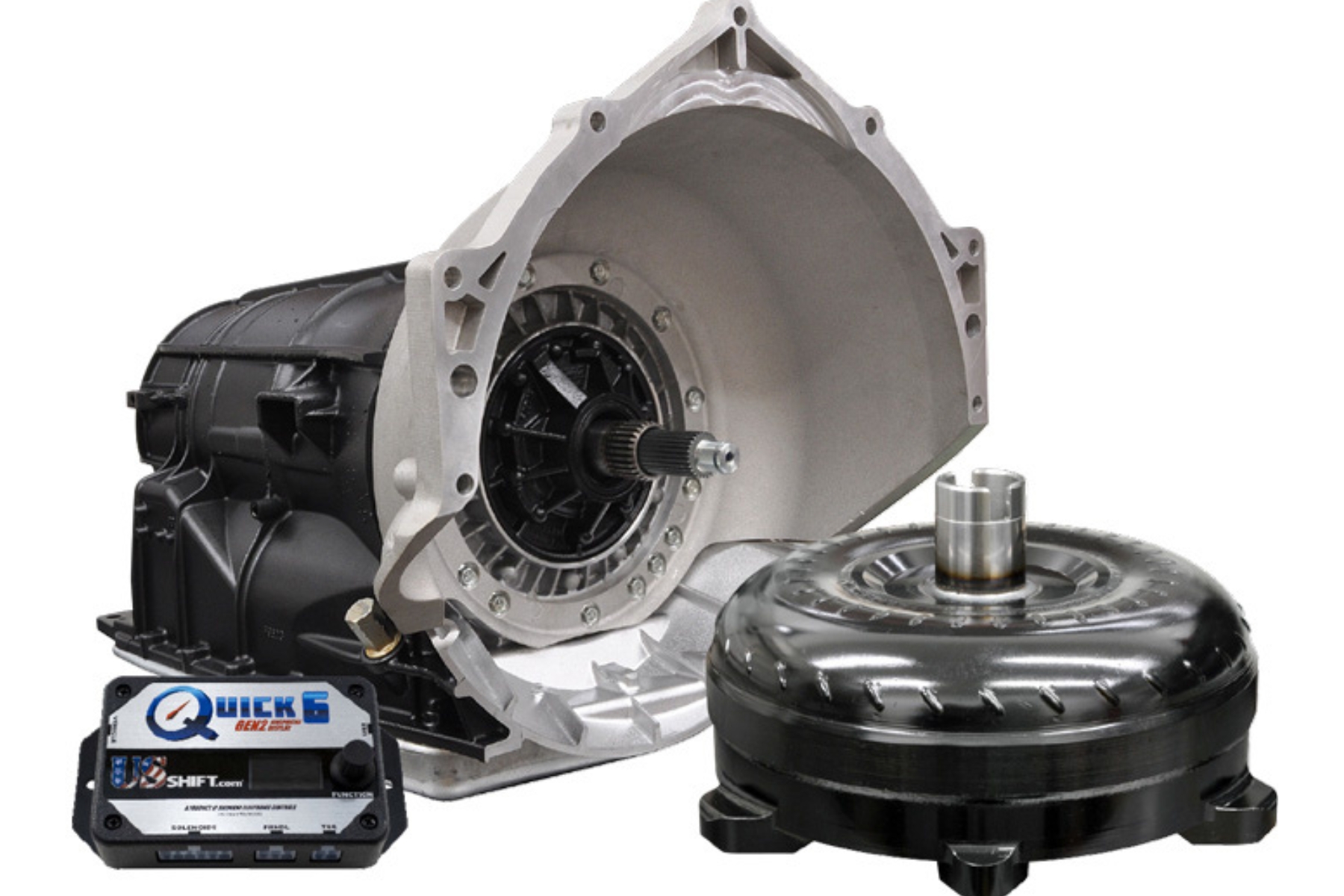
When LS and LT engine swaps call for an automatic or automatic overdrive transmission, builders have generally been forced to choose between a TH350, a TH400, or the 4L60E/4L80E. ATI Performance Products is expanding those options with its ATI 6R80 transmission kits. The lineup takes Ford’s 6R80 six-speed automatic and adapts it to an LS or LT-based engine. ATI builds the kits in two versions, calling them the first true externally controlled Ford six-speed transmission packages built specifically for Chevrolet-powered vehicles. The combination promises comfortable highway cruising alongside serious horsepower capacity in the same unit.
What’s Inside The ATI 6R80 Transmission Kit
Each ATI 6R80 transmission kit is built around a torque converter, bellhousing, and transmission. All three pieces are engineered to work together behind an LS or LT engine. ATI offers the lineup in two versions. Part number 730001 pairs that hardware with the US Shift controller. Part number 730000 includes the same transmission and converter without the controller. Gear ratios run 4.17, 2.34, 1.52, 1.14, .86, and .69 on both versions. That spread gives builders a wide range for launch and cruising RPM. ATI rates the kits from 500 to 1,000 horsepower, depending on vehicle weight and gearing. Multiple tuning templates allow a transbrake and a second-gear leave off the 2.34 ratio. Both are tuned independently of the engine’s own management system.
Both versions ship with a short steel pan, and ATI also offers extra-short and deep cast pan options for builds that need more ground clearance or fluid capacity. A Moroso fabricated pan is in development, and buyers can also choose a 2WD or 4×4 configuration.
The four-wheel-drive setup depends on which transfer case a builder plans to run. ATI sales associate Rob Sappe said the most common route bolts an OEM Ford transfer case to an OEM Ford 6R80 transfer case adapter. Any other transfer case needs a specific adapter and input shaft sourced for it. Two-wheel-drive builds need a custom driveshaft built around the yokes designed for the 6R80’s flanged output.
ATI Knows Six-Speeds
ATI’s move into six-speed automatics is not new. General Motors introduced its own 6L80E six-speed in late 2005. It used clutch-to-clutch shifting to eliminate the one-way clutches found in earlier transmissions. GM followed it with the eight-speed 8L90E in 2014. According to Sappe, the biggest opportunities for improving the 6L80E for high-performance use come down to four areas. Those are the intermediate shaft, clutch counts and material, a heavy-duty gearset, and a series of valve body updates.
Those upgrades follow a clear ladder based on horsepower. Sappe said a 500-horsepower build gets increased clutch capacity along with heavy-duty frictions, steels, and valve body updates. Builds pushing past 500 horsepower add a heavy-duty 300M intermediate shaft and hub on top of those same valve body changes. Anything past 750 horsepower or running a heavy vehicle also gets a 4140 heavy-duty gearset. Built out that way, a 6L80E can handle as much as 1,000 horsepower, close to the ceiling of the Chevy-specific 6R80E kit.
The 8L90E’s wide 7.0:1 overall gear ratio spread is a mixed bag for performance use, in Sappe’s view. He said the transmission carries more low gear than most performance builds actually need. The small ratio drops between gears do help, though, since they keep the driveline from getting shocked and overloaded the way a larger ratio drop would. ATI backs that platform with an aerospace-grade Vasco input shaft and upgraded clutch materials, along with a 300M-steel output shaft for Corvette applications. That depth of experience with GM’s own six- and eight-speed automatics is exactly what ATI drew on when it set out to adapt Ford’s 6R80 for the same Chevy and LS engine bays.
Why The 6R80 Wins Over GM’s Six-Speed
According to ATI’s founder and President, J.C. Beattie, Ford’s 6R80 has one major advantage over GM’s own 6L80E: full external control. Beattie told Dragzine that the modern six-, eight-, and 10-speed automatics from GM and Ford share the same ZF-based engineering roots. He noted that they are “very much the same idea for function, capacity, and holding ability.” The difference comes down to tuning access.
Sappe put it plainly. The 6L80E’s internal computer makes it difficult to tune for added power, clutches, and torque management. Doing so requires specialized programs or equipment. An external US Shift box, by contrast, needs only a normal laptop. No specialized software is required to make the same changes. A handheld programmer on the 6L80E only adjusts items such as shift points and tire size. It cannot add a transbrake, torque cut, or second-gear leave. That level of control requires a true standalone controller, something the 6R80 platform allows.
Picking The Right Transmission For An LT Build
The 6R80 package is not aimed at dedicated drag cars. Beattie told us that a car built strictly for the strip is better served by a three-speed automatic than a six-speed. The extra gears and overdrive add little value at the track.
Sappe echoed that distinction from the sales side. He said ATI builds the 6R80 as a complete package for customers who do not already have a four-, six-, eight-, or 10-speed transmission and want a wide gear range with overdrive. It suits a fun street driver who wants modern transmission performance and reliability. That includes the ability to cruise at 70 mph at low engine rpm behind a locked-up converter. The 8L90E, by comparison, is only offered as an upgraded unit rather than a complete package. It is aimed at customers who already have one and need it repaired or built up for more power.
Picking between ATI’s transmissions for an LS- or LT-powered street car comes down to more than horsepower. Sappe said the decision weighs vehicle weight, tire size, rear gear, RPM range, the need for overdrive, available space, and whether a computer is on hand to control the unit. ATI still sells plenty of TH350 and TH400 packages for street rod cruisers that do not need overdrive. Customers chasing up to 1,500 horsepower get steered toward the heavy-duty 4L85E. Those who want a single overdrive and lockup at a lower horsepower level often land on the 4L80E. For builders who want all six speeds and dual overdrives for maximum highway cruising, the 6R80 package is the option ATI points to.
Adapting A Ford Case To Chevy Architecture
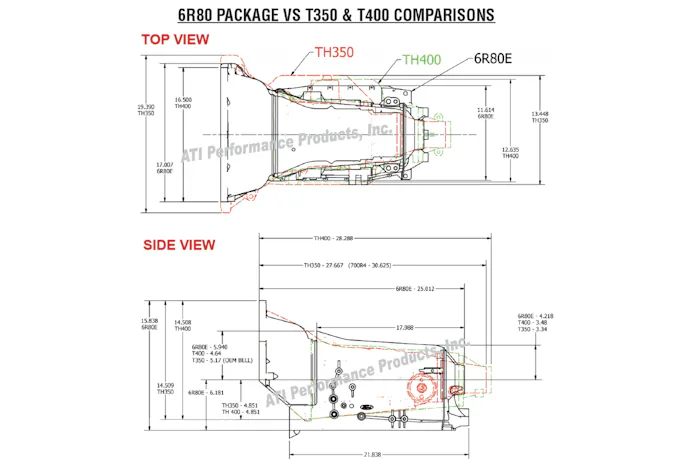
Making a Ford transmission live behind a Chevy engine takes more than a simple bellhousing swap. ATI CNC-machines each 6R80 case to accept a custom Chevy bellhousing. That bellhousing bolts through 13 mounting points machined into the case. The torque converter is a hybrid design as well, combining a Ford hub with a Chevy pilot. That combination lets the assembly locate correctly on an LS or LT crankshaft. The converter is available with or without a lockup clutch. For builders planning the swap, ATI also publishes a 6R80 dimension comparison chart. It lines up the case against a TH350 and TH400 in both top and side views. That makes it easier to check clearance and mounting points before cutting anything.
How ATI Builds A Race-Ready Core
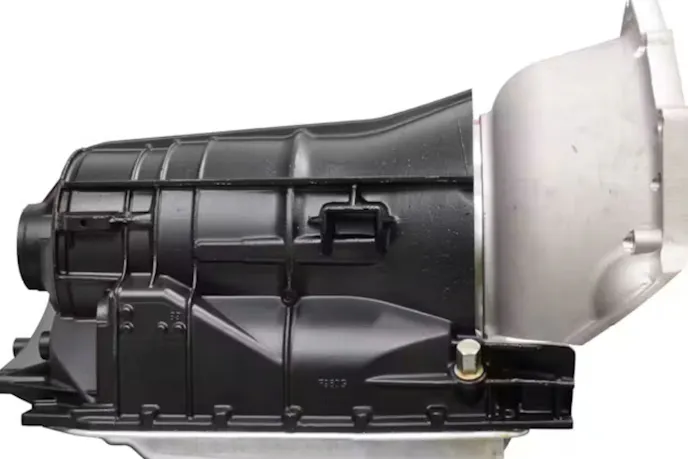
Every 6R80E build starts with a core case that gets inspected before any machine work happens. Dragzine reported that ATI checks each case for cracks and pulled threads near where internal parts contact the housing. Once it is approved, the case gets cleaned and CNC machined for the Chevy bellhousing. Many of the factory internal components carry over into the finished build. ATI inspects the factory shafts, bushings, and drums, replacing anything worn or cracked with factory replacement parts before assembly begins. Once the parts are approved, technicians measure the clutch and plate stacks to keep clearances within tolerance. A stack that runs too tight or too loose will not shift correctly.
Raybestos Clutches Add Holding Capacity
Fortified 6R80 builds also lean on upgraded friction components from Raybestos Powertrain. The company’s GPZ friction material is engineered for a high, stable friction coefficient. That stability increases torque capacity and durability while helping to keep the transmission running cooler, all without sacrificing shift quality. A Raybestos Torqkit built for the 6R80 adds ten additional friction plates for a total of 36. That works out to roughly 40 percent more clutch surface area than stock. The added surface area translates directly into a higher horsepower ceiling for the finished transmission.
Standalone Control Through US Shift
Running an electronically controlled six-speed outside of a factory chassis requires a standalone transmission control unit. ATI pairs its 6R80 kit with the US Shift Quick 6 controller from Baumann Electronic Controls. The system needs only five wires to operate: power, ground, tach, throttle position sensor, and ignition. Sappe said those five wires cover the most basic inputs needed to get a 6R80 running in a vehicle with limited factory outputs. Wiring in more inputs on the US Shift box unlocks finer tuning and greater expandability down the road.
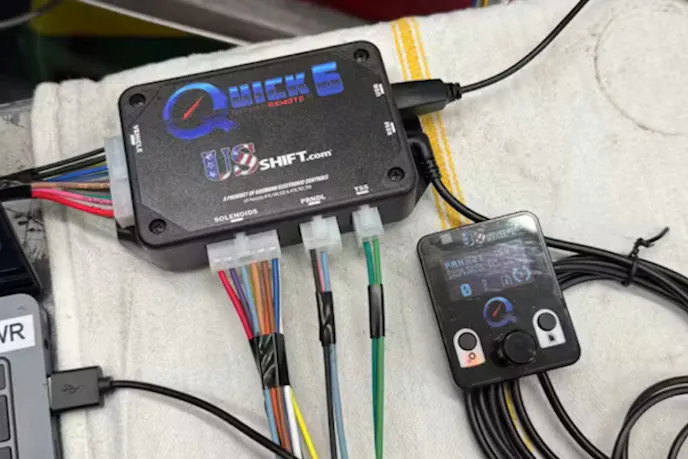
That simplicity matters most in an older chassis. The controller pulls its own RPM and throttle position signals straight from the engine. It never has to talk to a modern factory ECU or a CAN bus network, something a vintage muscle car never had to begin with. Builders can also wire in the standard Shift in Progress signal. That signal further protects the transmission by cutting power to the engine until a shift finishes. Drivers get access to a sport mode along with tap up and down shifting through either the shifter or paddle controls. The controller works equally well with EFI or carbureted combinations.
Fortified For High-Horsepower Duty
Torque cut is what keeps a clutch-to-clutch automatic like the 6R80 alive under hard use. The system briefly swings ignition timing across a range of 20 degrees to negative 20 degrees during a shift. That timing swing reduces the load on the clutch packs. ATI includes a 300M-steel intermediate shaft standard in builds rated for 700 horsepower and higher.
The company also offers the shaft separately as an upgrade for superchargers, turbochargers, or nitrous applications, where the factory piece is prone to failure. According to Beattie, a properly built 6R80 can handle 1,000 horsepower in a car weighing 3,300 to 3,400 pounds. Those numbers put the ATI 6R80 transmission kit in range for anything from a mild street cruiser to a serious weekend racer.
Rebuild Support And Testing
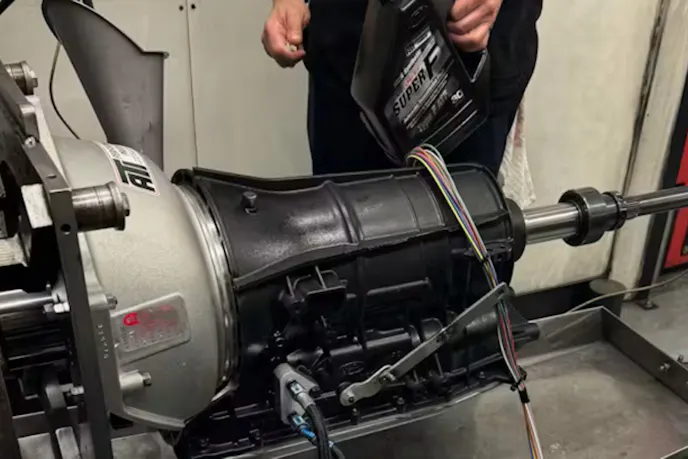
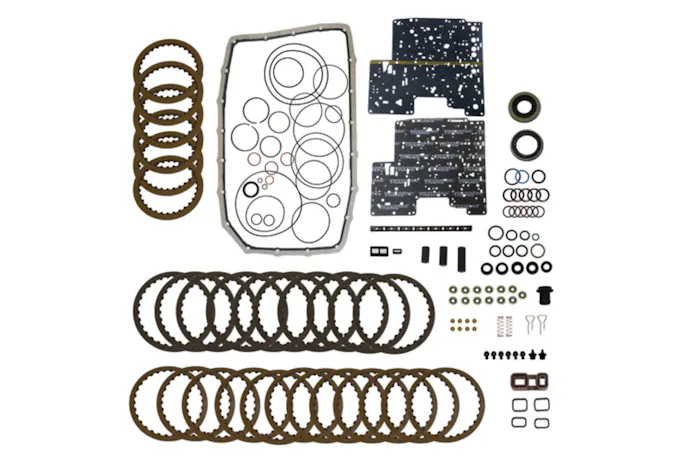
ATI backs the platform with parts beyond the initial build. The company stocks 6R80 master overhaul kits covering paper, rubber, and clutch components. Kits are available for both 2009-2014 and 2014-and-newer cases, along with a dedicated bushing kit for units needing a full refresh. Every completed transmission also goes through dyno testing before it leaves ATI. The company recommends Mercon LV or a compatible fluid to keep the clutch packs and valve body operating as designed.
The ATI 6R80 transmission kits give LS and LT engine builders an option that was previously limited to Ford-powered platforms. That holds true whether the goal is a comfortable overdrive for a resto-mod or a six-speed that can survive four-figure horsepower on the strip. The torque converter and bellhousing are engineered to work as a system, with the US Shift controller available on the 730001 kit for full electronic control. That makes it a package built to bolt in, rather than one requiring a pile of adapters and guesswork.
You might also like
Cadillac Celebrates 125 Years With A $239,000 Escalade-V Collector Series
Cadillac unveils the 2027 Escalade-V 125th Anniversary Collector Series, a $239,000 supercharged V8 SUV limited to just 252 examples.